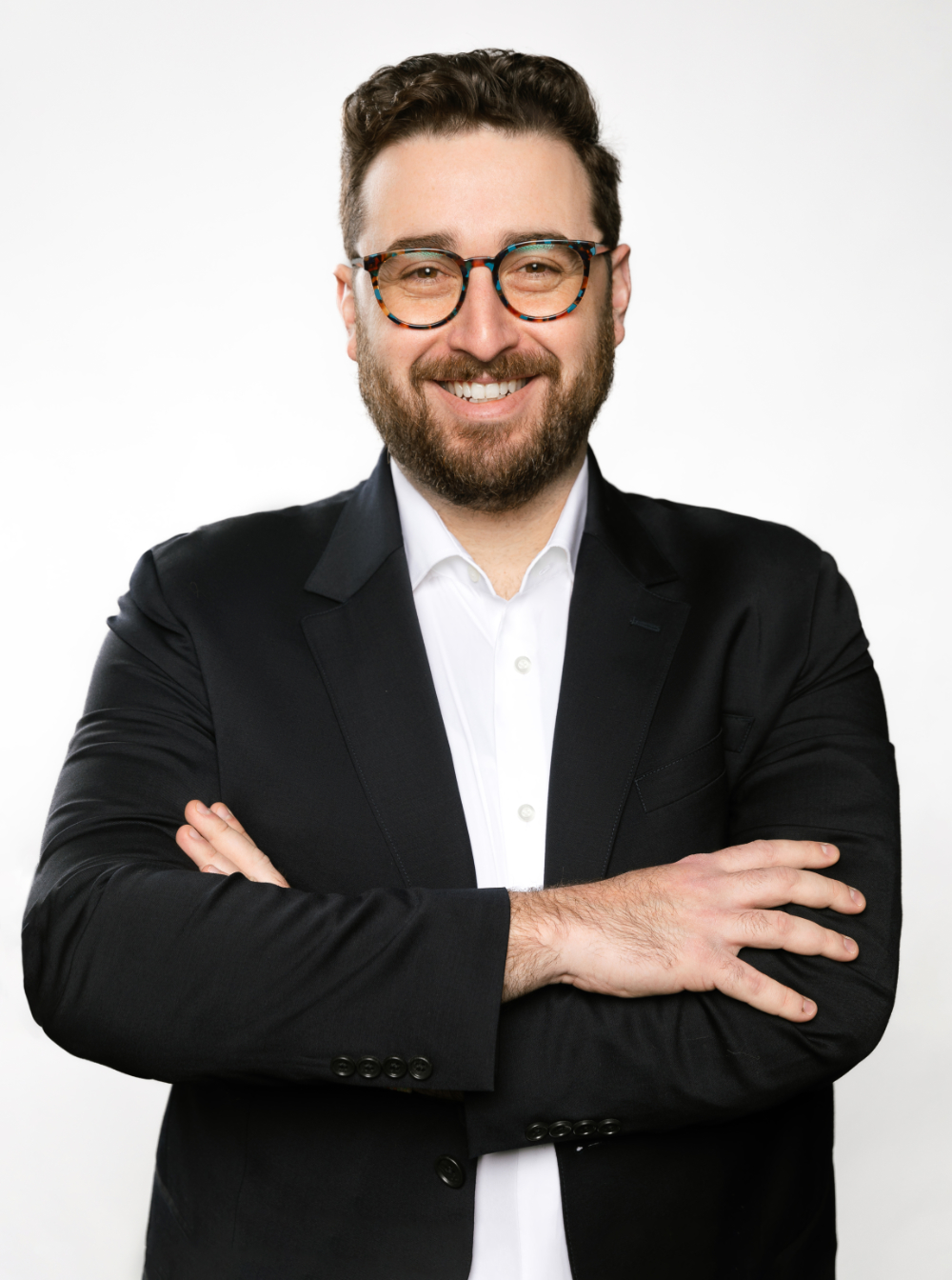
It’s one thing to hold strong beliefs. It’s quite another to act upon them. Litigator Max Rodriguez, though, has devoted his career to finding the pathway in the law that aligns most with his internal mission – to make an impact by exposing and preventing wrongdoing.
That path has had twists and turns; the son of four – yes, four – lawyers, after two clerkships, he worked at a white-collar criminal defense boutique. Reflecting on that experience, he mentions a saying in the Torah: “Justice, justice you shall pursue.” While he respected the work of criminal defense lawyers, he wanted to fight for the greater good on the plaintiffs’ side.
That goal led Rodriguez to find a niche in whistleblower and defamation law – and to found his own firm, the Law Office of Max Rodriguez, in January 2024. The firm operates on three core areas of work: First, representing whistleblowers through government whistleblower programs like qui tam actions under the False Claims Act, the SEC Whistleblower Program and the DOJ Corporate Whistleblower Award Pilot Program. Second, plaintiff and defense-side defamation litigation. And finally, standalone appellate work – handling appeals in New York State Court, federal circuit courts nationwide and the U.S. Supreme Court. Together, Rodriguez has crafted a firm that stands not only in alignment with his values and his goals, but with his clients’. It’s a mission and a case mix that has attracted clients and required growth. In less than two years, Rodriguez’s practice has grown from a pure solo operation to a full-fledged law firm with an associate, a chief of staff and a legal analyst.
“More often than not, the clients I work with are less motivated by the money and more motivated by wanting to know that someone has heard what they're concerned about and is going to take it seriously,” Rodriguez says.
His cases have matched that drive. Late last year, Rodriguez secured a $680,000 settlement in a precedent-setting Paycheck Protection Program (PPP)-related qui tam whistleblower suit. The case was the first ever resolved on the theory of false claims of pandemic-era economic uncertainty. In another matter, he represented former Fox News employee Nina Jankowicz in a headline-making defamation suit against the news giant, alleging that the company had personally targeted Jankowicz in a campaign of false claims and destruction. He is also currently representing survivor, activist and lawyer Andowah Newton in an appeal to her claim of sexual harassment and retaliation in the workplace under the Ending Forced Arbitration of Sexual Assault and Sexual Harassment Act – an act she herself was instrumental in creating. These are just a handful of the public examples of his diverse caseload (after all, many whistleblower cases remain confidential for years) that runs the gambit from healthcare fraud to sanctions evasion to “extremely online” fights over free speech in defamation cases.
But it’s not just his legal work. Rodriguez has consistently sought out opportunities for work that aligns with his values outside his practice, including substantial political work. In 2020, Rodriguez served as Voter Protection Regional Director for the Montana Democratic Party during the General Election; later, he served as a policy adviser on Manhattan District Attorney Alvin Bragg’s campaign, and later on his Transition Committee – realizing policies around criminal justice reform, corporate accountability, hate crimes and more that Rodriguez himself had helped create.
His political work, like his legal work, comes back to quite simply stepping up and taking action.
“There’s something so simple and clarifying when you get opportunities to do things that are objectively the right thing,” Rodriguez says.
Lawdragon: Tell us about finding the whistleblower practice area – how did you know you’d found the type of work you wanted to pursue?
Max Rodriguez: I just fell in love with it. It hit this point of alignment for me. Obviously the client has their own personal objectives, and especially when they've gone through the difficulty of being a whistleblower, money is understandably one of them. But more often than not, the clients I work with are less motivated by the money and more motivated by wanting to know that someone has heard what they're concerned about and is going to take it seriously. So, helping my client raise attention to whatever it is that they experienced hopefully results in a good outcome for everyone involved. But even just at a minimum to make sure that the client is in a position to intelligently and thoughtfully say, “This is wrong, someone needs to look at it and something should happen,” is one of the most rewarding things I've been in a position to do as an attorney. That has become the core of my practice.
LD: How does that play out in your firm?
MR: The team that I've been lucky enough to have on board are all people who have worked really hard in a lot of different places, but I think we all share a common trait: We have the easiest time working hard when we're able to support each other and when we really feel motivated that we're doing the right thing. That’s also the client’s objective. So, it puts us in a position where we never wake up in the morning and wonder if what we’re going to work really hard on today is helping at all. It's never a question. Making small ripples in the pond – it does matter, and it does make an impact.
LD: What first brought you to the law?
MR: I like to say that I have four parents who are lawyers. My parents met in law school and then divorced, and they both married people who either are practicing lawyers or who went to law school. So, there was a lot of law around me as a child.
LD: Wow.
MR: As a teenager, I was sort of oppositional, so I insisted I was never going to be a lawyer. The thing that I was most passionate about in high school was theater. I liked that it was collaborative. I liked that it was storytelling and that I felt connected to what I was doing.
LD: That sounds like being a litigator.
MR: Exactly. After I graduated undergrad, I was a paralegal for two years in the city. In the course of that, I worked with some really great lawyers and learned a lot. Against all prior resistance, I realized, I think this could work for me. I went to law school at NYU in 2012, and I loved it. I was a child of the financial crisis, so I was always really drawn to cases involving corporate wrongdoing and accountability. Business is a critical part of how everything functions and at the same time relies on an enormous amount of trust in people and institutions to do the right thing – and all too often, they don't.
Making small ripples in the pond – it does matter, and it does make an impact.
LD: Now, what are you looking for in the future for the firm?
MR: I've learned enough at this point to know I cannot predict the future. Because if you had put me in a time machine back to two years ago, when I was preparing to launch this practice, and told me what it looked like, I would've told myself, “You’re kidding.” I'm not looking for it to be an enormous enterprise because my view has always been that this is a very idiosyncratic business. It's personality-driven. So, I want to be able to put my hands on everything – in culture, in administration and in matters, even when the matter is not principally mine. I want to be in a position to collaborate with people, to give feedback and advice so that the firm really speaks with one voice, one brand and one culture, so that clients know exactly what they're getting if they're picking us.
LD: Of course that means you're incredibly selective about your cases as well. So what goes into that process? What are you looking for when you take on a client?
MR: For whistleblowers, it is an involved process. Credibility is critical. We spend a great deal of time going back and forth with potential clients in the whistleblower practice to understand what they've experienced or seen, to understand what evidence is in their possession, what evidence they're aware of that's out there and how specifically they can describe it. But also then on top of that, there are all sorts of other considerations, like – what's the company at issue? Some companies, even if they've done something very, very egregious, are not realistic targets. The other part of that is then also a working relationship, because we really view clients, especially whistleblower clients, as partners. So, if it's going to be a real working relationship, we need to know that we work together well. Then, finally, there’s the question of whether the case fits the mission. Usually, that part is really easy.
The other principle for me, which is deeply eccentric in some ways, is the more complicated the better.
LD: Tell me about that.
MR: I like the idea of trying to make sense of something that is sufficiently thorny – something where it's going to take real creativity to figure out how to put the square peg in the round hole. I love cases like that, especially where the person behind that puzzle has really experienced something where they deserve somebody taking their best shot at it.
LD: Are there any cases like that that come to mind?
MR: Many, but I think one in particular that comes to mind is one I'm working on right now. I’m very fortunate to represent a woman named Andowah Newton who experienced sexual harassment, assault and retaliation in the workplace. That experience propelled her into becoming an incredible advocate for other survivors. She testified in Congress when Congress was working to pass what became the Ending Forced Arbitration Act and was experiencing some of those issues related to her own case. She was invited to the White House when the bill was signed. Then, ironically, she was placed in the position where the trial court for her own case, as respectfully as I can put it, got it wrong in applying the very law that she had advocated for the passage of. Therefore she, unlike all the other people she had been advocating for, would be compelled to arbitrate these very sensitive claims in a forum that the company wanted and she did not. We are now appealing that decision to the Second Circuit Court of Appeals.
Business is a critical part of how everything functions and at the same time relies on an enormous amount of trust in people and institutions to do the right thing – and all too often, they don't.
LD: Speaking of cases, can you tell me about this recent PPP fraud settlement?
MR: As it's alleged in the complaint, our client was a senior executive at a company that bought single-family residential real estate and would manage and rent it as an investment portfolio for incredibly high-net-worth investors. There was a very large program that was a part of the CARES Act when the pandemic hit in 2020 called the Paycheck Protection Program, or PPP, which was a system that Congress set up to loan money to businesses that needed it because of the economic uncertainty of the early days of the pandemic – to ensure that they had money for their essential operational expenses. Then, if they used the money in the way the government was asking them to use it, the SBA would forgive the loan.
But while lots of businesses faced uncertainty, some didn't. One of the certifications the companies needed to make when making the application for the loan was that current economic uncertainty makes this loan request necessary to support the ongoing operations of the applicant. So, in that case we were faced with a company with a lot of cash on hand – very comfortable investors, very good margins. And on top of that, their entire business model was predicated on an investment strategy that actually stood to benefit from Covid, which was residential real estate rental. Everybody wanted a house in the pandemic. So every signal was pointing in the direction of, them not needing this money. They asked for it anyway and got it anyway.
Speaking of liking when things are a little thorny, while there have been a great number of whistleblower cases related to PPP fraud, this is the only settlement that has been reached on that economic necessity theory. I'm very proud of it, not just because it was the right result for the client and for the taxpayers, but also because there was, in my view, a clear wrong that's laid out in the complaint that was not necessarily easy or intuitive, but it was the right thing to try to hold them accountable. And we were able to.
LD: That’s fantastic. Then, can you talk a bit about your political work – for instance, with the Montana Democratic Party’s Voter Protection Group?
MR: After I decided that I was going to move on from my white-collar defense job in the summer of 2020, I wasn't sure what I wanted to do yet. Before I ultimately landed at another firm, it was election season 2020, and I felt a strong need to do something that I felt aligned with. I ended up thankfully connecting with some friends from law school, and one of those friends was running the voter protection program for the statewide Montana Democratic Party and asked me to come on board in the Voter Protection Group. We did a mixture of voting law and compliance work, and we ran a voter protection hotline to advise voters on their rights and options depending on their circumstances. And then we supervised hundreds of volunteers in every county in Montana on election day.
LD: That’s amazing.
MR: It was one of the most gratifying experiences of my entire life, because fundamentally, what we were there to do was help people vote, regardless of party. Our guiding objective was, “This person has the right to vote, and we are going to help them vote if that's what they want.” And so there were some really incredible experiences.
LD: Such as?
MR: A woman called, and her mother was in a nursing home. This was 2020, so peak of the pandemic, so she wasn't allowed in the nursing home. She would usually assist her mother in filling out her ballot, and she couldn’t do that. When she went to the county election office to ask them for guidance, they basically told her, “It might be too difficult; you might just need to let it go this year.”
LD: Oh, wow.
MR: We figured out that there is this procedure in state law where you can designate an agent and that agent can then help with the ballot. So, I asked, “Okay, are there any nurses or nurses' assistants in the facility that your mother really trusts?” Then, we had her fill out a form, hand it to the nurse through the window, notarize it, then they helped her mother with the ballot, handed it to her out the window, and then she dropped it off at the election office.
LD: That’s amazing.
MR: Again, it was just…aligned. There's something so simple and clarifying when you get opportunities to do things that are objectively the right thing.

