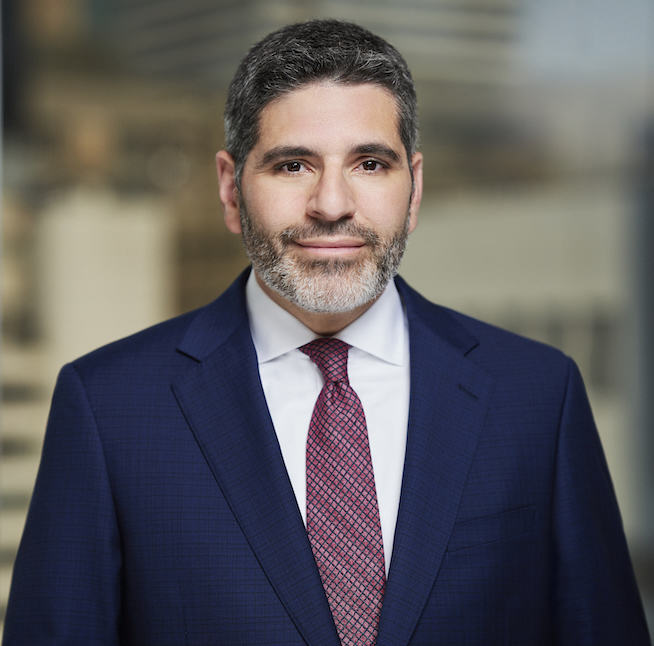
The center of the modern securities landscape is shifting, and few lawyers are describing that shift as bluntly – or litigating it as aggressively – as Jeremy A. Lieberman. As Managing Partner of Pomerantz, Lieberman has become one of the country’s most unflinching voices on how political influence, regulatory retreat and market exuberance are converging to threaten investors.
“There’s been an attack on investor rights,” says Lieberman, a member of the Lawdragon 500 Leading Lawyers in America. “The SEC is supposed to protect investors, yet it’s encouraging changes that would do the opposite.”
Lieberman’s warning is not abstract. It’s drawn from the cases his firm is driving forward – massive securities actions involving global companies, collapsing valuations, cross-border bond markets and emerging technologies that outpace oversight. He is challenging Google over undisclosed advantages in the ad-exchange market, pursuing Philips for years of alleged nondisclosure about dangerously degrading medical-devices, and fighting AT&T over abandoned lead-sheathed cables buried near American communities. In each instance, the stakes are enormous – not only for investors, but for the systems meant to protect them.
What concerns Lieberman most today is the accelerating erosion of those protections. The SEC, he argues, has taken “a very permissive turn,” scaling back crypto enforcement, signaling openness to arbitration bylaws that could block investor claims from ever reaching court and showing reluctance to pursue politically connected executives. According to Lieberman, these shifts represent “seismic” changes in how the agency understands its mandate.
Layered onto that regulatory softening is a marketplace gripped by AI hype and ballooning crypto exposure – an under-examined ecosystem that, to Lieberman, signals a singular moment: speculative claims rising alongside emerging technologies while institutions hesitate to intervene. It’s precisely the environment in which securities litigation becomes not just corrective but essential.
Lawdragon: Can you give us an update on the Google case?
Jeremy Lieberman: The court has allowed the case to go forward and denied the motion to dismiss. It also held that Google’s CEO Sundar Pichai made false statements to Congress about how Google was treating certain platforms in the digital advertising marketplace. The judge found that Google had given Facebook special privileges as part of a deal to push more content through Google’s exchange and that their public statements didn’t reflect that. The court held we had an actionable misrepresentation there, so the case is proceeding.
LD: That’s a major step forward. Another high-impact matter you’re handling is the Philips securities litigation. What can you tell us about that case?
JL: It’s a very significant case. For more than a decade, Philips’ CPAP, BPAP and ventilator devices – used by people with sleep apnea, asthma and other respiratory conditions – were emitting particles from the foam inside the machines. That foam muffles the motor noise, but over time it degraded, broke down into small particles and released toxins. Philips knew about this for close to a decade and did nothing. Eventually the complaints piled up and regulators in several countries forced action. That led to a massive recall – about 15 million devices – during Covid, which obviously exacerbated that major health crisis.
The SEC is supposed to protect investors, yet they’re promoting changes that would do the opposite.
We’re now deep in discovery. It’s an intense case and we believe it’s very strong. Even after the issues started coming to light, the company kept insisting the devices were safe, so there’s a lot to unpack.
There are concurrent consumer cases against Philips, DOJ penalties in the hundreds of millions, and securities actions abroad – particularly in the Netherlands, where Philips sold a large volume of securities. We’re leading the U.S. securities case. Because of the confidentiality orders governing the documents we receive, we’re not able to coordinate information with the other litigations unless defendants agree to a coordinated structure. If they eventually allow that, we’ll participate, but right now coordination isn’t permitted under the confidentiality restrictions.
LD: Beyond Google and Philips, what other significant matters are you currently litigating?
JL: We’re litigating significant cases against AT&T and Lumen. As the telecom industry moved from traditional copper-wire networks to fiber optics in the ’90s and early 2000s, companies were supposed to remove their old lead-sheathed cables. Instead, AT&T left roughly a million miles of those cables buried – in waterways, near schools, in residential communities. That’s a massive environmental and health liability, and they didn’t disclose it. They’d faced litigation over the issue before, so they clearly knew about the problem, but the cleanup never happened. Our case against AT&T is pending in the Southern District of Texas and it’s a very large, very serious matter.
LD: You’ve also had major developments in the Nikola case recently. Can you walk us through where things stand?
JL: This is a case against the electric vehicle company for inflating its share price prior to going public, before investors could discover that the company was an intricate fraud and empty shell. We’ve now had a class certified, which is a major step. Trevor Milton, the architect of the fraud, was convicted and jailed, but has since been pardoned by Trump. That only wipes out criminal exposure, though – it has no effect on civil liability. So the case against him continues.
Discovery is nearly complete and several motions are being briefed. The complication is the company’s bankruptcy. We had actually reached a settlement right before Nikola filed for bankruptcy and now there’s a fight over whether that settlement survives. The company is arguing that once it entered bankruptcy the settlement isn’t binding. We obviously disagree. So there’s an active legal battle over the enforceability of the settlement while we continue to pursue claims against Milton and the company.
LD: Interesting that Trump pardoned him.
JL: The worse the crime, the more likely to pardon in this day and age.
LD: On that topic, how do you think the new administration is impacting the way the SEC approaches enforcement? What have you been seeing?
JL: They’ve definitely changed course. Our work has never been that tethered to SEC enforcement – even under a favorable administration, the SEC tends to move slowly, it’s very political and it doesn’t always prioritize shareholders. But that’s even more true now.
There have been a few big developments. First, the SEC is essentially encouraging SPACs to come back into the market, which is a terrible development for investors. Crypto enforcement has been scaled back as well. A lot of actions against crypto companies – Coinbase and others – have been dismissed. So you’re seeing a real rollback in enforcement. And if someone is politically connected, like Trevor Milton and others, the SEC isn’t eager to pursue them. That’s unfortunate, to put it mildly.
We’ve developed substantial expertise in non-U.S. listed securities and how to bring those cases into U.S. courts.
Another shift is with arbitration bylaws. Historically, if a company put a mandatory arbitration provision in its bylaws – basically telling investors they had to arbitrate claims rather than collectively bring them to court – the SEC would refuse to accelerate the IPO. Without acceleration, you don’t go public. That policy had been in place for years.
Now the SEC, through Chairman Atkins, has said they’re abandoning that policy. Companies with mandatory arbitration bylaws will be allowed to go forward. That has the potential to eviscerate investor rights. Thankfully, most corporations haven’t adopted those provisions yet – they’re worried a future administration could reverse course and then they’d be stuck if they want to conduct a secondary offering. And Delaware corporate law still doesn’t allow for those bylaws, which is another reason companies haven’t rushed to adopt them. But the SEC chairman got up at a Delaware forum and openly encouraged both corporations and legislators to consider changing the law to allow these anti-investor provisions. That’s seismic.
It fits a larger pattern. The head of the CDC is anti-health, the head of the EPA is anti-environment and now the head of the SEC is pushing policies that actively undermine investors. The SEC is supposed to protect investors, yet they’re promoting changes that would do the opposite.
About 60 institutional investors – representing roughly a trillion dollars in assets – have already signed a letter opposing the policy. It hasn’t taken hold yet, so securities litigation is still alive. And even if companies try it, there will be major legal challenges. But the fact that the SEC chairman is encouraging it at all is extremely discouraging.
I remember the first few months into the administration thinking, “We’ve gotten lucky, nothing’s hit us yet.” Lo and behold, we now have a full-scale attack on investor rights.
LD: At least investors have got you in their corner. Let’s touch in on the Credit Suisse bond case. What’s happening there?
JL: It’s a very interesting case. During the mini–banking crisis in early 2023 – when Signature Bank, First Republic and Credit Suisse all essentially collapsed – Credit Suisse was making public statements denying that it was experiencing large withdrawals. They claimed deposits were increasing and there was no deterioration. There were securities cases brought on behalf of common stockholders here in the U.S., but globally there were also investors holding these AT-1 bonds.
These bonds are unusual. Under Swiss law, the government had emergency authority to wipe them out – literally make them valueless. When Saudi Arabia announced it wouldn’t provide further capital, Credit Suisse started to unravel. The Swiss government arranged a merger with UBS and UBS didn’t want the liability of those bonds, so the government exercised that authority and eviscerated them. A Swiss lower court has since held that the government didn’t have the legal right to do that, which makes the whole thing even more controversial.
We represent investors who purchased these bonds in U.S. transactions. That’s very hard to establish after Morrison, which says you can only bring a U.S. securities claim if the security is listed on a U.S. exchange – or if the transaction itself is domestic. These bonds weren’t listed here, so we had to plead the domesticity of the transactions based on where the purchaser and seller were located, where the broker-dealers were, where the money changed hands and so on. We were able to do that successfully, which was significant.
We also just had a class certified for those investors. That’s extremely difficult in non-U.S. traded securities cases, especially bonds, because courts often question whether the bond market is efficient. So it’s a high-profile, very contentious case. The evisceration of the bonds – whether it was truly an emergency measure or just done to make the UBS merger more palatable – raises major issues. This is one of the very few post-Morrison classes certified for a non-U.S. traded security tied to a U.S. transaction. It’s an important development for investors. We’re lead counsel for the AT-1 bondholders.
LD: Sounds like the firm is really busy these days!
JL: We’re definitely busy. In 2024, we were appointed lead counsel in about 48 cases – that’s the most in the bar. In 2025 it was 46, which again is the largest number in the space. Being involved in that many cases gives us tremendous depth of experience. Some firms have impressive results in individual matters, but dealing with such volume gives us valuable experience in navigating complex issues across markets, industries and jurisdictions.
[AI is] creating a lot of froth. And whenever you have froth, you end up with litigation.
It’s especially valuable in cases like the Credit Suisse bonds. We’ve developed substantial expertise in non-U.S. listed securities and how to bring those cases into U.S. courts, how to get classes certified – like we did in Petrobras with the Petrobras bonds. Securities class actions are really our baby. There are very few firms that focus almost exclusively on these cases. A lot of firms split their attention across consumer or other types of litigation. Our breadth and focus in this area are, I think, unparalleled.
LD: Are you seeing a lot of AI-related issues in your cases?
JL: Absolutely. A lot of companies are making specious AI claims – saying they have some AI technology that’s going to transform their business or make their products more efficient. We brought a case against a logistics company that kept telling the market, “AI is doing all our work, AI is making us more efficient, our revenue should be higher because of it.” We spoke to confidential witnesses and there was no AI at all. They were using the same old computer programs they’d always used. You’re seeing that kind of deception a lot. So yes, there are already cases based on that and I’m sure there will be many more. It’s clearly having an impact on the market. It’s creating a lot of froth. And whenever you have froth, you end up with litigation.
Another thing to watch is what’s happening in crypto, because that ties directly into fears about a tech or AI bubble. Bitcoin has gone down recently and there’s about $4.9T invested across crypto. I think the value of this currency is highly speculative – what’s actually behind them? And the SEC has allowed a lot of companies to make crypto a core part of their business model. For some companies, their whole business is buying or exchanging crypto. Coinbase, MicroStrategy – there are many others.
So the question is: what happens if there’s a run on crypto? It’s not far-fetched. There’s very little backing these assets. If Bitcoin were hacked – and it’s not impossible; we don’t even know who runs it – what does that mean for the entire market? And what does it mean for the banks that are trading in stablecoins and crypto now? JPMorgan is in it. Citigroup is getting involved because money is flowing there and they don’t want to lose the profit stream.
Everyone is getting involved in some way. So if crypto suddenly loses significant value, the ripple effects could be enormous. AI might be a bubble, but at least there’s actual technology behind it. Crypto – I don’t believe there’s anything there.
LD: I always tell people who ask if I’m investing in crypto, “I know too many lawyers to do that.”
JL: Exactly. That’s where I see enormous risk – and a wave of future litigation. Regulators, in this administration and the last, don’t want to look like they’re stifling innovation, so they’ve allowed massive amounts of money to pour into something very few people actually understand. And it’s everywhere now: banks, public companies, retail investors. So imagine a run on crypto. We’ve never had an asset class this large with so little behind it. Even subprime had an underlying asset.
With crypto, there’s nothing behind it. A collapse is easy to envision and the spillover into the broader financial system would be serious. As a litigator, sure, it means cases – but as an investor with money in banks, I don’t want to see the whole system threatened.
LD: And there’s no jurisdiction. If something goes wrong, you don’t even know who owns it.
JL: Right. If there’s a run on the dollar or U.S. bonds – also possible, given our debt – the government still has land, taxes, a military. There’s something backing it. Crypto has none of that. That’s why it’s such a profound market risk. And the political side worries me too. Crypto companies poured hundreds of millions into the last election and now they’re getting deregulation in return. None of this, in my view, is good for investors.

