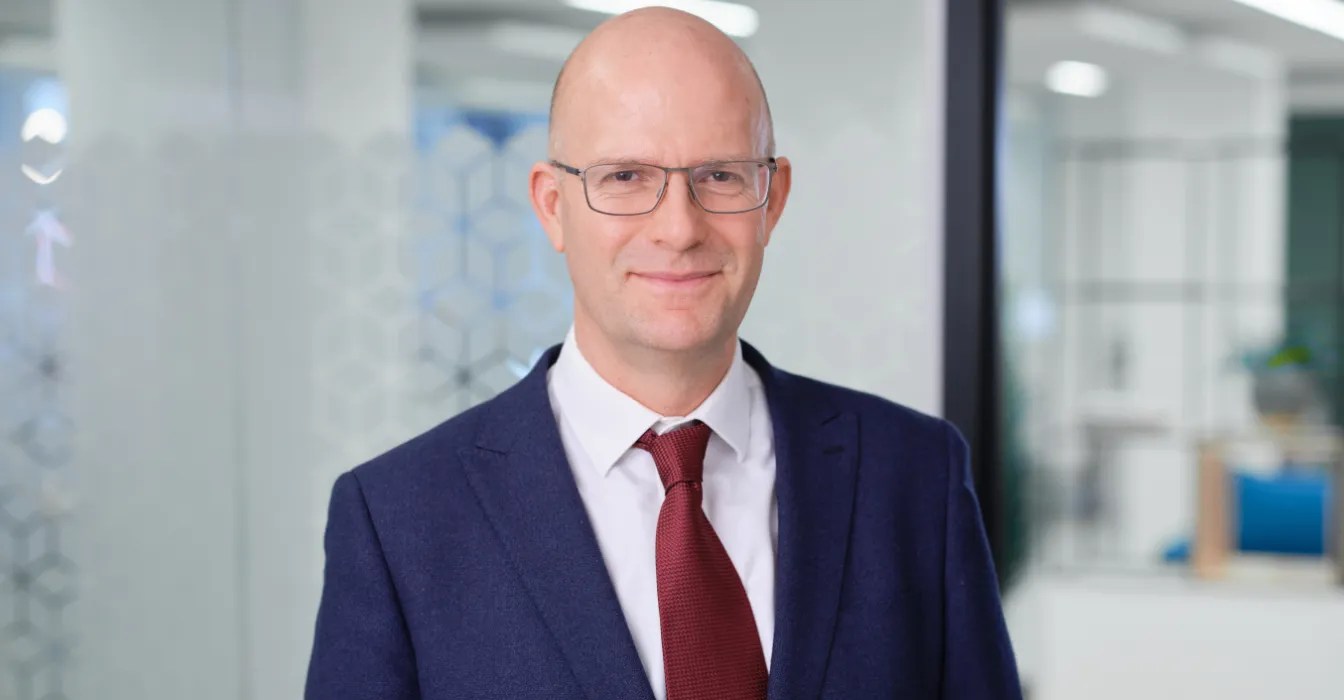
Crisis and litigation communications has become one of the most specialized corners of advisory in the UK and few understand its demands better than Lawrence Dore. His work sits at the intersection of legal process, reputation management and stakeholder strategy, where depth of knowledge drives every decision and every result.
At DRD, the strategic communications boutique he co-founded, Dore has built a firm defined by focus and a team trained to support clients under scrutiny, navigate complex disputes and work seamlessly alongside legal teams when the stakes are highest.
“We have built a firm that understands legal processes and how communications can support clients under scrutiny,” says Dore. “Whether in the courtroom or the court of public opinion.”
Dore’s ability to operate at this level is the product of a career spent inside environments where scrutiny is constant and missteps are costly. Before founding DRD in 2012, he advised global companies at top financial PR firms and later led financial and corporate communications at Marks & Spencer. Those years gave him an intimate view of how organizations behave under pressure, how legal and commercial priorities collide and how essential disciplined communication becomes when reputation, value and risk converge.
“Facing truly complex challenges and getting to the core of the issue keeps me excited,” Dore says. “Too much time is often wasted on work that simply doesn’t matter.”
The field has changed dramatically since DRD opened its doors. Disputes that once unfolded quietly now play out across jurisdictions and platforms, amplified by unregulated outlets that can seed damaging narratives at speed. Through it all, DRD remains anchored to the philosophy that shaped its founding: specialization matters, clarity outperforms volume, and clients in crisis need advisers who bring discipline to ambiguity.
“Ultimately clients look for a trusted adviser,” says Dore. “Someone who has seen it before, can cut through complexity and reassure them they are in safe hands.”
That mandate is only sharpening as reputational threats accelerate and legal, political and public pressures continue to converge. It’s a perspective honed over decades and one that continues to define DRD as a firm built for complexity.
Lawdragon: Can you describe for our readers the mix of work you do within your practice?
Lawrence Dore: We’re based in London we service around 100 clients in the year through our London office, with a rough split of 50/50 between UK and international clients. Our work falls broadly into four categories: crisis support before, during and post crisis; litigation support, assisting our clients through legal disputes; policy advocacy and competition and regulation, which includes navigating regulatory challenges and competition claims.
LD: Tell us about founding DRD. What was the vision for it, and what need did you see in the market?
Dore: All of our partners have worked at other leading consultancies or in house where broader services are offered. At DRD we recognize that working alongside legal teams is a specialist skillset. We have built a firm that understands legal processes and how communications can support clients under scrutiny, whether in the courtroom or the court of public opinion. From a personal perspective, my time in-house – where we had a communications function of 70 to 80 excellent people – showed that every now and then an issue would arise where we needed specialist help. These were always crisis or litigation issues. I couldn’t find an agency that did this, hence DRD.
Clients want bespoke advice from top practitioners, not necessarily a brand name service provider with dots on maps.
LD: What are some aspects about this work that you find professionally satisfying? What keeps you excited about it?
Dore: Each day I get to work with amazing colleagues – bright, funny, driven and committed. Without an environment like that we, as a firm, couldn't achieve what we do. Seeing our team grow, and our client delivery getting better each year is enormously satisfying.
From a work perspective two things stand out and keep me excited and motivated – facing truly complex challenges and getting to the core of the issue, meaning what really needs to be done to achieve a result. Too much time is often wasted on work that simply doesn't matter. And winning. Winning feels great. Whether it's beating competitors to a new instruction, seeing our client convincing stakeholders of their position or receiving a positive judgement – this makes all the hard work worthwhile.
LD: Out of all the work you’ve done in your career, what would you say is the most interesting matter you’ve handled?
Dore: One of the joys of our firm is just how diverse and interesting our clients are. I love sports and we've represented multiple clubs, sporting bodies and institutions, so I wouldn't even call that work! I think thematically the intersection of law, public opinion and politics is resulting in the most interesting work we do. It calls on us to bring expertise and insight of multiple stakeholders and calibrate their importance when defining a strategy. Large infrastructure projects are a good example of this.
LD: Tell me one of the things that truly sets DRD apart from competing firms?
Dore: We are top ranked in the UK by Chambers in both litigation and crisis. Only one other firm is, and they are global. We have more ranked individuals than any other firm. I think this endorses our view that for many clients they want bespoke advice from top practitioners, not necessarily a brand name service provider with dots on maps.
LD: Are there any trends you are seeing in your practice in terms of the types of matters keeping you busy these days?
Dore: I think the threat to our clients' reputation has become more acute and this trend is set to continue. Disputes, always acrimonious, are now impacting all elements of our clients’ business as opponents seek to leverage advantage in any forum available to them. A litigation in one jurisdiction will be publicized everywhere, making the management of stakeholders constant and challenging given that a legal process can take years to resolve whilst damaging allegations can have immediate impacts.
We see constant innovation in reputational attacks. New unregulated outlets like Substack allow damaging material to be seeded which can spread rapidly. Garnering political support can open up new fronts to manage and requires an understanding of policy makers as well as litigation skills. Speed continues to be a challenge. The need to respond rapidly catches out clients who either have not prepared or do not have the internal infrastructure to manage intense, sudden scrutiny.
In terms of trends we are most busy on competition claims, investigations, safeguarding and whistleblowing, governance and policy driven changes – for example in renewables, infrastructure and building. The pushback on climate related initiatives is also challenging for global organizations needing to balance different political environments. Challenges continue across all sectors from sport, infrastructure and media to HNWI, charities and crypto.
LD: How has your work changed since the early part of your career?
Dore: DRD was set up in 2011 when litigation communications was in its infancy. Most of the lawyers we spoke to saw the idea of a PR firm being involved in a dispute as a risk and a distraction, as in their minds what took place in the courtroom between lawyers was all that mattered. This has fundamentally changed and there is now near universal acceptance that, whether desirable or not, clients need to defend their reputation or make their case outside the courtroom to bring their stakeholders with them.
The need to respond rapidly catches out clients who either have not prepared or do not have the internal infrastructure to manage intense, sudden scrutiny.
Our team has also developed a far broader set of skills to assist in handling issues. Understanding the legal process and the constraints this imposes is always a given, but today we bring in policy experts, former journalists, advanced monitoring tools, expertise in social and emergent media, understanding of LLMs and deep sector insights to enhance our advice.
What hasn't changed though is that ultimately clients look for a trusted adviser, someone who has seen it before, can cut through complexity and, perhaps most importantly, provide reassurance to clients that they are in safe hands.
LD: Tell us a bit about your career path. What do you like about your practice at DRD in terms of culture or other characteristics?
Dore: My career path has allowed me to acquire knowledge and learn constantly. I think that as your career progresses it is the ability to internally process the experiences you have had and deploy them together for the benefit of your client that makes a real difference. My time in the city taught me about finance and markets and gave early exposure to meeting and engaging with CEOs and Finance Directors.
Time spent at two top financial PR firms, Citigate and Brunswick, gave me access to global clients and allowed me to see best in class operators advising some of the world's largest organizations. My spell in house at M&S was invaluable – understanding how corporates operate, the structures in place and the role a communications function played in supporting a corporate objective. Running my own firm, which was sold successfully after seven years, taught me a lot about getting the culture right and how empowering your colleagues and hiring the best possible people was critical to success. These experiences together, I hope, have been brought to DRD.
LD: What makes DRD as successful as it is?
Dore: It comes down to three points. The first is focus. We do what we do and we don't get distracted. We want to be the top advisory firm for clients in crisis or in a dispute. Turning down work that doesn't fit this model is as important as who you work with.
The next point is about understanding our reputation. Each time we are referred work by a legal contact they have placed their trust in us. They didn't need to recommend us, and if we get it wrong it reflects back on them. We think about this every day. Our referrers are our lifeblood and we do everything we can every day to vindicate their decision to recommend us.
The third point is the people. I set up DRD with the amazing Claire Davidson. She's a constant inspiration and a daily support. You need that when times are tough and two heads are always better than one. And then all the team. I'm proud of everyone who works for us, and everyone who has joined us and gone on to do great things. You spend a lot of time, a lot of evenings and weekends working together – and if you don't love your team, it must be pretty soul destroying.
LD: Can you share some strategic plans for your practice or the firm in the coming months or years?
Dore: Probably like most firms we do annual strategy reviews and a bit of navel gazing. Thankfully we then snap out of it and realize that our strategy, to be the advisor of choice for clients facing challenge and change, does not need refreshing. Rather it needs doubling down on. We spend time constantly asking ourselves how can we be better, are we doing more than just meeting client demands? We need to anticipate, be ahead of them and have the skills they don't yet know they need. This drives our focus to be on skills and talent. I think the obsessive desire to be better, to constantly challenge how you do things and learn from what hasn’t worked, is a key determinant of success.
One area that becomes more important each year is our ability to advise and implement internationally. This is reflected in our marketing and networking. We're abroad a lot more and we’re focused on forging ever closer relationships with firms like ours in their key markets. This is a focus for the coming year.
LD: Was there an early experience or mentor who really helped shape the course of your professional life?
Dore: There are many impressive individuals who have inspired me and taken the time to encourage me, too many to mention. Perhaps the most formative experience was working with a business coach who helped me understand the relationship between finding personal fulfillment and my career. Understanding what drives your personal happiness is critical when deciding which career to follow and where to focus.
LD: Did any experience from your undergraduate work push you towards a career in the law?
Dore: Whilst many of my colleagues trained as lawyers and went on to practice before moving into communications, my career path was different. I graduated with a great knowledge of Anglo Saxon and Byzantine history from Oxford University and, incredibly, found a fund manager who believed these were transferable skills that would equip me for valuing shares and investing in bonds. Three years later I left the City and whilst I did not recognize it at the time the depth of knowledge I acquired around finance, investment and the role of markets has been invaluable.

