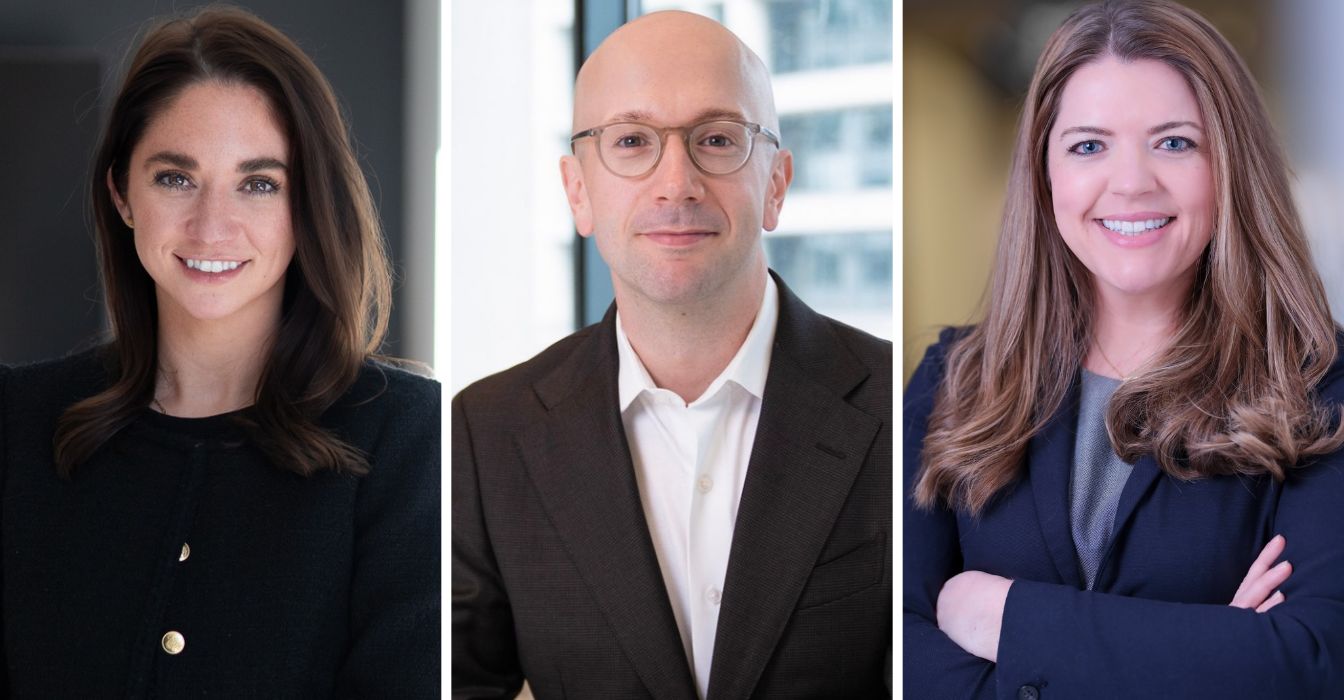
Reputations are fragile things, the legendary investor Warren Buffett says. Building one can take a lifetime. Ruining it requires five minutes or less.
Which is why organizations – from companies to nonprofits, universities, and individual leaders – turn to TLG Communications for help navigating potentially existential crises that come with scrutiny from criminal investigations, regulatory probes and Congressional hearings.
The combination of pointed questions from investigators or lawmakers, negative headlines and hostile commentary can be debilitating, and the spotlight it casts is rarely flattering. For businesses, it can quickly impact stock price, longer-term business risk and reputation among consumers and investors, threatening the future of the enterprise. How an organization responds to these moments often determines how it is remembered.
Thorough planning and nimble, strategic responses are crucial to weathering the maelstrom, according to members of TLG’s oversight and investigations practice.
“A trial is won or lost. An investigation either finds something or doesn’t. But along the way, your reputation and identity in the public eye can suffer immensely, stay intact, or even be strengthened,” explains Ian Sams, a senior managing director based in Washington, D.C., who previously served as senior advisor and top spokesman for the White House Counsel’s Office, handling oversight and investigations. “Legal problems can also carry major optics problems. We work closely with our partners to make sure that the way people are perceived throughout the process of an investigation, for example, supports their objectives, reputation and standing.”
Engaging Investors, Employees and Other Stakeholders
Companies under scrutiny are often most concerned about the news media, which is a reputationally impactful audience but seldom the most consequential one, says TLG’s Katherine Bosley, who advises corporations facing sensitive situations from government enforcement actions to civil litigation and congressional investigations.
“From day one, we focus on widening the lens to assess the complete stakeholder landscape and advise clients on how to strategically engage audiences,” Bosley says. “Investors, policymakers, regulators and employees are all part of it.”
TLG acts as a strategic thought partner, adds Angela Hoague, a senior leader who manages the firm’s Washington, D.C. office and joined in 2018, just five years after it was founded by Molly Levinson. “Communications is sometimes viewed as a separate function, but in reality, it impacts every aspect of the business and should be integrated into broader strategic decision-making,” she says.
Lawdragon: Each of you brings a unique perspective to your work at TLG. Tell us how the earlier stages of your career prepared you for what you’re doing now.
Angela Hoague: Before joining TLG, I spent more than a decade at the Food and Drug Administration serving in several capacities, including in the Office of Regulatory Affairs, which oversees critical enforcement and recall activities, and the Commissioner’s Office, where I worked closely with Congressional offices, the Department of Health and Human Services, the White House, and other key industry stakeholders. That experience gave me a deep understanding of how complex institutions operate and navigate competing priorities, regulatory scrutiny and high-stakes issues. At the time, the FDA had approximately 17,000 employees and oversaw products accounting for 25 percent of U.S. consumer spending. My government experience allows me to bring a regulator’s perspective to those challenges – anticipating scrutiny, identifying potential vulnerabilities and helping clients navigate sensitive matters strategically.
Katherine Bosley: I began my career supporting the Department of Justice, first as a paralegal in the Criminal Division’s Fraud Section, working in the FCPA Unit, and later as an analyst at the Executive Office for Immigration Review, where I supported congressional responses and public information sharing. The Fraud Section gave me a front-row view into how regulators and enforcement agencies approach complex investigations and that insight has proved particularly valuable in multinational matters or those that span jurisdictions. At EOIR, I learned how a federal agency balances transparency with accuracy when responding to oversight and informing the public. I’ve carried both perspectives into my work at TLG since joining in 2018.
Ian Sams: I come out of the public sector – about 15 years straight of working in government and on campaigns. That experience allowed me to work in situations with large-scale impact and high stakes. For instance, I was the Covid communications coordinator at the Department of Health and Human Services during the response to the pandemic, handling all crisis communications for the agency and all of our subcomponents – the Centers for Disease Control and Prevention, the Food and Drug Administration, the National Institutes of Health – in the middle of a horrible worldwide crisis.
Afterward, I transitioned into the White House where I was a senior advisor and spokesman in the White House Counsel's Office, overseeing the communications strategy for all oversight and investigations of the President and cabinet-level agencies across the administration. Having seen investigations and oversight from that side enables me to provide a higher level of expertise to clients who are navigating those types of matters themselves.
Picking Up the Phone
LD: Partnership seems to be a recurring theme when you’re describing your work. Tell me what that looks like with clients who are seeking help handling government oversight and investigations.
AH: Partnership starts with close coordination among the client, outside legal counsel, and other key stakeholders, grounded in honesty, transparency and mutual trust. Government oversight and investigations often involve many consequential decision points along the way, so it’s important that clients feel confident that you understand the issues, have the relevant experience, and you're asking smart questions and providing strategic insight. Ultimately, it’s what enables the continued information flow required to navigate these matters effectively.
The hardest moment in a crisis is when a reporter presents information that an organization is not prepared to address.
KB: The matters with the best outcomes, especially in oversight and investigations, are the ones where we’re brought in early. Things can move very quickly: A company may receive a notification letter just as it’s posted on someone’s X account, while a press release goes out and a reporter publishes an exclusive. Having an established relationship where teams can move immediately, rather than having to provide context after 12 hours of crisis, can make all the difference but only where credibility exists. Ideally, you know your own record before anyone else makes it public. The hardest moment in a crisis is when a reporter presents information that an organization is not prepared to address. Beyond scenario planning, it's about who belongs in your “war room.” Narrowing the decision-makers can be enormously difficult in a crisis, but knowing who communicates what, to whom and when is core to responding effectively. And it’s not just about one spokesperson and one statement. It's also asking, "How are we looking around the corner? We have earnings next week, so how will we talk to investors about this? How will we talk to employees who are being inundated on their own LinkedIn?”
Pressure-Testing Crisis Plans
LD: That makes so much sense. On that note, when is the best time for a client to retain you? I assume as early as possible.
AH: Absolutely. Doing preparedness exercises before there's even a hint of an incoming investigation is optimal. Investigations can be really unpredictable, and you don't always know how circumstances or investigative priorities are going to shift. That’s why it’s critical to have already gone through the exercise of gathering facts, pressure-testing potential vulnerabilities and developing scenario plans. Even if you never end up having to put those plans into practice, there are a lot of valuable lessons that can be learned through preparing effectively, and organizations are much better positioned to respond when the stakes are high.
IS: We're realists, though, and we recognize that a lot of times, you don't have the luxury of being able to prepare. So if some anvil has fallen on your head, you at least want people who have been through the crisis before, who will help you craft your immediate response and also build that longer-term runway out of it – ensuring you're making decisions in the moment of a major crisis that will hold up two years and five years from now. Our collective experience at TLG navigating many of these reputation-defining moments both inside and outside of government is unique.
LD: It seems like that would be even more important in today’s environment, where the regulatory environment and the marketplace are both so volatile.
KB: In the past two years, institutions like universities and foundations, and even individual executives, have become routine subjects of scrutiny in a way many weren’t before. They often lack the infrastructure to respond, so they engage TLG to not only battle the news of the day but identify and analyze the deeper, longer-term implications. Organizations that haven’t traditionally had to prepare for heightened scrutiny increasingly recognize that regardless of industry, today’s landscape is unrelenting and they need to be ready.
Private Sector Vulnerability
IS: People think a lot about what they want to say, and sometimes, what’s left behind is how it's going to be done, how the message will be conveyed to the right people. Operational considerations are as important a part of planning as the substantive components. That’s a crucial part of preparing for potential investigations or crises: setting up the infrastructure to handle events as they unfold.
AH: And that’s true at every level, from anticipating the strategic scenarios that may arise to accounting for the tiniest operations detail. For example, “We have a press release, but it's 10 p.m. and the person who normally posts press releases leaves at 6 p.m. Who do we contact?" You don't want to be asking that question in the moment, especially when time is of the essence. You need to know all of those things in advance and have a plan because even the best strategy is only as effective as your ability to execute it.
LD: What have been the biggest shifts in the oversight and investigation landscape in the past couple of years?
IS: We're living in a much more polarized and partisan environment, and that will mean big pendulum shifts and less stability and continuity. An administration might be controlled by one political party and Congress by another. State legislatures and state Attorney General’s Offices could be controlled by different parties, with all of them having totally different priorities for what they want to investigate and the tactics that they want to use to do so.
That’s a crucial part of preparing for potential investigations or crises: setting up the infrastructure to handle events as they unfold.
Also, regardless of party, the private sector is more often a subject and target than in decades past. As government actors and political actors have become more willing to withhold things that are being demanded in the course of an investigation, investigators – whether Republican, Democratic or nonpartisan – have seen an opportunity to use the private sector to obtain more information. As the scrutiny of the private sector intensifies, it creates a greater need for serious risk planning, even among industries who in years past may not have even worried that they would be subject to this kind of scrutiny.
‘There’s No There, There’
LD: What other trends are you seeing in oversight and investigations?
KB: Affordability is the red thread that runs across sectors and is a defining frame of the cycle. With households squeezed, lawmakers are under pressure to fight for their constituents, and we have seen most recently the direct and exponential impact that then has on companies across tech, AI, energy and finance sectors. At the state level, attorneys general – especially those seeking higher office and looking to establish a more dominant share of voice – are capitalizing on these opportunities, even more so when there’s less happening on the federal level.
IS: In recent years, there has been a pretty significant uptick in political actors' willingness to use law enforcement as a messaging vehicle. Whether that's state AGs or federal enforcement agencies or Congress, and regardless of which party controls those offices, there has been a greater comfort with using those powers to drive proactive political messaging for whoever's in power. That’s an important thing to think about as you are considering your oversight risk and vulnerabilities. You may think that an investigation is going to go nowhere because “there’s no ‘there’ there.” Often, that isn’t the point. The point could be to score messaging points to drive a communications agenda.
KB: Part of TLG's role is ensuring consistency across audiences. Imagine that everything you've said to a committee, a regulator or a reporter will one day be presented side by side. TLG brings together the teams responding to each audience to make that consistency possible.
LD: Touching on that landscape, how is social media changing your work? Talking about preparedness, is it possible to prepare for a social media firestorm or content that goes viral unexpectedly and changes the conversation?
AH: Not all fires are five-alarm fires, and that’s particularly true on social media. It depends on who is posting and what they're saying and the potential reach and impact. When you are a company leader who is deeply invested in the organization, it’s understandably difficult to see negative commentary, but just because something is out there doesn’t necessarily mean it warrants a public response. That said, there are increasingly influential voices on Substack, TikTok and other platforms that stakeholders and consumers look to for news and information. We need to be closely monitoring those conversations and be prepared to engage when appropriate, while recognizing that the landscape is a lot more unpredictable. Someone posting on TikTok isn't going to reach out for comment in advance of a post that could quickly gain traction.
