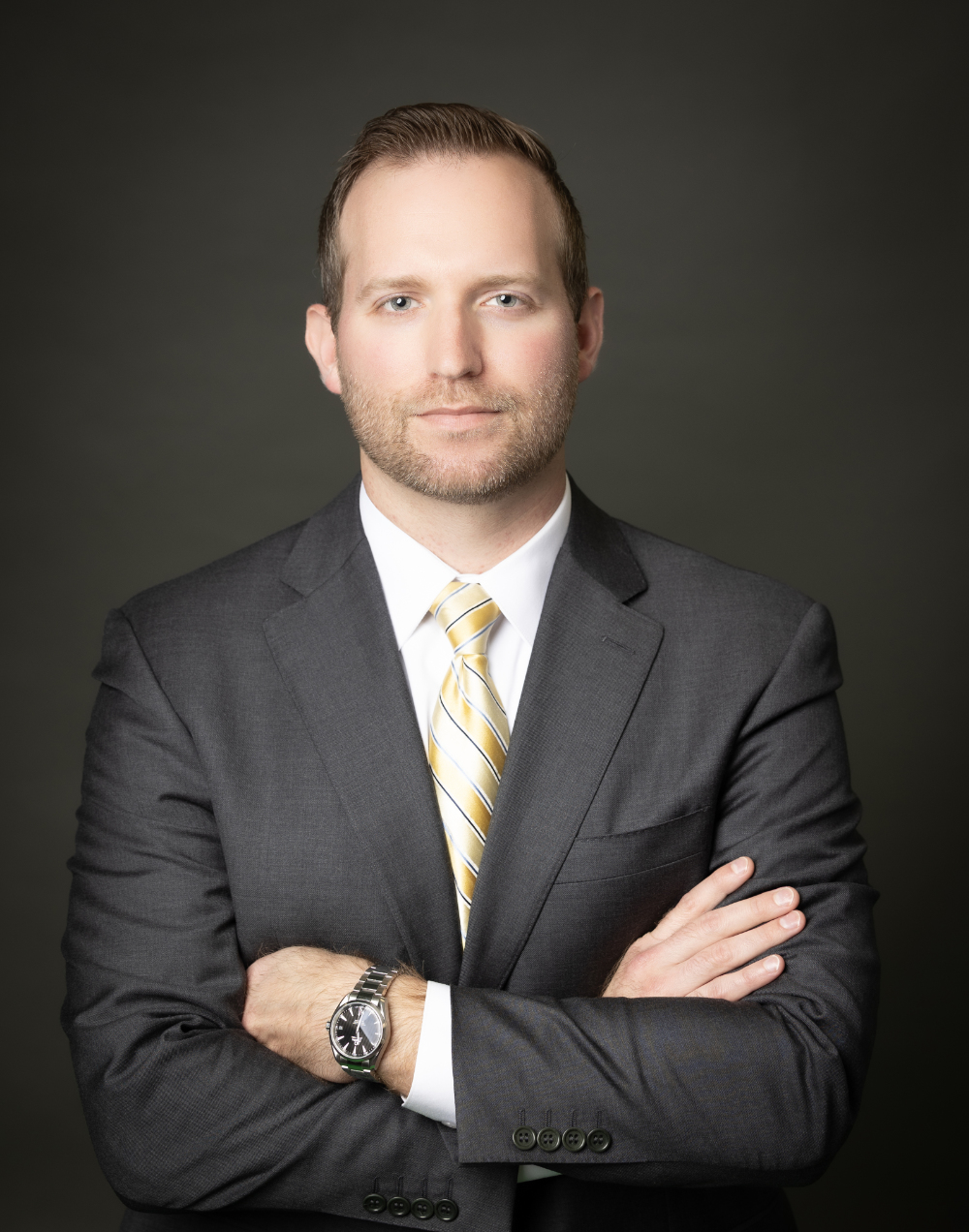
In medical malpractice, clarity is rarely a given. Facts blur, memories collide and nearly every detail is contested. This is where Jordan Dulcie does his best work. He has built a reputation for cutting through complexity, translating dense medical evidence into human truth.
Dulcie grew up around hospitals, charts and clinical language. His mother was an operating room nurse who transitioned to being a legal nurse consultant, and he began his own career on the other side of the aisle defending hospitals and medical providers. He learned how insurers evaluate risk, how defense teams frame medical decisions and what ultimately moves juries.
That perspective now shapes his work in a very different capacity: representing patients and families harmed by preventable medical errors. Today, Dulcie focuses on medical malpractice, catastrophic injury and wrongful death cases in his practice at Searcy Denney. He has secured more than $75M in settlements and verdicts, including a $5.1M medical malpractice verdict in 2024 and a recent $7.1M jury verdict for a Navy veteran catastrophically injured in an auto collision. His fluency in both defense and plaintiff strategy gives him a rare vantage point – one that allows him to meet complex medicine with clarity and advocate for accountability where it matters most.
“When preventable harm changes someone’s life forever, the civil justice system is how we make sure it doesn’t happen again,” Dulcie says. “What matters is accountability.”
Many of Dulcie’s cases involve life-changing injuries: loss of speech, blindness, limb loss, brain injury, wrongful death. His approach blends medical fluency with a patient-first trial strategy grounded in empathy and responsibility.
“There’s a misconception that plaintiff-side malpractice lawyers are against doctors,” he says. “The truth is most of us care deeply about medicine. We want great providers. But when avoidable harm occurs, there has to be responsibility. That’s how healthcare gets safer.”
We sat down with Dulcie to talk about accountability, what juries really need to hear and the human stories behind the headlines.
Lawdragon: What can you tell us about that $5.1M medical malpractice case that you won last year?
Jordan Dulcie: It was a tragic case. Our client, John Smith [changed for privacy reasons], had classic risk factors for esophageal cancer. He saw two ENTs over the course of a year for a persistent sore throat and difficulty swallowing. Both doctors saw the same mass in his throat, and both failed to do the most basic thing: order a biopsy. One simply “eyeballed” it and dismissed that it could be cancer. The second assumed the first doctor had biopsied it. Neither confirmed anything. So months went by while the cancer spread.
When John finally reached the University of Miami, the doctor there suspected cancer immediately. The biopsy confirmed it but it was now stage IV. By then, the only option was a radical neck surgery removing his voice box and much of his throat. He could no longer speak and could only breathe through a tracheostomy. His life changed overnight. Significant pain, scarring, chemo, radiation – and no return to anything resembling normal life. And because the cancer had spread, that surgery was simply the lesser of two evils.
When you try these cases, the hardest and most important thing is putting yourself in the family’s shoes. The only way you can explain it honestly is to understand it yourself.
The tragedy didn’t end there. During the litigation, John died at home. His wife found him unresponsive. The autopsy showed mucus plugs had blocked the trach – his only airway – causing him to go into respiratory arrest. The defense tried to claim it was a random heart attack. They fought liability, causation and even the cause of death.
We tried the case for two weeks. The defense’s main theme baffled me – they claimed it wasn’t cancer and that they did nothing wrong. Then, in the same breath, they argued that if it was cancer, the first doctor should have done the biopsy, so they blamed him. The jury was hearing both “it wasn’t cancer” and “it was cancer but someone else’s fault.” None of it made sense.
The jury understood the failure: Both doctors had clear opportunities to diagnose when the cancer was localized and treatable. Their inaction cost him his voice, his quality of life and ultimately his life. It was a heartbreaking case, especially because John wasn’t there to see the verdict. His wife felt that deeply. We all did. But the jury did the right thing.
LD: The emotional aspect of these cases must be so challenging. Did the wife end up taking the stand?
JD: She did. And when you try these cases, the hardest and most important thing is putting yourself in the family’s shoes. The only way you can explain it honestly is to understand it yourself.
His wife was incredible in how she described the day-to-day reality of their lives after the surgery. If he needed something and she was in another room, he couldn’t call out. He couldn’t speak. He wrote notes, and if he couldn’t write at that moment, there was simply no communication. Eating, breathing, showering – everything required care. She went from being his partner to being his full-time caregiver in what should have been their retirement years. That is a very heavy shift.
On the stand, she was very strong. And she had one of those moments you can’t script. Unprompted, she asked if she could say something, and then years of frustration and grief came out – the denials, the delays, the toll. It was raw and honest.
You never know how a jury will take something like that. It was one of those moments every trial lawyer both fears and understands. Will the jury see sincerity? Or just anger? But by that point, they had already seen the extent of his injuries and how drastically his life had changed. I usually put the spouse or the injured party toward the end – after the standard-of-care testimony – so the jury is hearing that reality after they’ve already understood what should have been done medically. That’s critical, because in medical malpractice cases the real battle is almost always standard of care. Damages are rarely the fight unless there’s no offer at all. Getting the jury to the point of saying, “Yes, this was negligent” is the hardest hurdle. Once they get there, the human impact needs to land genuinely and truthfully.
I think the trial turned on her sincerity. She never asked the jury to imagine themselves in her position. She didn’t have to. In the way she told her story, they did. Her sincerity is what stayed with them.
LD: Can you tell us about another case that stands out in your career? Something that made an impact for you personally?
JD: My first big verdict in Gainesville was in 2023. Even when you’re board certified and have tried a lot of cases, you still want that validating win. Trying cases is hard, and you usually aren’t trying the “perfect” ones where all the facts line up in your favor.
It was one of those moments every trial lawyer both fears and understands. Will the jury see sincerity? Or just anger?
This case was an auto collision. Our client was a Navy veteran with two young daughters. The other vehicle was a commercial roofing truck. At first glance, it looked like our client ran a red light. But the light had been flashing red due to the rain, and drivers ahead of him were treating it like a stop sign: stop, look, then go. He did the same. At some point while he was already moving through the intersection, the signal switched back to a solid red. The other driver claimed he had a green.
Those facts can coexist. But having a green doesn’t mean you can drive straight into a car already in the intersection. The law is clear: if someone is there, you yield. So we walked the jury through that context. What our client did was reasonable. Then he got T-boned.
The defendant driver didn’t help his own case. He was combative, contradicted himself and we impeached him repeatedly. And when we got into the accident reconstruction, his own testimony became our strongest evidence. Based on his stated distance, speed and the movement of both cars, it was physically impossible to have hit our client unless he was speeding. The math made the point.
The injuries were catastrophic. He tore the inner lining of his carotid artery, developed clots and suffered a stroke. He’s now almost completely blind with significant cognitive deficits. He was the sole income for the family. Everything changed.
The policy was only $2M. The case was worth far more. The defense offered almost nothing despite numerous opportunities for them to settled within the policy limits. So we tried it. After two weeks, the jury returned a $7.1M verdict. It was absolutely deserved. And it was a good moment to come back to the firm and tell them we were right to take this case. That the details and facts mattered.
LD: Tell me about your decision to switch over to the plaintiff side.
JD: My mom has been a legal nurse here at Searcy Denney for over 30 years. I clerked here in law school and grew up around the firm as a child. But we’re a very trial-intensive firm, so I knew I needed hands-on litigation experience. In the civil world, the quickest way to get real trial reps is usually on the defense side, which is why I started there.
Because of my mom, I grew up around medicine, so when I started practicing, I went straight into med mal defense. I worked at a small firm that did only that, then at a larger defense firm that handled a lot of med mal across the state. It was invaluable. You learn how insurers evaluate cases, what adjusters worry about and what they dismiss. When you eventually switch sides, you know what pressure points actually create risk. If insurers don’t feel risk, they don’t pay. They don’t think like jurors or families – they think like insurance companies.
I spent about three years on defense before coming back to this firm and I was thrilled to return to a place that felt like family. There’s a misconception that plaintiff-side malpractice lawyers dislike doctors. The truth is most of us care deeply about medicine. Many of us have family who work in healthcare. We want great providers. But like any profession, mistakes happen and when harm results, there has to be accountability. It’s no different than causing a crash while driving – training doesn’t excuse responsibility.
What I love about representing plaintiffs is helping people whose lives have been permanently altered. In the Gainesville case, two young daughters now have a father who is nearly blind and needs assistance to walk. In the Smith case, a wife lost her husband. So much of that loss never shows up in a verdict, but it’s real.
Spending time on the defense side first was valuable, but coming back to represent victims of negligence is where I want to be.
The goal is to make healthcare safer. Even one case that forces scrutiny or prevents another patient from being harmed has value. The challenge is that in Florida, the laws make accountability extremely difficult, and there are providers with repeated failures who continue to practice. That affects the entire system. Great doctors aren’t the ones who worry about accountability. It’s the ones who cut corners or the ones who don’t understand the great responsibility that comes with their profession.
Our civil justice system exists to make sure that when preventable harm occurs, there is responsibility. That’s why I do this work.
LD: That’s special about your mom. So you kind of grew up at Searcy Denney?
JD: I did. I’ve been around the firm since I was a kid, so it feels like home. Searcy Denney has a long history of fighting for justice and trying cases – that culture shaped me early. I always hoped I’d build my career here. Spending time on the defense side first was valuable, but coming back to represent victims of negligence is where I wanted to be, and where I hope to finish my career.
LD: What is it about this firm that makes it a strong platform for the work you do?
JD: The support to take on difficult cases. Some firms won’t touch cases that are expensive to litigate or likely to go to trial. Here, the priority is representing the client fully. Chris Searcy has always said, “If the case needs to be tried, you try it. Win or lose.” We’re fortunate to have the resources to stay in these cases for years. Some of our cases last a decade or more. You’re never going to be questioned or punished for trying a tough case. If you’re doing it for the right reasons, the firm stands behind you. That level of trust and backing is what keeps me here.
LD: And Chris himself is still very much in the trenches.
JD: Absolutely. In most large firms, the senior partners step back to run the business – they’re not in depositions or prepping for trial anymore. Chris is the opposite. He’s been practicing for about 50 years, and he’s still in it every day. I’ll come in on a Saturday to prep for trial, and he’s in the library with the books open, digging for a case. He doesn’t rely on the computer. He still does it old school.
He embodies the fight and grit of a trial lawyer. He loves the practice. He loves the courtroom. He’ll turn down a massive settlement if he believes the client deserves more, because he knows trial is where you get the true measure of justice. And he’s never afraid of that risk. For all of us here, that’s a model. His heart and his commitment to the people we represent is something I think about every day.
LD: You’ve also been active in advocacy work outside the courtroom. Can you talk about that?
JD: I do a lot of work with the Florida Justice Association. I serve on its board, and I work closely with the Florida Medical Rights Association, which has been fighting to repeal what’s known as the “Free Kill Law.” It’s an unjust law that’s been on the books for 30 years, and it prevents entire groups of people from bringing a medical malpractice case if they die without certain survivors. I turn down cases every year because of it, and those are incredibly painful conversations to have. Our goal is to educate lawmakers on what these laws actually mean in practice, because the lobbying power on the other side is enormous. I don’t love politics, but it’s necessary work. If we want accountability, if we want safer systems, the civil justice system is how we get there. This advocacy is as much a part of my job as being in the courtroom.

