
Bernstein Litowitz Berger & Grossmann has long stood atop the world of shareholder litigation, wielding an influence in financial accountability that is nothing short of extraordinary.
From the fallout of the post-Enron era to the reckoning of the 2008 financial crisis, and into today’s high-stakes battles over corporate governance, BLB&G has delivered the lion’s share of the most consequential securities litigation recoveries. The firm’s $6.2B WorldCom settlement and $3.2B recovery in Cendant remain among the largest securities class action resolutions ever achieved. The firm also secured $2.43B from Bank of America over its acquisition of Merrill Lynch and took the Merck (Vioxx) litigation to the U.S. Supreme Court, winning a unanimous ruling that paved the way for over $1B in investor recoveries.
In addition, BLB&G led the headline-grabbing case arising from allegations of workplace harassment at 21st Century Fox, as well as the seminal race discrimination class action involving Texaco. In both cases, BLB&G achieved monetary recoveries and corporate governance reforms that not only secured justice for the harmed parties but also established standards of conduct and accountability measures that have held to this day.
A recent study by Institutional Shareholder Services, a provider of data and insights on securities litigation law firms, underscored the firm’s unique stature, revealing that BLB&G played a leading role in the majority of the most consequential shareholder cases in U.S. history. Unlike firms that rely solely on scale, BLB&G prizes precision, focus and strategic discipline. Its impact is deliberately disproportionate – leaner, sharper and relentlessly effective.
Firm founder Max Berger has helmed the most significant financial litigation in American history. Over the course of more than four decades, he has helped recover billions of dollars for defrauded investors, led groundbreaking cases that have redefined fiduciary accountability and reshaped the landscape of institutional shareholder litigation. But ask him what he’s most proud of, and he doesn’t cite the WorldCom recovery or the Cendant settlement. Berger talks about ethics, culture and integrity. And he talks about his team.
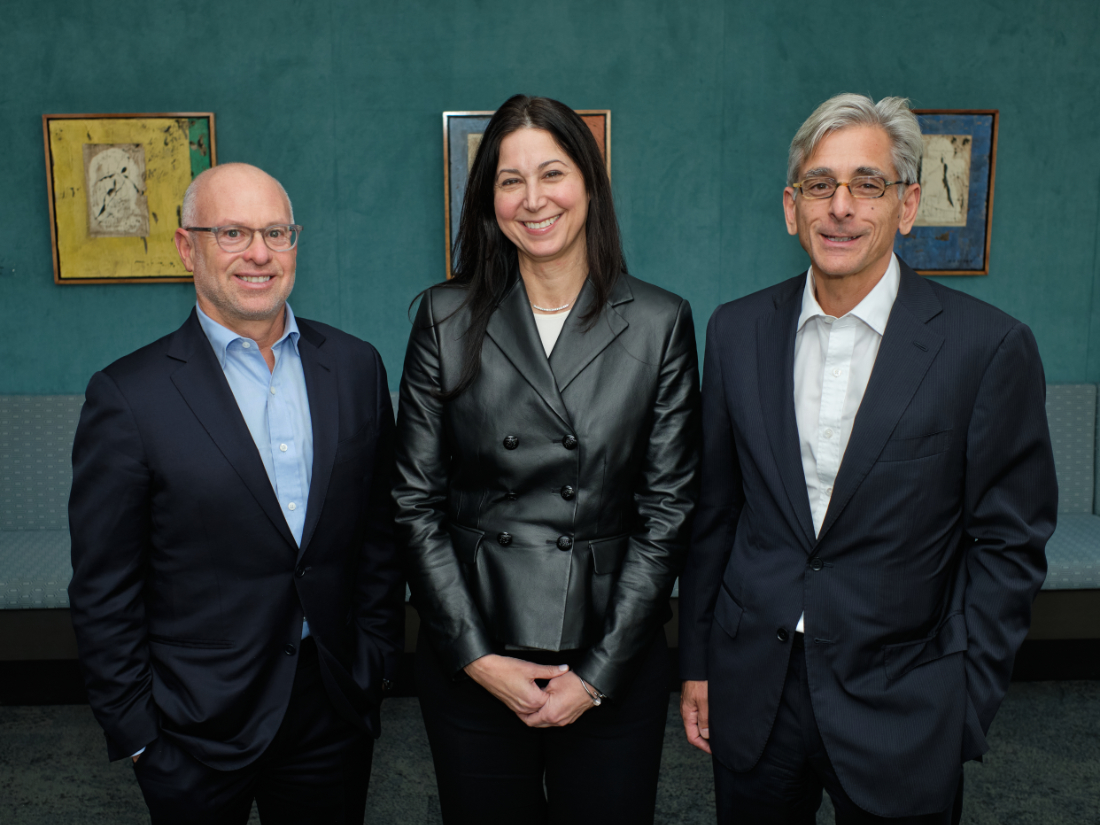
Berger is referring to a core group of partners who have worked closely with him to shape BLB&G’s legacy. Longtime partners Gerald Silk, Hannah Ross and Salvatore Graziano all regard Berger as a mentor and have played key roles in the firm’s evolution – fortifying its foundation while guiding it into its next chapter.
In an industry known for high-impact battles and hardball tactics, Berger’s legacy isn’t just in what he’s won – it’s in how he’s won it.
“Dream Big and Dare to Fail”
Berger’s story begins far from the halls of privilege. Raised in a Queens housing project, he shared a small room with his sister well into his teenage years. His father worked in the box office at Broadway’s Music Box Theatre – a modest job, but one guided by an unshakeable sense of integrity. Berger vividly recalls how his father refused to sell house seats to scalpers, even though it would have meant extra money for the family.
“That was the first lesson,” Berger says. “My father would never compromise his principles for money. That’s how I was raised.”
The values of honesty and responsibility guided Berger as he pursued an education that once seemed out of reach. The first in his family to attend a university, he graduated from Baruch College and received a full scholarship to Columbia Law School, which was a transformative opportunity for Berger – one that carried the weight of expectation but also immense promise.
At Columbia, Berger’s perspective broadened, and he quickly decided to follow a path less traveled by his peers. Instead of corporate law, he sought a career where he could represent those harmed by injustice. He found that calling at Kreindler & Kreindler, a plaintiffs’ firm specializing in high-stakes aviation cases.
“It was about fighting for people who couldn’t fight for themselves,” Berger says. “You could be a great lawyer and still do good.”
It was about fighting for people who couldn’t fight for themselves. You could be a great lawyer and still do good.
The early years taught Berger invaluable lessons about trial craft, ethics and the power of law as a tool for social justice – lessons that would guide him when, in 1983, he took the leap to start his own firm with three partners. And BLB&G was formed.
Berger’s motto – “Dream big and dare to fail” – was more than simply a catchphrase. It was an ethos that fueled the firm’s early struggles and shaped its daring approach to litigation. When the Private Securities Litigation Reform Act passed in 1995, the law imposed obstacles intending to limit securities claims. While many firms balked at these new hurdles, Berger saw opportunity in the statute’s lead plaintiff provision. Rather than racing to file suits for individual shareholders, he cultivated trust with institutional investors – pension funds, banks and public funds – which were newly empowered to lead class actions. This strategic foresight positioned BLB&G at the forefront of some of the most consequential securities cases to come.
To name just one of these industry-defining cases, BLB&G prosecuted a high-profile series of actions arising from the implosion of the “Structured Alpha Funds,” a complex options-trading strategy marketed by Allianz Global Investors. The firm represented 35 institutional investor clients in 20 separate actions to prosecute breach of contract and breach of fiduciary duty claims against Allianz, negotiating settlements that returned more than $2B in total to investors.
Raising the Bar
Berger is a lion among lawyers for his achievements, professionalism and the imprint of his firm on the bench and bar. But, for his team, as well as anyone who has stood with – or opposed – him, he has earned his stature for his unyielding focus on doing what’s right. And for building a firm that would stay focused on professionalism and integrity as its mantra.
Robert Giuffra, co-chair of Sullivan & Cromwell who opposed Berger in Allianz, says that Berger “is an undisputed lion of the plaintiffs’ bar. He’s one of the most skilled legal minds I know, and he unfailingly operates within the highest moral standards.”
In 1999, Berger was negotiating a record-setting settlement of $3B in Cendant. The dollar amount mattered, but so did the message he was sending. Under intense pressure to settle early – and despite generous offers from defense firms – Berger held firm. He refused to engage with Cendant’s lead negotiator at one point, forcing them to bring in a different law firm to restart the talks. In the end, Cendant paid what Berger demanded. That set a precedent of Berger assessing the right number and remaining unmovable until he achieved it. He did it again with Ernst & Young in 2003, with a $300M settlement – still the largest ever paid by an auditing firm in a securities case.
Another of Berger’s proudest victories wasn’t about the size of the payout – it was, again, about principle. In the 2005 $6.2B WorldCom case, he insisted that outside directors personally contribute to the settlement. These board members – including a former Secretary of the Army and a dean of Georgetown Law – had approved an $8B acquisition without due diligence. Berger demanded they collectively pay 20 percent of their liquid net worth, verified by certified statements, in settlement.
“It wasn’t about the money,” says Berger. “It was about sending a message that corporate directors are accountable.”
Though the total they contributed was just $25M – a fraction of the overall settlement – it sent shockwaves through corporate America. Critics warned that companies would struggle to recruit outside directors. Berger countered: pay the directors more, and allow them to do their jobs in the right way. The practice quickly adjusted.
It wasn’t about the money. It was about sending a message that corporate directors are accountable.
“Max has the ability to see around corners and fight harder than anyone in cases that shape the law for decades,” says Brad Karp, chair of Paul, Weiss whose friendship with Berger has arched over several cases as opposing counsel, including the WorldCom case and the recession-era case against Bank of America over its acquisition of Merrill Lynch. “Through it all, he has always held the highest standards of integrity. He’s truly one of the greats.”
Berger’s lawyering style is meticulous, methodical and deeply principled – blending fierce advocacy with an unwavering commitment to ethics. That duality didn’t just define his personal approach – it became the DNA of BLB&G’s identity, shaping a firm culture grounded in integrity, collaboration and purpose.
Culture, Carried Forward
BLB&G has never measured success by size alone. With fewer than 150 lawyers, the firm consistently outperforms litigation giants many times its scale – a feat made possible by the values Berger instilled from the beginning – rigor, integrity, collaboration and an unrelenting commitment to doing what’s right. The culture he built isn’t just a backdrop to the firm’s success – it’s the engine.
Inside BLB&G, excellence isn’t defined solely by courtroom victories, but by how people treat one another, how ideas are challenged and how purpose is shared. Lawyers are encouraged to lead from any seat, speak up and make their work count. Berger codified these values – literally – printing them in every notepad and embedding them into daily practice. Integrity. Client commitment. Ethical advocacy. An unyielding pursuit of justice. Giving back.
Berger’s message to the team has never been clearer: The firm’s culture isn’t a consequence of its success – it’s the very foundation of it. That resonates more than ever today, as Berger has moved to serving as an ex officio member of the Executive Committee while continuing his robust practice.
The new chapter is a thoughtful evolution – true to the values that have guided Berger and the firm for the past 42 years. Berger has entrusted the next generation of exceptionally capable leaders – Silk, Ross and Graziano – to work with all of the firm’s partners to carry the firm forward.
Rather than dictating the path ahead, he has instead empowered them to shape it – to lead with confidence and build upon the firm’s foundation in their own way. In an industry often marked by fraught transitions and contested legacies, Berger’s approach offers something rare – a culture built to endure and leadership empowered to grow it.
Carrying the Torch
If Max Berger instilled the soul of the firm, Hannah Ross has helped carry it forward – with the same sense of duty, purpose and pride.
Ross began her career as a prosecutor, serving at both the Middlesex County District Attorney’s Office and the Massachusetts Attorney General’s Office, where she built a foundation in civil and criminal advocacy. Driven by a deep sense of justice, Ross came to BLB&G in 2002, drawn not by headlines or paychecks, but by something she recognized instantly – shared values.
“I felt like I was really helping victims seek justice, find their voice,” Ross recalls of her time in public service. “And when I came here, it felt like I could still do that – but on a different scale.”
Over the past two decades, Ross has proven her theory to be true by playing a leading role in some of the most significant securities cases of her generation, representing institutional investors in complex, high-stakes litigation around the world. She attributes her success, in large part, to the mentorship she’s received from Berger over the years.
“From the moment I interviewed with him until this day, Max has been such an important part of how we operate – making sure that we’re collaborative, supporting each other and always focused on protecting victims,” says Ross. “And he has led by example.”
Today, Ross serves on the firm’s Executive Committee, in the seat Berger personally asked her to take over from him when he stepped down. She also plays a strategic role in evaluating new cases and advising the firm’s institutional clients – work that requires not just legal rigor, but the trust that comes with decades of credibility.
“At the end of the day, for me, it needs to be fulfilling,” says Ross. “And I have found this work to be so tremendously fulfilling.”
Her resume reads like a blueprint for facing the giants of global finance head-on: Bank of America, Washington Mutual, Wilmington Trust, Wells Fargo and Allianz – the last of which she led during the earliest days of the Covid-19 pandemic.
At the end of the day, for me, it needs to be fulfilling. And I have found this work to be so tremendously fulfilling.
“There was so much uncertainty in the world, but our team didn’t miss a beat,” says Ross. “We knew our clients had suffered significant losses. We put our heads down, did the work and got them real recoveries.”
Ross may now be a leader in her own right, but the path she walks was lit by others. In her earliest cases – including a sprawling, multi-jurisdictional litigation against OM Group that settled in 2005 – she worked side by side with senior partner Gerald Silk.
From Protégé to Pillar
Joining the firm as an associate 27 years ago, Silk quickly became Berger’s closest collaborator and a driving force behind BLB&G’s success. He worked tirelessly alongside Berger and learned to pair legal prowess and principled advocacy. Silk’s legal instincts were as sharp as his strategic vision – a combination that left a lasting impression on a young Hannah Ross.
Their first major case together, against OM Group, became a masterclass in securities litigation – and in mentorship. The case involved a complex international fraud scheme, with allegations that OM had materially overstated the value of cobalt inventories and misled investors about its financial condition. The investigation spanned multiple countries, including depositions and evidence gathering in Finland, London and Cleveland.
“Jerry was in the trenches with me,” Ross says. “He taught me how to build a case from scratch – how to plead it, prove it and fight for investors every step of the way. That case shaped me.”
Silk’s leadership style mirrors the firm’s ethos – collaborative, exacting and always grounded in the client’s interest. He played central roles in landmark cases during the early 2000s accounting scandals and the financial crisis, earning a reputation as both a litigator and a mentor. A longtime member of the firm’s Executive Committee, he is indefatigable about the firm and its mission. Today, he leads the effort to identify and evaluate new matters – giving him a wide-angle view of global misconduct and pairing it with the granular work of litigation required to achieve meaningful economic justice.
“I’d sum up the secret to our success in one word: collaboration,” says Silk. “So much of the firm’s success is built on conversation – the ability to challenge one another and reach consensus, knowing everyone has the same goal, even if they’re coming at it a different way.”
Translating Values into Victories
If culture is what you build when no one’s watching, Salvatore Graziano is the firm’s quiet architect. A first-generation college and law school graduate raised in New York City by Italian immigrant parents, Graziano brings a deep personal commitment to justice – and a relentless work ethic that has defined his career at BLB&G.
His legal career began in the criminal courts of New York as a prosecutor, where he learned to build cases through meticulous investigation and a strong moral compass. Graziano brought his sharp courtroom instincts and sense of justice to BLB&G, where he quickly established himself as one of the most respected voices in securities litigation.
“When you were a government prosecutor, you just walked into court with the benefit of the doubt,” Graziano says. “Here, we had to earn it. But I like that. I like the challenge of it.”
One of Graziano’s most defining cases was against Merck, in a years-long battle over the drug Vioxx. The litigation culminated in a 9–0 victory at the U.S. Supreme Court in 2010, a ruling that reshaped loss causation doctrine and unlocked more than $1B in recoveries for investors.
“We didn’t inherit a winning case – we built it,” Graziano says. “These cases are hard. To be successful, we have to litigate at a higher level than our adversaries – the biggest firms in the country, the most prestigious, the best financed.”
Graziano’s early wins helped shape the firm’s reputation for high-stakes, high-impact litigation. But his imprint on the firm goes beyond the courtroom. As a longtime mentor to younger lawyers – including Ross – he helped bridge the world of public service and private litigation.
These cases are hard. To be successful, we have to litigate at a higher level than our adversaries – the biggest firms in the country, the most prestigious, the best financed.
“Sal really taught me how to think strategically, how to frame a case, and how to keep the mission front and center,” Ross says. “He embodies everything Max wants this firm to stand for.”
Now a key member of the Executive Committee, Graziano continues to shape both cases and culture. Colleagues point to his steadiness, strategic clarity and belief that the firm’s strength lies not in flash, but in fundamentals.
A Future in Motion
Beyond their legal excellence and focus on value-based culture, BLB&G has a dedicated practice of giving back to the community and investing in the next generation of lawyers, even beyond their office walls.
Among many other endeavors, Berger is a long-term member of the Dean’s Council and Public Interest/Public Service Council at Columbia Law School, where he and the firm have established two fellowships, the Dale and Max Berger Public Interest Law Fellowship and the Bernstein Litowitz Berger & Grossmann Public Interest Law Fellowship. The programs are committed to financially supporting civic-minded young lawyers in developing careers that serve the public good. Berger has also endowed the Public Interest/Public Service Fellows Program, providing support for Columbia Law students committed to careers in public service.
The firm also continues to maintain the Paul M. Bernstein Memorial Scholarship at Columbia, established in 1990, which supports second-year law students with proven academic excellence and community involvement.
Berger’s support for the next generation of legal talent also extends to undergraduate pre-law students though a variety of programs at Baruch College, including fellowships, internship support, financial support and career direction.
This work with students underscores BLB&G’s core value of cultural integrity, and helps cement the firm’s legacy as a true standard-bearer for exceptional influence in the legal field.
A Growing Legacy
While courtroom excellence remains the firm’s cornerstone, its continued success also depends on something less visible but equally vital: strategic leadership and a clear vision for growth. As BLB&G has evolved, it has been shaped not only by its founding values but by a new generation of partners expanding the firm’s reach – operationally, globally and culturally.
“I don’t know what challenges will come next,” Ross says. “But I do know that this firm – because of the people Max brought together and the values he embedded – will keep showing up, evolving and fighting to protect investors’ rights. No matter what.”
In that continuity – in the strength of the culture itself – Berger’s greatest legacy is clear: from a Queens housing project to the pinnacle of shareholder litigation, he built something designed to endure. More than a winning record, it’s a culture that elevates clients, empowers lawyers and advances justice. BLB&G is a living testament to what’s possible when ambition is grounded in integrity – and when lawyers don’t just fight hard, but fight for something that matters.

