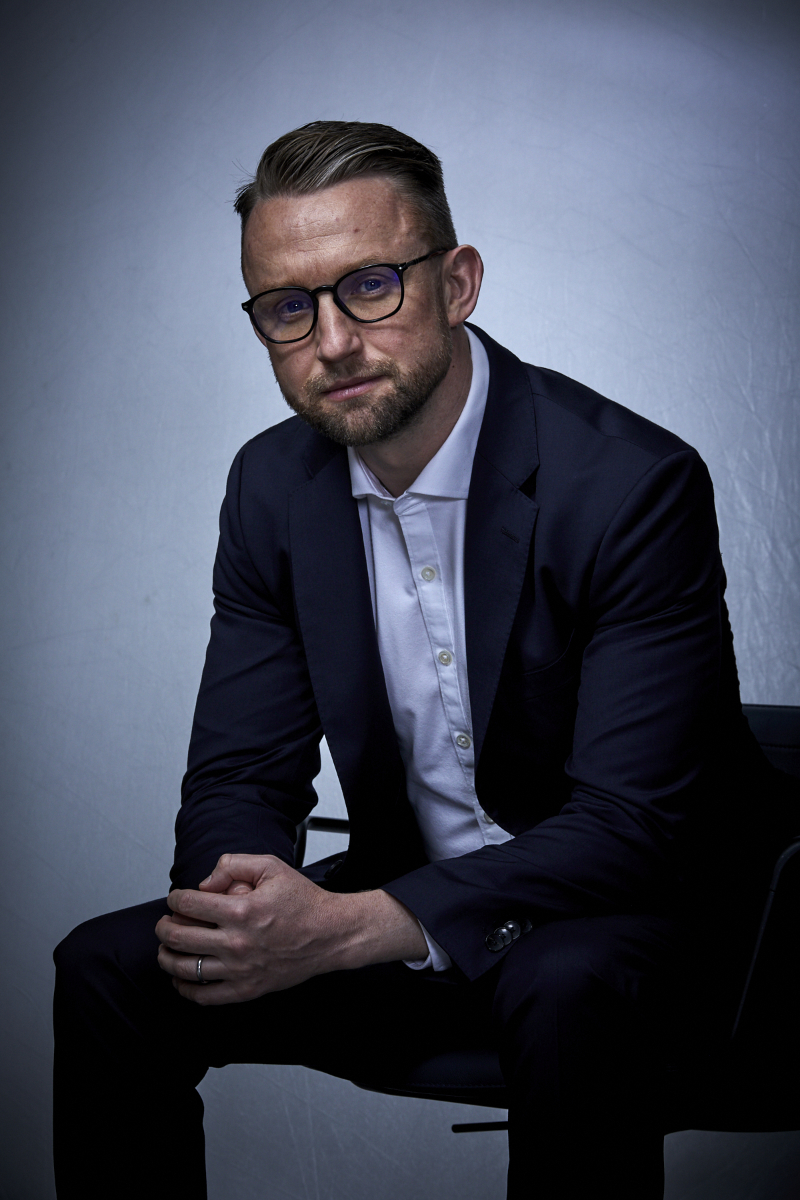
Cross-border dispute projects mean myriad variables. Related claims in multiple jurisdictions mean a multiplier on regulations, structures and issues, and a multiplier on the expertise needed to navigate these complexities. To avoid the inevitable pitfalls associated with simultaneously arguing a single fact pattern under different laws and in different circumstances, an experienced and capable central managing attorney is needed: one who holds the through-line of the fact pattern, sets the strategy and considers how different legal theories might conflict in various jurisdictions. The process requires a leader with experience and admission to practice in various bar jurisdictions, with a vast knowledge base and a sagacious tenacity – someone like Robert True of Quinn Emanuel.
As the onshore lawyer managing the multiple arms of a disputes project with offshore elements, True has become adept at balancing many moving parts at once.
“When numerous jurisdictions are involved,” says True, “the only person who can possibly be charged with balancing the competing considerations and ensuring that a project does not derail itself is the central managing attorney. It’s a tall ask. This person really needs to be the ultimate expert, but also someone who is driven by the constant reminder of what they don’t know.”
Firmly established at Quinn Emanuel since 2022, True is known for his strategic acumen, financial literacy and distinctive and discerning sensibility, but above all else for his tenacity and commitment to the client’s cause. Based in Australia, admitted to practice there, in the Cayman Islands and Hong Kong and with experience litigating in a number of jurisdictions beyond that, he specializes in financial services litigation and professional negligence by way of insolvency and fraud.
True's rap sheet includes representing the liquidators of Canadian listed Sino Forest Corporation, principally in US$2.6B+ negligence and fraud proceedings brought against valuers in Singapore and separately against perpetrators in Hong Kong, Canada and other jurisdictions, and representing the Cayman Islands liquidators of the GFC era Weavering Macro Fixed Income Fund, in US$600M+ proceedings against directors as well as the fund’s Irish auditors. He is currently engaged by the liquidator of NewSat Limited in respect of significant Australian, U.S. and English law claims brought against that failed satellite company’s financiers, including U.S. Ex-Im and a suite of global banks, as well as COFACE, their French credit insurer.
True excels on both sides of the V., with clients who range from liquidators of failed investment vehicles to listed and private companies, financiers and private equity. But it is the creativity and intellectual challenge of the work that comes most often in plaintiff mandates which keeps True invested. His results speak volumes to the immense value he brings.
Lawdragon: In a cross-border disputes project, what should plaintiffs consider when choosing the best jurisdiction to commence proceedings?
Robert True: At the outset, there's a distinction between where a party can file and where a party should file. There are some jurisdictions which have standing rules that might prevent plaintiffs from even making a filing there, depending on who they are and what the claim is. That’s a specific question with a specific answer. But the should question is a much larger and broader question with any number of answers. When there are options, getting it as right as possible means knowing the project and anticipating how it will play out. It’s a difficult task.
For me, a recent fraud case, which had Cayman and Irish elements and Asian domiciled defendants, is a good example. I’m oversimplifying, but the claim could be filed in either Cayman or in Ireland. There were practical advantages either way, and local counsel in both jurisdictions were adamant that filing in their jurisdiction was the best way forward. No surprises there! Ultimately what was needed was a comparative analysis of the risk that Courts in both Ireland and Cayman would not grant leave to serve the writ out of the jurisdiction on the Asian domiciled defendants, something neither the Irish or Cayman lawyers were well placed to do. This ultimately was a deciding factor on this occasion.
When there’s a genuine choice, soft factors are also always going to be important, things like the quality of the judges across different jurisdictions as well as their attitude to the type of claims identified, local trends, the strength of the local profession, the location of documents, the location of witnesses. All else being equal, avoiding a foreign subpoena enforcement process by filing where the witnesses are located can sometimes be hard to beat in terms of one-off advantages. That said, ultimately the most important comparative measure is the law of limitations. Fortunately, that consideration is also the most obvious.
All else being equal, avoiding a foreign subpoena enforcement process by filing where the witnesses are located can sometimes be hard to beat in terms of one-off advantages.
LD: What are the pitfalls?
RT: Litigants need to recognize that filing is an important step. It probably can’t be entirely undone and it can have ramifications for a host of other interconnected parts of a multi-jurisdictional disputes project later on. The wider facts of the whole project need to be understood as much as possible before this happens. For example, If you have a insolvency project under consideration, with Hong Kong and Australian characteristics and in which fraudulent preference claims are likely to feature, then appointing liquidators in both jurisdictions might be possible, but the facts in the context of key differences between this part of law of Australia and Hong Kong are going to provide a clear answer as to which jurisdiction should be the liquidator’s “home.” Once the facts and the law are understood, there's not likely to be a choice – there's going to be a wrong answer, and you’ve got to make that choice right at the outset.
LD: What trends are you seeing in cross-border disputes so far this year?
RT: I still think there's still a consensus as to the likely headwinds facing all foreign U.S.-facing companies. Global uncertainty is the other trend, and that means that 2026 is likely to be the sort of year in which market volatility means that creditors continue to avoid or delay making big decisions while they search for understanding about what happens next.
LD: You're presently practicing in Australia, but you still have a strong association with the offshore world for your admissions in Cayman and Hong Kong. What is it about these jurisdictions that draws you to them?
RT: Definitely the beaches in Hong Kong and the cosmopolitan skyline in the Cayman Islands.
LD: Ha!
RT: Hong Kong does have some truly outstanding beaches, actually. But honestly, it's the nature of the work that pulls me back. Offshore cross-border work is always a learning experience. Even the world's most predictable master feeder-fund structure that you’ve encountered a hundred times before is suddenly interesting and uniquely challenging when it's all set up to fund a series of private regional hospitals in Vietnam. Your work also suddenly takes on a special kind of significance when you realize that what you do might affect standards of patient care, or water quality, or loans to micro-businesses. The offshore space is also an opportunity to truly live the life of a global citizen. It's a wonderful, interesting, enlightening way to live.
LD: Did you think this is the kind of practice that you were going to have back in law school?
RT: Absolutely not. If I’m honest, in law school, I simply wanted to try and work for the most prestigious Australian law firm that I could possibly get into, with all questions about what sort of law I’d practice (and everything else) to come later. In Australia, nearly all these sorts of firms are defendant focused firms that do most of their work on panels for banks. I was lucky enough to do that, quite happily, for a number of years until an opportunity to go to the Cayman Islands arrived which I couldn't pass up. That was my introduction to the creative world of insolvency plaintiff mandates.
Liquidators, with no prior understanding of a company’s operations, appointed over the black hole of an entity operating in a far-away country which has been the victim of some sort of disastrous, terminal event and, burdened by statutory obligations and limited funding, trying to fashion assets of value for creditors out of nothing in the form of legal claims. It’s the legal equivalent of what I imagine it’s like to build a house in the forest with hand tools. A challenge worth anyone’s time.
It’s the legal equivalent of what I imagine it’s like to build a house in the forest with hand tools. A challenge worth anyone’s time.
To give you an idea of these sorts of challenges, one famous case I was involved in featured a multi-sector, multi-jurisdictional conglomerate. Management of the operating company announced in the home country that they were going to do a hardware update. Nothing to see there. They sent a truck around to the offices in all the different cities to pick up all the computers on the premise that these would be replaced – and that truck then mysteriously fell off a bridge and exploded. All the servers and computers were gone, and management fled the next day. A liquidator was appointed with little information to go on, but the annual report did at least say there was $100M in a bank account. Of course when the liquidator rang the bank, the bank said that the account was empty.
Coming into a project in that sort of scenario – piecing the fact puzzle together, identifying a fraud theory, identifying the legal claims which are probably the only real assets the company will ever have, working out who should have known and then embarking on the huge task of establishing all that to the legal standard in some court, somewhere – it's just something I never looked back from. In this way my time in Cayman and then Hong Kong certainly left me with a very keen interest in the high-quality plaintiff disputes space, which is definitely not where I originally thought I was going.
LD: What role do you think onshore lawyers like yourself have to play in helping clients achieve results in the offshore world?
RT: I think we are essential in these multi-jurisdictional disputes projects, which often involve offshore elements, especially when numerous, smaller jurisdictions are involved, which is nearly always! Even a very simple Chinese fund structure coming out of Hong Kong is likely to involve at least, both Mainland and Hong Kong as well as BVI and the Cayman Islands. So instantly that’s four jurisdictions before any complexity is added at all.
In these sorts of projects, the onshore managing attorney role is crucial, but has been badly overlooked on occasion, with disastrous results. It has often been filled by someone who is not even a disputes lawyer, but who instead (especially when the group is not insolvent) has maintained the ultimate client relationship and probably advised on the initial structure, even if it was 20 years ago. These sorts of lawyers see their role as a sort of “water carrier” – someone who simply appoints a bunch of disputes lawyers in different jurisdictions and then relays the various bits of advice they receive to the client’s internal legal counsel, making sure along the way that the structure they set up is not too heavily criticized. It’s a lucrative middleman role, but it creates risk for the client. When the project then takes on the form of a hydra, a snake with many heads, at best the heads stumble but don’t fall over each other. At worst, the heads bite each other.
I mentioned earlier that in a vacuum we can identify that evidence about how a creditor’s state of mind unearthed, say, in a Hong Kong filing, could destroy a preference claim run by a liquidator in Australia: it could provide that creditor with an Australian law defense which doesn’t exist under Hong Kong law. But the Hong Kong lawyer running those proceedings could hardly be blamed for that if it actually happens – they don't practice Australian law, and their job is to win the dispute that they’re appointed to. They may not even know that there's an Australian preference claim on foot. The only person who can stop the project from falling over in that situation is a central managing attorney who is locked in and focused on the interplay of simultaneously run disputes in separate jurisdictions. If they are just a middleman this role is essentially vacant and the Australian law legal claim asset is about to evaporate.
So, the hydra needs to be replaced by a hub and spokes. That hub – the nerve hub – needs to plan the project and then actively hold all the reins. This includes mapping the global fact pattern as well as crafting the claim theories, which will often be under foreign law, at the outset. It then includes the task of inserting all that knowledge and expertise into the litigation processes that local counsel run, right up to trial, and without overbearing. It’s a specialist role and a crucial one. But, especially once the project is underway, it’s custom designed for the type of person who can synthesize expert inputs from local specialists. It definitely does not suit a know-it-all. There is always far too much to know.
LD: What do you appreciate about Quinn Emanuel as a platform for this sort of work?
RT: It's simply a pleasure to come to work every morning and leverage Quinn's fearsome reputation and specialist litigation focus in my practice. But equally, it's a pleasure to work with some of the nicest and most well-rounded people you're ever likely to come across. It's probably a surprise to the market that you could have a firm with this sort of reputation that is overwhelmingly filled with these sorts of people, but it's the reality at Quinn. It makes the firm a very special and unique work environment.

