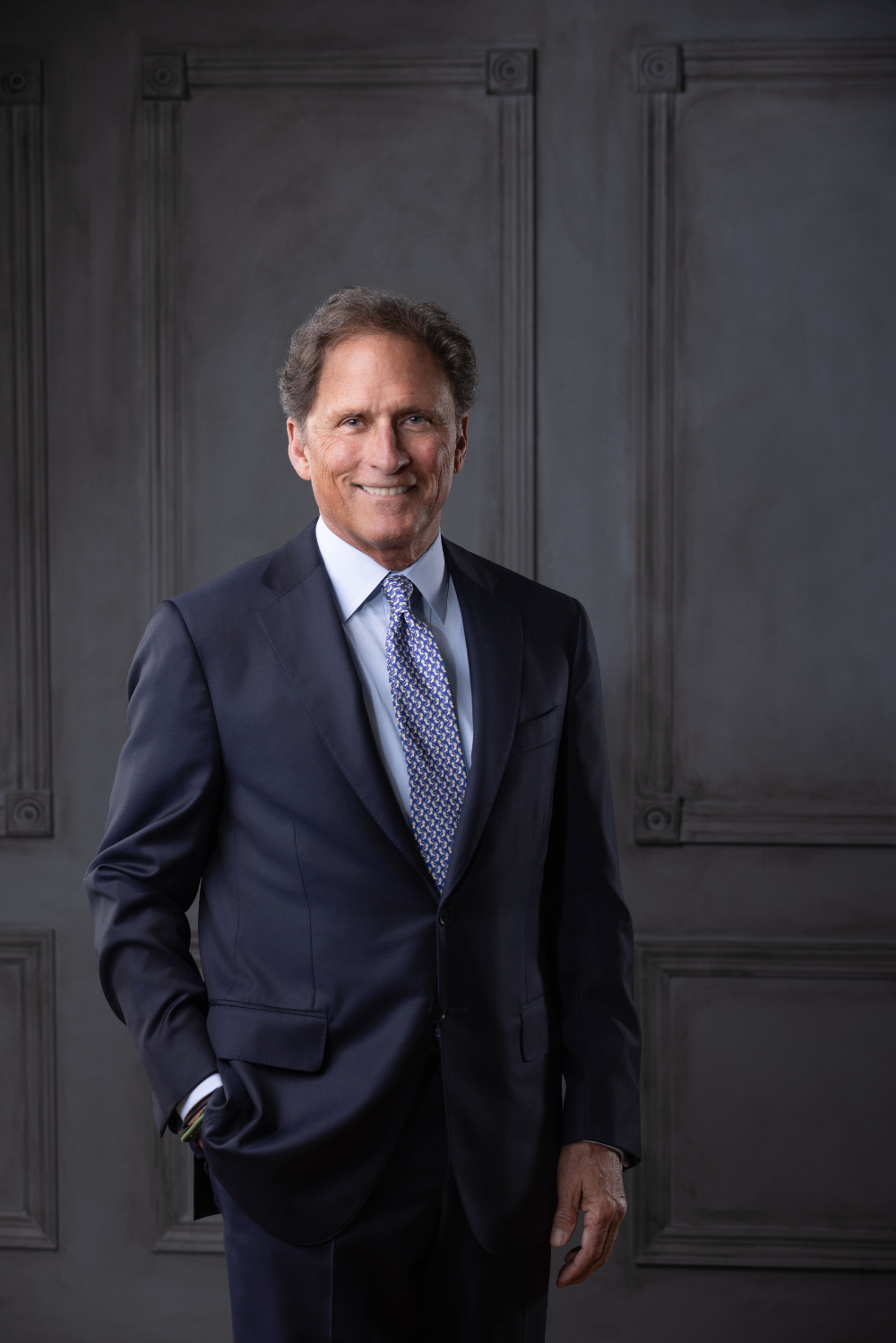
In Bill Ohlemeyer’s world, the most important conversations have very little to do with who is or isn’t “right.” In conference rooms where years of litigation loom, lawyers are entrenched, clients are anxious and the real question is no longer who has the better argument, but how to actually solve the problem. This is where Ohlemeyer now works, as a mediator and arbitrator with Phillips ADR.
It is a vantage point few lawyers ever reach. But over more than four decades, Ohlemeyer has seen disputes from every side – as a trial lawyer at Shook, Hardy & Bacon; as Vice President and Associate General Counsel at Fortune 5 giant Altria Group; and later as a partner at Boies Schiller Flexner, where he handled some of the country’s most complex mass torts, product-liability battles, MDLs and commercial disputes. He has defended asbestos and pharmaceutical bellwethers, navigated environmental and tobacco litigation and most recently led the Cherokee Nation to more than $130M in opioid settlements against major distributors and pharmacy chains.
That range has given Ohlemeyer a rare fluency in how legal arguments collide with business reality, regulatory pressure, public scrutiny and human risk – insight he now uses to help parties land outcomes that actually work.
“You’re not there to prove one side right and the other wrong,” says Ohlemeyer. “The law is – or should be – a problem-solving discipline.”
That instinct to move past positions and toward solutions also keeps him in the classroom. Since 2002, Ohlemeyer has taught a mass tort class at Columbia Law School, using skeptical, demanding students to pressure-test the very ideas he brings into mediation rooms every day. For him, teaching is not nostalgia. It is quality control.
“Teaching forces you to re-examine what you think you know,” says Ohlemeyer. “It’s the best way to stay sharp.”
After a career spent inside some of the most consequential legal fights in the country, Ohlemeyer has arrived at a simple conviction: Being right matters far less than solving the problem.
Ohlemeyer is a member of the Lawdragon Hall of Fame.
Lawdragon: Can you give us a bird's eye view of your practice?
Bill Ohlemeyer: I came to mediation after years in private practice, where a not insignificant amount of my work involved resolving disputes through mediation. I worked frequently with Layn Phillips, a retired federal judge who later founded a mediation group in Corona del Mar. Through that experience I came to really appreciate the craft. You learn quickly that the best mediators bring insights and solutions you don’t see when you’re only advocating from one side of the table.
When I decided to leave Boies Schiller, Layn encouraged me to join his group as a mediator and arbitrator. I spent a year co-mediating with him, which completely changed my perspective. As a lawyer, you live in one room, focused on your client. As a mediator, you see everything – both sides, sometimes multiple parties and how all of their interests intersect.
That shift was what drew me to the work. It’s still about litigation – developing facts, applying the law, understanding risk – but you approach it from a much broader problem-solving perspective. You’re no longer trying to win for one side; you’re trying to help all sides resolve a dispute they may be experiencing in very different ways.
It’s still about litigation – developing facts, applying the law, understanding risk – but you approach it from a much broader problem-solving perspective.
That challenge is what I enjoy most. It allows me to use everything I learned in practice while engaging with conflicts from a wider, more strategic vantage point. And it gives me the opportunity to work with an incredibly diverse range of people and disputes.
LD: What kind of matters are you mediating?
BO: My work spans a range of disputes, but I tend to focus on complex commercial and litigation-driven matters. Many of my cases come from lawyers who knew me in private practice, so they often involve contract disputes, product-liability claims and other high-stakes commercial issues.
I’ve also been involved in matters centered on statutory interpretation – situations where the law is unsettled and the parties are essentially trying to predict how a court might rule. In those cases, mediation becomes a way of helping assess risk and reach a resolution before spending years in litigation.
I’ve always believed in being a “generalist” – both in practice and now in mediation. Working across different industries and legal issues keeps the work intellectually challenging and allows me to bring a broader perspective to helping parties resolve their disputes.
LD: What has surprised you about this work?
BO: I was sort of spoiled in private practice. Coming from large private-practice firms, I was used to an extremely high level of preparation, creativity and execution. In mediation, you sometimes encounter lawyers and clients who don’t have the same resources or experience, and that changes how cases are approached.
It’s not really a surprise so much as an adjustment. Not everyone practices law or resolves disputes the way I was accustomed to in private practice, and part of being an effective mediator is recognizing that difference and taking it into account when helping parties work toward resolution.
LD: How does your time in-house at Altria inform the work you do now as a mediator?
BO: It’s hugely relevant. Ultimately, the real decision-makers in most disputes are general counsel and business leaders, not just outside lawyers. Having worked in-house, I understand how those decisions actually get made – and how business analysis can differ from legal analysis. Lawyers often define “winning” as being right in court. Business leaders define it as managing cost, controlling risk and avoiding unintended consequences. That perspective helps me guide lawyers toward solutions that actually work for their clients, not just arguments that sound persuasive.
LD: Is there a case from your litigation career that stands out as particularly memorable?
BO: I tried a case in Muncie, Indiana, just weeks after my first child was born. It was an eight-week trial involving a nurse whose death was alleged to have been caused by secondhand smoke at a Veterans Administration hospital. The defendants were five tobacco companies and their holding companies and the case was tried right before the states and the tobacco companies reached their nationwide settlement – so there was an enormous amount of attention on it.
Muncie was a small town and the courthouse couldn’t handle a trial of that size, so they converted the convention center into a makeshift courthouse. For eight weeks, the largest “convention” in town was a tobacco trial – filled with lawyers, experts, reporters, and witnesses.
At the same time, my son was due. We asked the court for a brief continuance and the local paper actually ran a headline that read, “Baby’s Birth May Delay Trial,” because of the economic impact on the town. He ended up being born five weeks early, which meant the trial went forward as scheduled.
At the same time, my son was due. We asked the court for a brief continuance and the local paper actually ran a headline that read, “Baby’s Birth May Delay Trial.”
I was a relatively young partner at the time, leading a team that included lawyers far more experienced than I was. We ultimately obtained a defense verdict, to the surprise of many. It taught me that you don’t have to be the oldest lawyer in the room to earn respect, make good decisions, or lead a team. You have to be thoughtful, considerate and willing to be firm when it matters – and all of that came into focus over those eight weeks.
LD: Let’s talk about your style as a litigator and how it’s evolved in your mediation practice.
BO: I’ve definitely matured. I’m more patient, more open to other people’s approaches and a much better listener. Trying cases teaches you that – not just listening to witnesses, but watching juries, judges and the dynamics in the room. You learn to take in a lot more information.
That matters even more in mediation, because you’re not there to prove one side right and the other wrong. You’re there to help both sides understand that even strong cases have weaknesses – and that those weaknesses can have real legal and financial consequences.
That would have been much harder for me to do earlier in my career. When you’re young, you’re working hard to prove yourself, which can make you impatient, aggressive or louder than you need to be. With experience, you realize you don’t have to perform in the same way. You already know you can do the work – and that gives you the freedom to listen, learn and move cases forward more effectively.
LD: What first drew you to law?
BO: It was almost by accident. My younger sister was taking the LSAT, so I took it too – mostly because I didn’t know what else I wanted to do. I ended up at the University of Missouri, nearly quit two weeks in, and then met a solo practitioner who hired me to help write an appellate brief for $3 an hour. We figured it out together.
That turned into three years of real trial work – jury selection, motions, sitting in judges’ chambers, even a capital murder case with a sequestered jury. By the time I graduated, I’d seen about 15 trials.
I then clerked for a maverick federal judge in Kansas City who believed clerks belonged in the courtroom, not the library. By the time I arrived at Shook, Hardy & Bacon, I’d watched nearly 30 trials start to finish. I knew how courts really work. A lot of it was luck – but it gave me experience early, and that made all the difference.
LD: What do you think it takes to be a great lawyer?
BO: It all starts with your attitude, and why you’re doing it. If you go into the law for money or attention, you’re in it for the wrong reasons. You should do it because you’re interested in helping people solve problems – in working through complex issues, advancing new ideas and collaborating with others to get to an outcome that actually works. If you focus on that – on learning, on the craft, on the work itself – the rest takes care of itself.
LD: I like that. A lot of people joke that they became lawyers because they like to argue.
BO: I hear that all the time and I always say the same thing: Arguing is not a problem-solving technique. The law is – or should be – a problem-solving discipline. That’s what drew me to it. With legal training, you can do far more than just fight – you can manage risk, structure deals, resolve disputes and help people move forward. If more lawyers approached it that way, I think people would better understand what we do – and have more respect for it.
LD: Are there any trends that you're seeing in the work right now?
BO: One of the biggest shifts I’ve noticed is the rise of pre-litigation mediation. When I was in private practice, most mediations happened after a case was already in court – once everyone was entrenched and the costs were piling up. Now, more parties are choosing to mediate before a lawsuit is even filed.
When I was in private practice, most mediations happened after a case was already in court – once everyone was entrenched and the costs were piling up. Now, more parties are choosing to mediate before a lawsuit is even filed.
That makes a lot of sense. A pre-litigation mediation gives both sides an early look at the strengths and weaknesses of the case – the kind of information you wouldn’t otherwise get until you’re deep into discovery. It also helps avoid the enormous transaction costs of full-blown litigation, and it forces everyone to focus on what really matters, what would actually happen over the next two or three years if this dispute went forward.
In that way, it’s a relatively inexpensive way to get the right people in the room and ask the hard, practical questions before positions harden and momentum takes over.
LD: You’ve also spent a lot of time teaching. How did that become part of your career?
BO: I started at Columbia Law School when I was at Altria. I had a professional relationship with Ken Feinberg who taught the mass tort class at Columbia. When he was appointed Special Master of the September 11th Victim Compensation Fund, he asked me to step in and cover the class from time to time. The following year he asked me to essentially take it over. That’s how I ended up teaching the course.
Altria was very supportive. I wasn’t in court every day and they saw real value in having someone on the legal team engaged with students and ideas at that level. For me, it became a way to stay sharp – to keep current on the law and to test my thinking in front of a room full of very smart, very skeptical people.
When I later began splitting my time between New York and Kansas City, the dean at the University of Missouri asked if I’d be interested in teaching there as well. I said yes for the same reason. Teaching forces you to re-examine what you think you know, absorb what’s changing in the law, and explain it clearly to people who are genuinely curious about it. It’s been one of the most professionally valuable – and personally rewarding – parts of my career.
LD: Looking back, how does your time as a trial lawyer shape the way you approach mediation today?
BO: It probably seems ironic that someone who spent years trying so-called “bet-the-company” cases now makes a living helping people settle disputes. But to me, it makes perfect sense. What mediation really draws on isn’t just experience – it’s experience shaped by both success and failure. You learn a lot when you win. But you learn even more when you try a case you think you’re going to win and you don’t. That forces you to ask whether you succeeded because of yourself, or in spite of yourself. That’s what I bring into the room now: experience tempered by insight.

