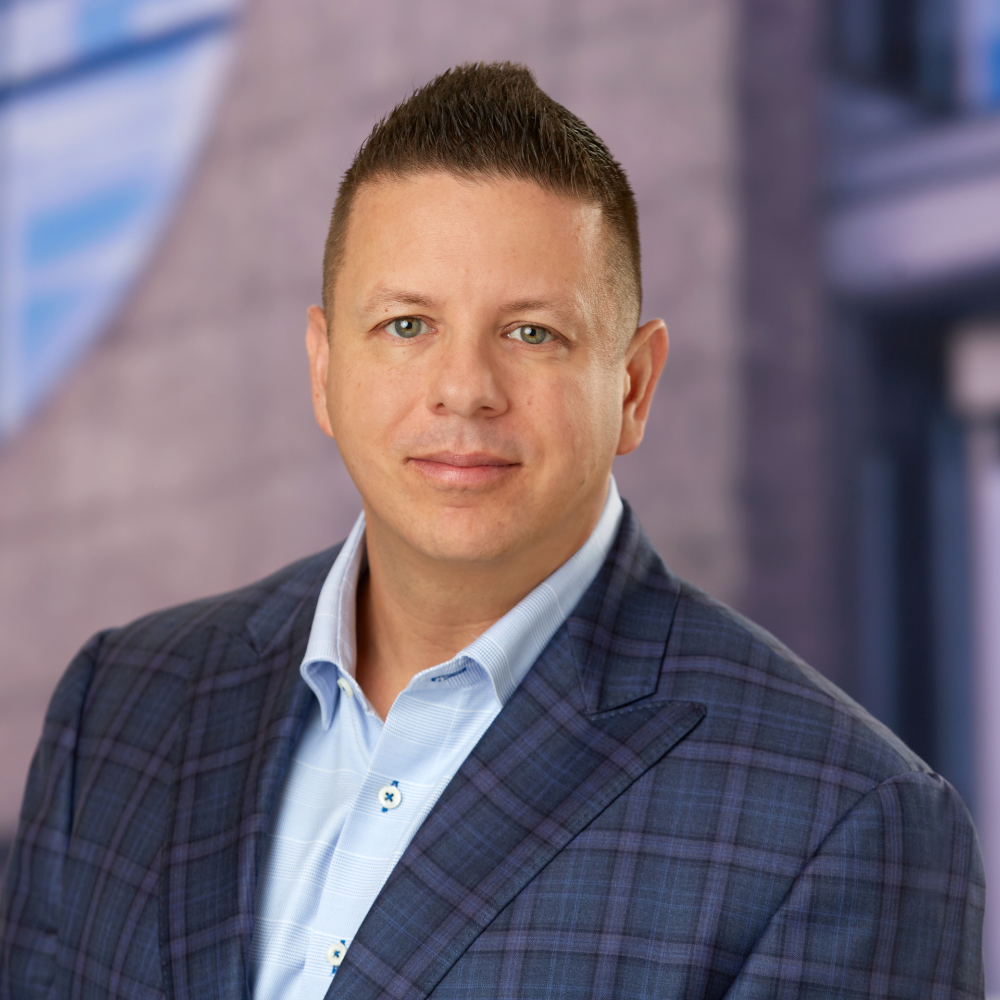
When Zachary Darrow co-founded DarrowEverett in 2007, the firm’s focus was largely commercial real estate – land use, finance and project-level transactions. Within its first year, the Global Financial Crisis swept through the market with devastating force.
The real estate and finance sectors were among the hardest hit. Credit markets froze. Development stalled. Transactions evaporated. For a young firm concentrated in those areas, the downturn was existential. For Darrow, it became a defining test of leadership.
“We couldn’t change the market,” Darrow says. “But we could change how we positioned ourselves within it.”
Drawing on his background as a business executive within both Fortune 500 and hedge fund environments, Darrow had seen firsthand how sophisticated institutions deploy capital and structure risk.
“During periods of economic disruption, two things tend to happen,” Darrow says. “Opportunities are created and people become more cautious with their own capital.”
If transactions occurred at the project level, he believed the real leverage sat higher – with joint ventures, private equity investors and institutional capital. While others retrenched, he began looking upstream.
That shift would reshape the firm. DarrowEverett expanded deliberately into capital formation, private equity and complex transactional work, building a cost-efficient platform anchored in Providence and Boston and steadily expanding across high-growth East Coast markets.
Over the past decade, that upstream strategy has matured into a significant private equity and M&A practice. Darrow now leads a team representing private equity investors and the companies they acquire, remaining engaged well beyond closing and positioning the firm to participate in ongoing transaction activity as capital continues to move.
For Darrow, the throughline has never changed – it’s all about execution.
“Putting points on the board,” Darrow says. “Ideas are one thing. Execution is what it really boils down to.”
Lawdragon: What drew you to a career in the law and specifically to this practice area?
Zachary Darrow: I come from fairly humble beginnings. I was always searching for something that could be a catalyst to a better life – more opportunity, more possibility. One of my earliest memories is being a bat boy at my mother’s softball game. An attorney on the team was wearing a Rolex. I asked how you get something like that. He said, “You have to make a lot of money. I’m a lawyer, kid.”
I later learned law isn’t necessarily the path to riches. But at the time it represented stature, achievement and the idea that you could build a meaningful life through your work. That stayed with me.
As I got older, I became interested in real estate. It allowed me to connect business and law in a tangible way. After law school, I joined CVS Pharmacy’s real estate group as a business executive. I wasn’t practicing law, but I saw firsthand how legal decisions affect business outcomes and what clients actually need from their lawyers. That perspective shaped how I practice today. Having sat on the client side, I see the law as a service – not an abstraction.
LD: What led to opening your own practice?
ZD: After leaving CVS, I joined one of the firms that had represented the company, and my practice grew quickly. I later moved as a partner to a mid-sized Boston firm. As that growth continued, it became clear much of it stemmed from my practical experience – understanding how clients think and what they need from their lawyers.
At a certain point, Eric Everett and I realized we had effectively built our own practice within the firm. We had strong client relationships and a clear vision for how we wanted to serve them. The decision to launch our own firm wasn’t driven by dissatisfaction, but by opportunity and alignment.
In 2007, we made the move – opening in Providence and Boston and bringing our clients with us. It was a natural next step and allowed us to build the firm intentionally around the way we wanted to practice.
LD: Tell me about the decision to open two offices.
ZD: It came from my prior business experience. I had seen how sophisticated clients choose their law firms – they use top-tier names when necessary, but they also work with strong firms outside the most expensive markets.
That showed me you could build a firm in a highly educated, more cost-efficient market like Providence and still deliver the same level of sophistication. At the same time, perception matters. Some clients wanted a Boston presence. So we opened both from day one – Providence as our operational base and Boston as a client-facing platform. It allowed us to balance efficiency with client expectations.
Ideas are one thing. Execution is what it really boils down to.
LD: DarrowEverett was initially focused on land use real estate law. What initiated the firm’s expansion?
ZD: The Global Financial Crisis (GFC) changed everything. Necessity became the mother of invention for us. When we started the firm in 2007, our focus was almost entirely on commercial real estate – land use, real estate finance and related transactional work. But within about a year, we began hearing the rumblings and shortly after that, the real estate and finance markets collapsed.
At the same time, there were early discussions around what would ultimately become Dodd-Frank and a complete reset of the regulatory landscape. We stepped back and asked ourselves how to respond.
One of the first things we did was lean into it. We launched a marketing campaign called “Challenging Times,” acknowledging the reality clients were facing and positioning ourselves as advisors who could help them navigate uncertainty. We couldn’t change the market, but we could help clients move through it intelligently.
We also recognized something more fundamental. During periods of economic disruption, two things tend to happen: Opportunities are created and people become more cautious with their own capital. They look to raise third-party capital to pursue those opportunities while preserving their own liquidity.
At the same time, regulatory reform reset the playing field. It didn’t matter how long someone had been practicing – there was a new set of rules to learn. We made a deliberate decision to build a practice around capital formation, initially focused on real estate and later expanding into private equity and broader capital raises.
Our operating model made that shift possible. Based in Providence, we had a meaningful cost advantage over firms in Boston or New York without sacrificing sophistication. Clients needed experienced counsel, but they were equally focused on efficiency – we were positioned to deliver both. That period ultimately became a significant growth opportunity, including our engagement on matters for Lehman Brothers’ post-bankruptcy estate, where the board had a duty to retain capable yet cost-effective firms. It validated our approach and marked an important step in the firm’s evolution.
LD: What other early engagements helped define your trajectory?
ZD: One of the most significant was our work winding down a large bridge lending operation in the Boston area. That engagement required coordination across our transactional and litigation teams and gave us deep exposure to distressed assets and complex portfolio unwinds. It helped establish our credibility in handling sophisticated, high-stakes matters during a very uncertain time.
We were also engaged on a managed account structure in the mezzanine and bridge financing space that ultimately exceeded $1B. That was a defining engagement for us. It validated our capabilities on the capital formation side and also generated substantial downstream deal work as that capital was deployed.
Just as importantly, we had a core group of clients who remained active throughout the GFC. Many of them continued pursuing opportunities, particularly in land development and adaptive reuse, using that period to work through entitlements and prepare projects for recovery. Being trusted to guide clients through both distressed situations and forward-looking investments helped define our role as practical, business-oriented advisors.
LD: How have you approached building trust and maintaining strong relationships with your clients?
ZD: Authenticity is critical. At its core, this is a service business, and while there are commercial realities, lasting client relationships are built on genuine trust and mutual respect. That means communicating openly and being fully invested in helping clients find solutions, particularly during challenging periods.
I also believe relationships shouldn’t exist between just one lawyer and one client. Service providers sometimes keep those connections too siloed. We’ve taken the opposite approach – intentionally introducing clients to multiple members of our team and allowing those relationships to develop naturally. When clients know several people within the firm – and know each of them genuinely cares about their success – the relationship becomes deeper and more durable. It stops being about a single point of contact and becomes institutional. That’s what builds lasting trust.
Clients needed experienced counsel, but they were equally focused on efficiency – we were positioned to deliver both.
LD: What is your approach to developing the team and culture?
ZD: Beginning, middle and end is the same: Lead by example. I’ve never expected anything from our team that I wouldn’t be willing to do myself. We have a saying here – no “golf course partners.” The point is simple: We’re all in the trenches together. There may be hierarchy for operational purposes, but leadership is grounded in shared effort and accountability.
We’ve also been intentional about growth – building in a way that supports both the organization and the people within it. At its core, this is a business that happens to be a law firm. We’re here to serve clients at a high level, but we’re also building a platform that serves our attorneys, paraprofessionals and administrative team. If you’re not investing in their growth and the environment they work in, you can’t build a durable organization. Culture has to be intentional. It has to encourage people to grow, because you need your team to feel invested in what you’re building together. That’s something we’ve remained deeply committed to from the start.
LD: You’ve expanded significantly in recent years, particularly in Florida. How did that progression unfold?
ZD: In all candor, it’s really been about following opportunity. As we expanded into private equity and finance, New York made all the sense in the world. About ten years ago, we began seeing meaningful activity in South Florida. Sometimes it’s better to be lucky than good – and South Florida has been on a remarkable run.
We started in Fort Lauderdale and quickly learned that geography in Florida matters. Clients made it clear: they weren’t traveling between markets. So we opened in Miami and later Boca Raton, aligning ourselves directly with where the work and relationships were.
As our presence deepened, we saw that Florida’s West Coast was a distinct market with its own dynamics. After working closely with the Saxon Gilmore team for nearly two years, it became clear there was a strong fit. Their experience in real estate – particularly affordable and workforce housing – along with strong litigation capability, made Tampa a logical expansion.
We focus on high-growth markets – places with sustained economic momentum. That same lens guides our interest in markets like Dallas-Fort Worth and Salt Lake City.
LD: Can you tell us about the mixed-use town center project you worked on in Boca Raton recently?
ZD: Sure. It’s now called “The Eclipse” – the former Office Depot headquarters in Boca. It’s been a phenomenal project.
Our work in South Florida grew organically. Often, we’d represent one side of a transaction, and the counterparty would later come back and ask to work with us. That’s how our relationships with BH Group and PEBB Enterprises developed. We initially worked across from them and later partnered with them. They’re dynamic groups, but more importantly, they execute. Ideas are one thing – execution is what it really boils down to.
The project itself is transformative. It involves repositioning a legacy corporate campus through office renovation, multifamily components, restaurant offerings and a flagship Equinox lease – creating a true mixed-use environment. It’s a strong example of how to rethink the 1980s and ’90s campus model for today’s market.
Many of those large corporate footprints no longer match how companies operate. Post-pandemic, there’s clear demand for something between dense urban cores and distant suburbs – integrated, active work-live-play environments. South Florida, particularly markets like Boca, sits squarely in that space, creating meaningful opportunity for developers.
Authenticity is critical.
LD: Shifting to private equity and M&A, what are you seeing in the market?
ZD: Over the past eight years, we’ve seen sustained activity in the M&A space. We represent clients on both sides – private equity firms in control and non-control investments, as well as target companies being acquired by institutional sponsors.
One area where we’ve had a real advantage is in what happens after the transaction closes. Many large transactional firms have tremendous expertise – tax, labor and employment, regulatory finance – but once the deal is done, it can be cost-prohibitive for them to remain as day-to-day counsel to middle-market companies. Our rate structure allows us to stay engaged post-closing, handling the operational work that follows – employment agreements, vendor contracts, credit facilities – while maintaining continuity with the transaction itself. That continuity matters. There’s often a disconnect between the deal terms and the ongoing operational realities. We’re positioned to bridge that gap, particularly in the middle market, which is where much of our focus lies.
Looking ahead, AI is going to meaningfully impact M&A. We were early adopters of Harvey and began beta testing platforms before many larger firms fully embraced the technology. That early adoption allows us to speak credibly with clients who expect modern tools to be used effectively. AI isn’t a replacement – it’s an enhancement. It increases efficiency in diligence and document management and accelerates work production, while judgment remains central.
Interest rates continue to influence deal volume, given the role of leverage in many transactions. While there’s awareness of political and global uncertainty, there remains a sense of cautious confidence in the market – stability sufficient to transact.
LD: How do you compete with Big Law while still delivering a certain level of sophistication?
ZD: For any mid-market firm, the first challenge isn’t getting ahead of Big Law – it’s keeping up. From day one, our goal was to eliminate any gap in quality, capability or resources that would make a client feel they needed a larger platform.
Where we differentiate is pricing, nimbleness and client focus. We can pivot quickly, deliver high-touch service and provide sophisticated work with greater overall efficiency and discipline.
At the same time, we’ve always invested to avoid being out-resourced. Early on, that meant investing in technology that allowed us to operate like larger firms. For us, it’s about ensuring the tools and infrastructure behind the practice are equivalent.
LD: What do you find most fulfilling about your work?
ZD: Putting points on the board. Achieving meaningful outcomes for clients. Having even a small role in catalyzing something meaningful – especially when it seemed difficult or unlikely at the outset – is incredibly rewarding.
We strive to be more than lawyers. We aim to be true business advisors – providing not just legal analysis, but perspective drawn from experience. At the end of the day, we’re a service organization. What keeps us going is delivering results and helping our clients accomplish what they set out to do, even in challenging circumstances.

