The issues that impact us most don’t conform to borders. From dangerous medical products to addictive tech, as our world becomes more intertwined, so do its problems.
And so do its solutions.
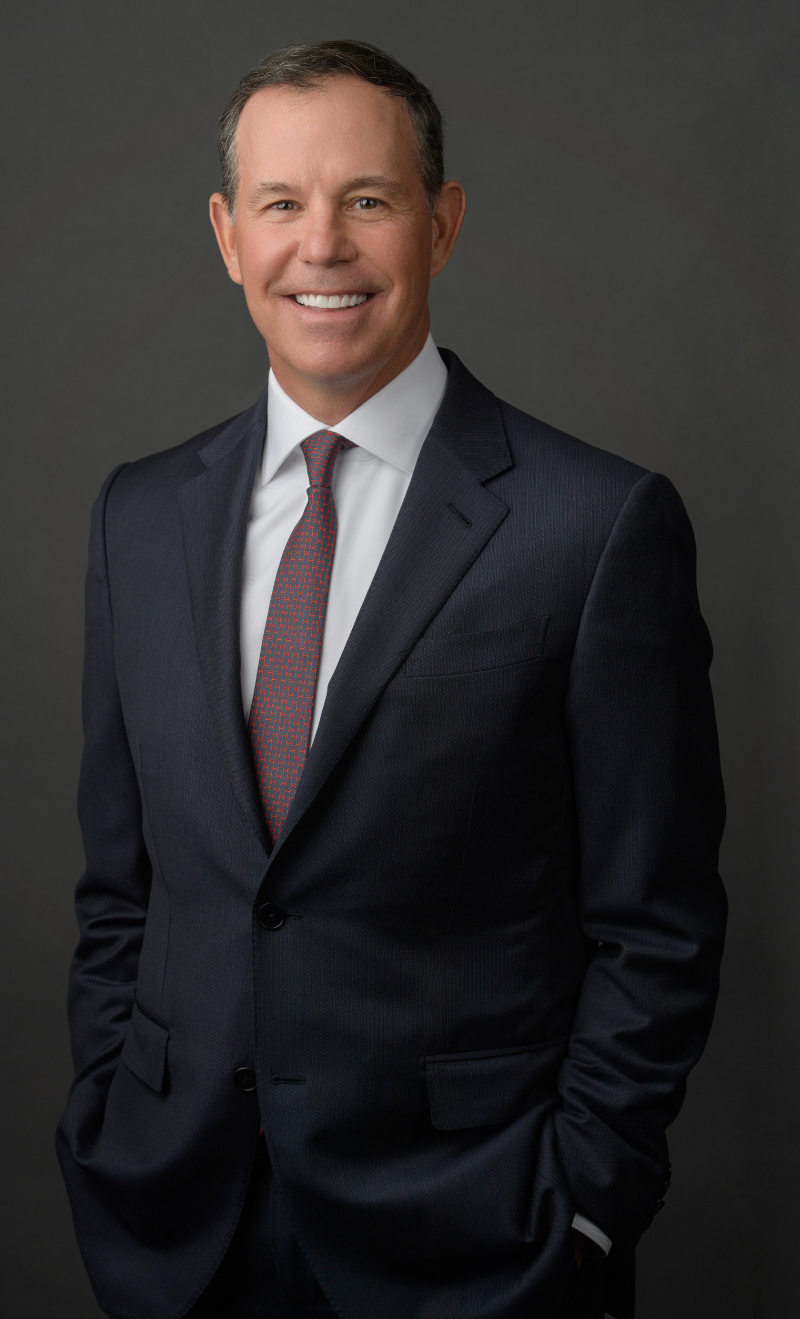
Tom Cartmell has spent decades at the helm of some of the largest litigations in history. He has unflinchingly taken on Big Pharma and Big Tech from a mid-sized, Midwest law firm, securing more than a billion dollars in jury verdicts and settlements for his clients. Just as importantly, the cases he works on alter the behavior of the world’s largest corporations.
“I truly believe that litigation is a way that you can make positive social changes,” says Cartmell. “When you’re able to make those changes through litigation, that impacts society as a whole. Not just the United States either – it impacts the world.”
A founding partner of his Kansas City-based firm, Wagstaff & Cartmell, Cartmell has been representing individuals and public entities in national mass torts for more than 20 years. He was deeply involved in the Pelvic Repair System Products Liability Litigation MDL, litigating cases on behalf of women who were seriously injured when treated with defective surgical mesh in abdominal and transvaginal surgeries. He was appointed co-lead counsel of the Ethicon MDL and took on five bellwether trials; he and his team also handled more opt-out trials than any other firm in the country. By the time the MDL closed, it had meted out a historic $8B in settlements for many thousands of women nationwide.
He and his team also played an active role in the nationwide litigation against opioid manufacturers. Cartmell represented cities and more than two dozen counties throughout that process. He also led a team that built the case against Teva Pharmaceuticals, which helped lead to a settlement of more than $4B against the company. Then, he moved to the litigation that perhaps most closely resembles his current docket – JUUL. Cartmell and his firm represented 350 school districts in the litigation against vaping giants for their impact on teen health and the education system. JUUL and major investors and directors eventually agreed to a reported $1.7B global settlement, and Altria Group added an additional $232M.
Cartmell has continued addressing issues impacting young people. Recently, he’s been spending much of his time leading the highly publicized litigation against global social media companies like Meta, owners of Facebook and Instagram, as well as TikTok, Snap and Google’s YouTube. The cases allege that the companies’ products are deceptively designed to be addictive, leading to high rates of depression and anxiety among adolescents that impacts both individuals and the broader education system. Cartmell has been appointed to leadership roles in the MDL, as well as to the Plaintiffs’ Steering Committee of the JCCP.
Of the billions of global users of these ubiquitous platforms, many are children and teens – including Kaley, a user of Instagram, Facebook and YouTube who argued that the platforms’ addictive properties led to her mental health struggles. Her case was a bellwether for the JCCP, and Cartmell served on the trial team, which was helmed by Mark Lanier of Lanier Law Firm. The Los Angeles jury found that the companies’ platforms harmed Kaley and ordered the companies to pay a combined $6M – a promising sign for plaintiffs soon to litigate a wave of cases alleging that these tech companies are responsible for users’ health. Reflecting on the trial win, Cartmell noted: “Mark Lanier was amazing to watch in trial. He tried an incredible case, and it was a pleasure to work with him.”
Cartmell will be following up that win by taking point in multiple upcoming bellwether trials; his next trial will be a Tennessee Consumer Protection Act case against Meta on July 20. In early 2027, he’ll be leading the case on behalf of the Tucson School District in Tucson, Arizona. After that, he’ll be trying a personal injury case in L.A. – the last of the Trial Group 1 bellwethers in Los Angeles Superior Court.
In addition to compensation for users’ harms, the litigation also seeks to change these companies’ practices, including the design of their products – which would be a worldwide transformation.
“This is hugely important litigation that can help make positive change,” says Cartmell. “I want our team to dedicate our time and energy to seeing this through to the end.”
Cartmell is a member of the Lawdragon 500 Leading Lawyers in America, the Lawdragon 500 Leading Litigators in America and the Lawdragon 500 Plaintiff Consumer Lawyers.
Lawdragon: Your next social media trial, on behalf of the state of Tennessee in Nashville, is coming up now. What's trial preparation looking like for you?
Tom Cartmell: My team and I are pretty bunkered in getting ready for that case. We're working closely with Tennessee assistant attorneys general Brian Phelps, Chris Dunbar and Matt Jansen. They're excellent lawyers and we have an impressive team that is working incredibly hard to be ready for trial.
LD: Looking at the recent L.A. trial win, what does that verdict speak to for the coming cases, even if your upcoming trial isn’t a personal injury case?
TC: The verdict is an excellent result for Kaley [the plaintiff] herself, and also for the litigation as a whole because of the message it sends. It speaks volumes that the jury found that both companies were negligent and intentionally designing their apps in a way that harms kids.
Personal injury cases are all a little different, and the defense is going to try to blame the circumstances in each plaintiff’s life on anyone and everyone but them. But the liability evidence is incredibly strong, and the internal documents are very easy to understand. The jury’s message was clear.
LD: You’ve worked on similar litigations, such as JUUL, where you also represented school districts. How do you view the overlap there?
TC: Both cases involve companies who are addicting kids. They're public nuisance cases, so the damage models are very similar. We work very hard to make sure that we really understand the circumstances in these schools. The administrators, teachers and students are very effective at explaining why there is a major problem for the whole educational process that needs to be addressed, and then they are very smart about understanding how to fix these problems in schools and how much it will cost. Administrations from these schools show the harms that they're having from loss of teacher time, to having to hire new mental health caregivers, to students who are unable to concentrate during class. All these things harm our schools, so there's a consistent thread there.
“It speaks volumes that the jury found that both companies were negligent and intentionally designing their apps in a way that harms kids.”
LD: Do you find that you are able to improve upon each litigation because of what you've learned in previous mass torts?
TC: Yes. We’ve learned a lot of things about public nuisance cases involving school districts in the JUUL litigation. We took one of the first school district cases to trial before Judge Orrick. Altria settled in the middle of trial right after we put on all of the evidence for San Francisco Unified School District, but we were able to visit with jurors after the settlement was announced. That allowed us to do a deep dive on our presentation of the evidence and the experts. So, coming into the Social Media MDL, as a team we looked at the lessons learned in the JUUL MDL and tried to improve our presentation of the evidence. We have a much better understanding of the effective ways to present the evidence to the jury now. I thought we did a great job in the JUUL MDL in the case against Altria, but we can do even better here.
LD: Do you remember the first mass tort you worked on?
TC: I do. There was an MDL in the Southern District of New York. It was called In re Ephedra Products Liability Litigation, and it was against dietary supplement companies. They sold over-the-counter products that included an ingredient called Ma Huang. This ingredient was a distant cousin molecularly to cocaine.
LD: Really?
TC: Yeah. These products were started by people literally in their basements. They were putting together these cocktails and calling them dietary supplements. They rev your heart up, so people were using them to work out.
I got a call from a lawyer who wanted to refer me a case for a young Marine who was going on his normal 45-minute run in the summer in St. Louis. He had taken Metabolife and gone for his run – and he had a heart attack and died. He was, I think, 27 years old and he had two young kids. So I started looking into that. I did a lot of research and sure enough, there had been a consolidation of these cases in the Southern District of New York. So, I reached out to some of the lead counsel in that case, specifically Jayne Conroy. I really didn't have any understanding of how these mass torts worked, and Jayne was so nice to me and took me under her wing.
LD: So that set you on a trajectory of continuing this work?
TC: It did. I made some friendships within that litigation. Not long after that was the Vioxx litigation and the Celebrex Bextra litigation. The Celebrex Bextra litigation was the first time I ever applied for a steering committee. That case was in front of Judge Breyer pending in the Northern District of California. Judge Breyer was, to this day, one of the most amazing judges I've ever seen.
LD: But you started on the defense side. Tell me about that.
TC: Right. When I graduated law school, I went to a big defense law firm. At the time it was called Blackwell Sanders. The head of litigation at that firm was named Tom Wagstaff.
LD: Ahh. The founding partner of your firm now.
TC: Yes. We worked together at Blackwell Sanders for three years and I worked under him. He was handling primarily medical malpractice defense cases, and he had a ton of business and was in trial a lot. That allowed me to at a young age go to trial quite a bit during those first three years. He was a tremendous mentor to me. Great trial lawyer; known in Kansas City as one of the best trial lawyers. He taught me almost everything I know, frankly.
Regulation sometimes is very slow and sometimes it doesn't happen at all, but litigation can change the risk-benefit analysis for these companies.
LD: And your dad, who was also a lawyer who moved from defense to plaintiffs’ work, knew him as well, right?
TC: That's right. My dad had actually had litigation against him and told me, “This is a really great trial lawyer who would be a great mentor.”
LD: That's great. And fairly early on in the life of the new firm you switched to the plaintiffs’ side. Was that always your plan?
TC: That was my plan. My dad was an excellent trial lawyer for plaintiffs who started his career at a defense firm, and I wanted to follow in his footsteps. Out of law school it made sense to get really good experience at a big law firm that could get you into trial and really hone your skills. After three or four years, I wanted to leave and go do plaintiffs’ work with that background of having already tried a bunch of cases so that I knew what I was doing.
LD: How did the conversation about starting the firm go?
TC: We had a Christmas party at Blackwell Sanders in 1996. Blackwell Sanders was growing like crazy. It had become a very big firm with lots of different offices around the Midwest. I remember Tom Wagstaff looking around and saying, "This place has changed. It's just not the same anymore – the small, personable, team atmosphere." I said, "Well, you could start your own firm and have that atmosphere if you wanted to." And he sort of laughed it off. I gave him trouble about it after that for several months and then not long after that he said he was going to go start his own firm and take me with him.
He knew because we worked so closely together that I really wanted to represent individuals philosophically. Honestly, I loved representing doctors and hospitals, too. It gave me a lot of experience, the doctors were very noble and the hospitals I represented were amazing. To this day I still represent the local children's hospital in Kansas City and from time to time I still represent doctors.
LD: Interesting. And back to mass torts, how have you seen them change since you first started working in that area?
TC: I would say the biggest change in my experience from when I started back in the early 2000s is likely that it's a much more diverse group of lawyers. I think it's a really great and very necessary change. When I started in mass torts, frankly, it seemed like it was mostly a bunch of old white guys. Later on, there started to be a movement to be more diverse in the appointments by judges. It's made these mass tort cases from the plaintiffs’ perspective much better – no question in my mind.
LD: When you're working on these sprawling cases, how do the individual stories stand out to you?
TC: Well, a lot of people question working in mass torts because you might lose the personal relationships with your clients.
LD: Right. I know you all focus on not doing that.
TC: Yes. One of our firm's focuses is to continue to keep those relationships with clients. Looking back, I would say the key moments that have kept me involved in mass tort litigation have involved the settlements or the trials that have been life-changing for the individual clients. Mass torts provide an avenue for people who never could take on these billion-dollar corporations on their own. We've had some amazing battles against the biggest corporations in the country, and that gets in your blood.
LD: And speaking of the lawyers with your firm, tell me a bit about the team there and what you find most fulfilling about working with them.
TC: We focus on developing lawyers who really try cases. They have experience on their feet in courtrooms. A lot of lawyers say they've tried cases, but they really haven't tried a substantial number. So we have I think a really great group of younger lawyers who have the experience in courtrooms on their feet trying cases substantially – taking witnesses and handling all the pretrial discovery. I love that about our team. It allows us to get involved in more great cases. More than ever, I want our firm to focus on cases that really do have positive social impact on society. My partners believe in that as well.
“We've had some amazing battles against the biggest corporations in the country, and that gets in your blood.
LD: Tell me more about that social impact.
TC: Regulation sometimes is very slow and sometimes it doesn't happen at all, but litigation can change the risk-benefit analysis for these companies. For example, in the social media cases, part of the damages that we're claiming are things like injunctions and telling them they need to change the design of their products. That was the same thing that was being asked of the opioid manufacturers and sellers. When you’re able to make those changes through litigation, that impacts society as a whole. Not just the United States either – it impacts the world.
LD: And remind me, do you have kids as well?
TC: I do. I have two kids.
LD: So working on these cases involving school districts, from JUUL to social media, is that impactful for you as a father, as well?
TC: It definitely is. My kids are grown now. My son is actually in law school. He's 28 and my daughter is 23, but they both grew up during sort of this social media epidemic, I call it, frankly, and during the JUUL epidemic. So I've had a strong personal interest in both of those cases because I've seen how it's affected kids my own kids' age. I feel strongly that that trying cases is an important part of what I do. It's extremely important that our system is a trial system. It’s the best system in the world.

