There’s a whole lot of miles between rice farmers scratching out a living throughout rural Texas and New York City’s Fifth Avenue, where retailers swipe cards in the millions every day.
At least if you were to jump in your pickup truck and drive.
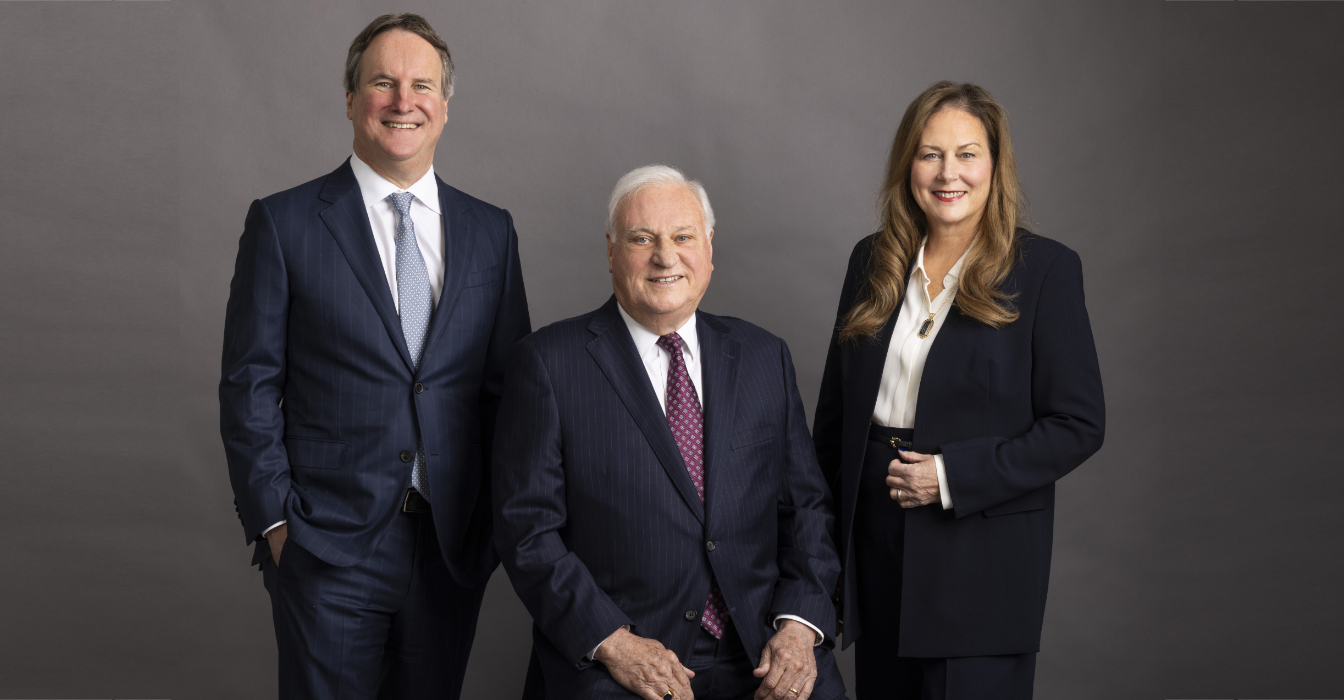
But if you are Robin C. Gibbs and his team of antitrust aces at Houston’s Gibbs & Bruns, both are clients to be championed in epic antitrust battles – advocating for the rice farmers against a milling company suppressing their prices and for merchants who claim Visa and Mastercard conspired to inflate so-called swipe fees.
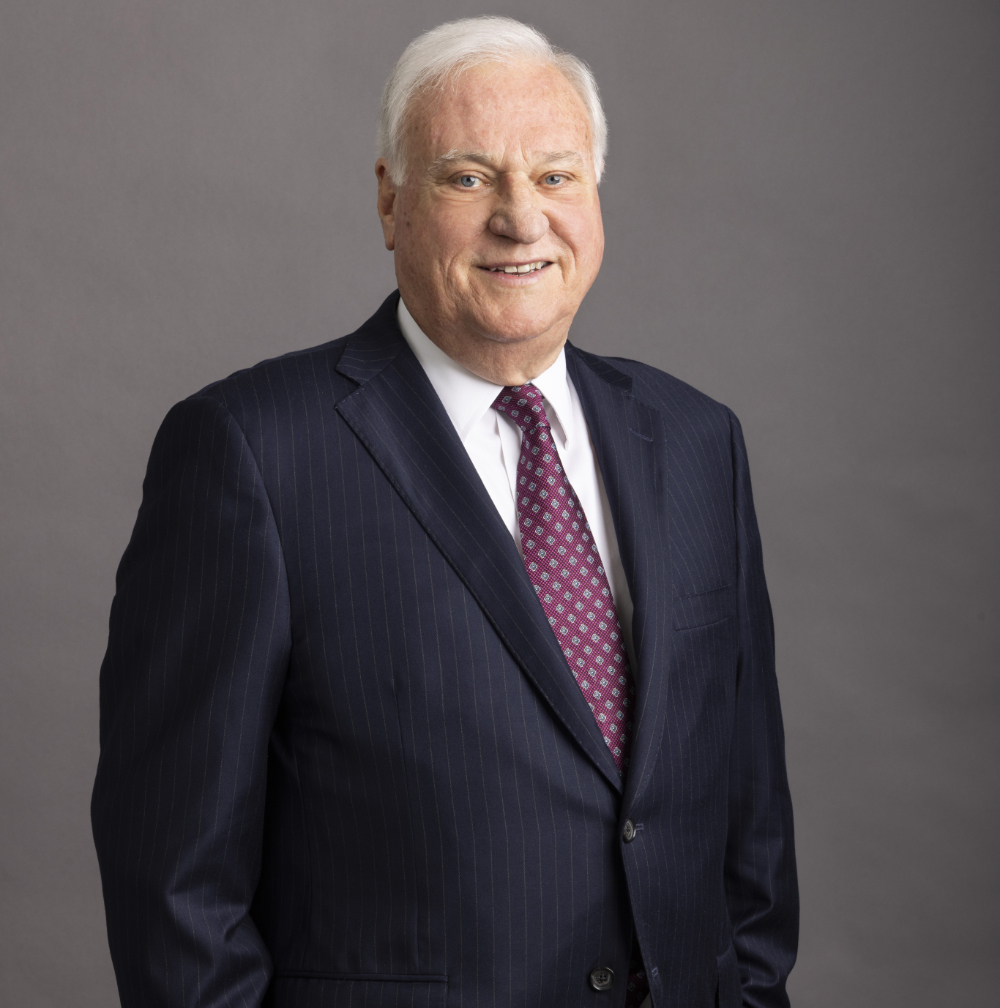
Inspired by a plaintiff lawyer uncle from San Antonio, Gibbs made his way to The University of Texas School of Law, from which in 1971 he joined the legendary antitrust practice helmed by Harry Reasoner at Vinson & Elkins. Houston was a hotspot of ambitious trial lawyers in those days, and just 12 years later, Gibbs would form his own firm, which has eclipsed his wildest dreams of creating a high-stakes business litigation boutique.
A crown jewel is its antitrust practice, hard hewed in agriculture and energy through years of fallow enforcement only to burst forth in the last decade as technology and global business exploded the lens on the intersection of law and competition.
Call it the law of unintended consequences. Kind of like sticking a drill in the raw Texas earth. Anything can happen.
“We hung up our shingle. We were generalists. Whatever ails you, we should have the skills to fix it,” Gibbs says, in his remarkably understated fashion. “But, coincidentally, antitrust did play an important role, both in economics, internally, and in our visibility because we were always with or against all the big commercial firms in the country.”
Gibbs parlayed his early years in insurance defense litigation – forming relationships and building courtroom know how – into referrals from V&E, Baker Botts and others. He created a client-rich environment in the halcyon days of Texas’ emerging juggernaut of a plaintiff bar in the ‘70s and ‘80s, defending and suing for entrepreneurs in real estate, technology and energy as the economy boomed, busted, then turned right around and did it all over again.
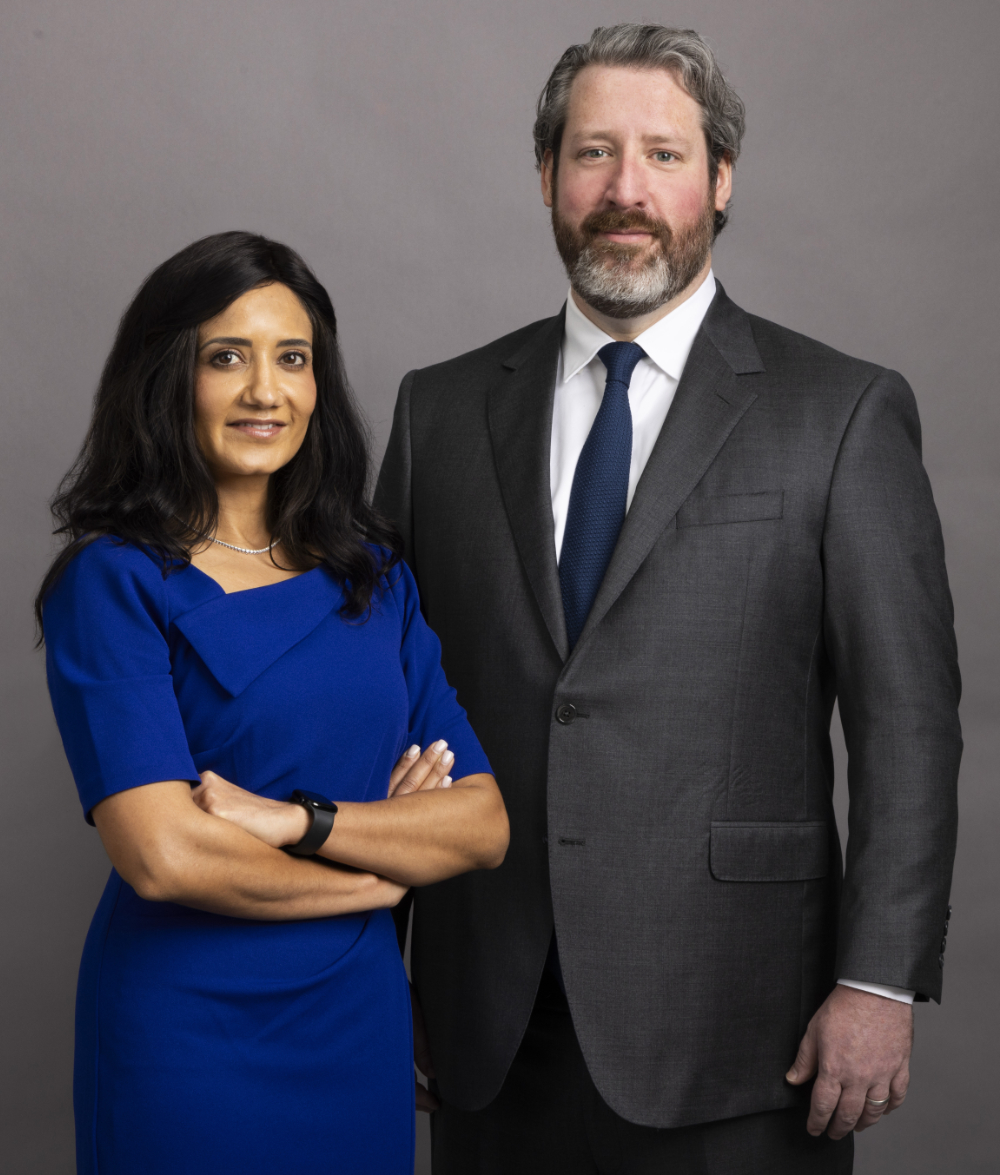
Ayesha Najam and Charles Rosson work at the cutting edge between technology and antitrust.
Gibbs’ early vision took hold in the exceptional people he judiciously selected to practice with him – attorneys who would go on to distinguish themselves as formidable trial lawyers in their own right. Among them are Kathy Patrick and Barrett Reasoner who led the firm’s most recent high profile antitrust battle against Visa and Mastercard. In this case, Gibbs & Bruns represented a group of 17 national retailers, including Target, the TJX Companies, Macy’s, Kohl’s, Staples, Office Max and Office Depot, JCPenney, Saks, Abercrombie & Fitch, Luxottica, Chico’s, Big Lots Stores, Victoria’s Secret and others in individual antitrust actions against Visa and Mastercard.
The plaintiffs sought over $20B in damages – which would be trebled if plaintiffs were successful at trial.
These plaintiffs alleged that, for decades, Visa, Mastercard and their card-issuing banks conspired to restrain competition and fix interchange prices – the fees merchants pay every time customers use credit or debit cards at their stores across America. According to the plaintiffs, those banks instituted anti-competitive rules and fixed interchange pricing when they owned Visa and Mastercard and kept those rules in place after Visa and Mastercard went public in the early 2000s. These agreements, plaintiffs alleged, restrained trade and caused them to pay billions of dollars in supra-competitive interchange fees.
Patrick and Reasoner are a fearsome duo for many reasons, she a product of rural Texas, he the son of Texas’ king of antitrust, Harry Reasoner. Patrick’s years at Harvard Law School enforced her desire to use the law to help people treated unfairly. Barrett, schooled at UT, was taught by a legendary antitrust professor, Lino Graglia (as was Gibbs), who believed no antitrust litigation was good antitrust litigation.
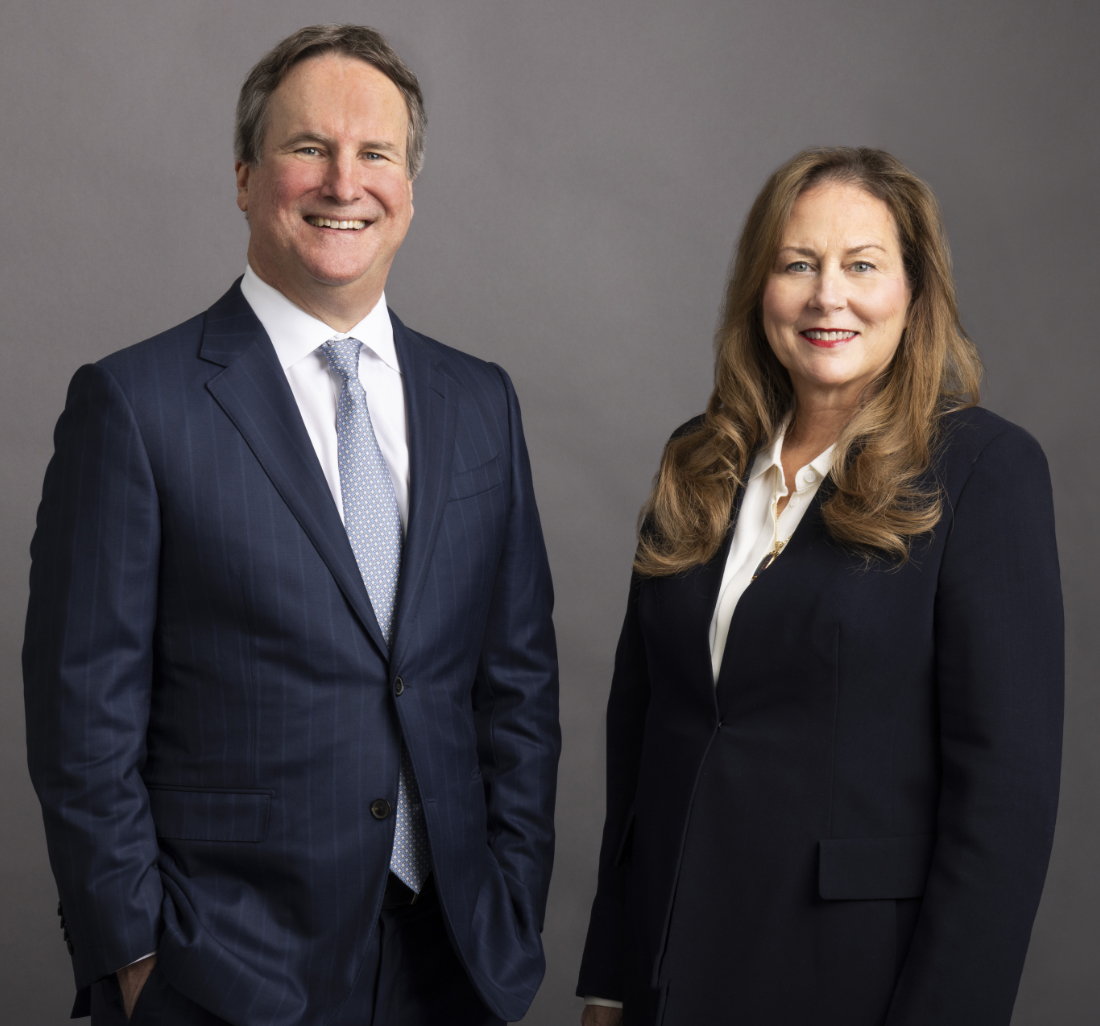
The seeming birds of two different feathers joined up in the early ‘90s. Patrick joined the then-seven-lawyer firm in 1986, just three years after Gibbs opened its doors. Reasoner followed in 1992, after a lap through the prosecutor’s office.
The firm represented a failed Texas grocer, Handy Andy, who had been driven out of business by a rival, H-E-B. And both remember teaming up with an Italian marine construction company to defeat allegations it conspired with competitors to rig bids for heavy-lift derrick barges.
“One of the best things about antitrust is learning about parts of the economy that you never knew existed and the boundaries of conduct reached by the law,” Patrick says. “The [marine] case that we handled broke ground in what would become the standard limiting the extraterritorial application of the antitrust laws.”
The duo has collaborated on some of the firm’s biggest successes, while each has also notched significant wins for plaintiffs and defendants in trade secrets, oil and gas, and financial disputes. When they combine – as they did in leading the firm’s Visa/Mastercard efforts – it’s a rare one-two of heart and head that gets results.
“These antitrust cases are absolutely complicated, but they require the same sorts of skills,” says Reasoner. “Trying to simplify it and tell a story that's going to resonate with the jury. Once you get past all the complicated aspects, there are fundamental stories of right and wrong that we think can be told in these cases and that we've developed a skillset in telling.”
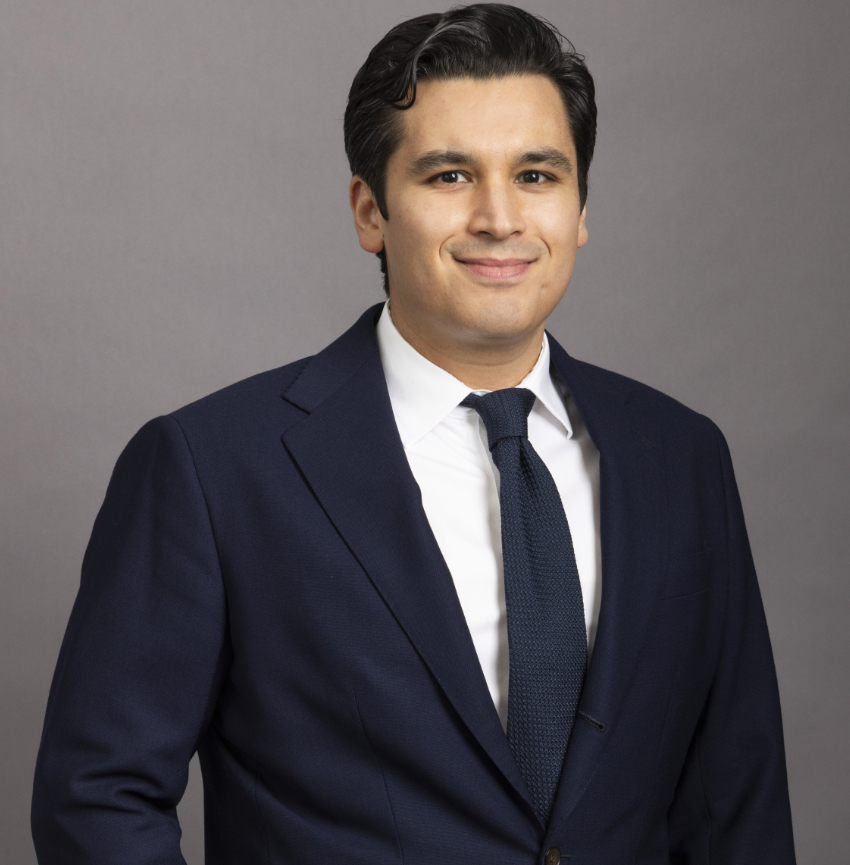
The Visa and Mastercard litigation began in 2005 as a class action, with merchants and trade associations claiming the card networks and their member banks colluded to fix interchange or “swipe” fees at artificially high levels. While many participants settled over the years, the Vorys law firm created a coalition of retailers that opted out of the agreement, with Gibbs & Bruns joining as lead trial counsel in 2019.
The plaintiffs contended that Visa and MasterCard essentially forced merchants to pay for Visa and MasterCard’s marketing to accept the cards, Patrick explains. She added that these interchange fees that merchants pay are their third-largest expense. “Our clients alleged it was a price-fixing conspiracy because if a merchant wanted to accept any card, it had to accept every card, no matter how much it costs them to do that.”
“Just think about a discount merchant, where they're dealing with very thin margins on the clothing they sell,” Patrick says. “If two percent or more of your cost of that transaction goes to accepting the credit card, you can't really make enough money to be stable.”
Denise Drake joined the firm in 2017 after clerking for U.S. Supreme Court Justice Stephen Breyer. Drake helped craft the opposition to the motions for summary judgment filed by Visa and MasterCard, which the court denied after finding triable issues of fact – rulings that preserved core liability theories and cleared a path to trial. “What was so exciting for me about being a part of drafting those briefs was how much they were on the cutting edge of the recent developments in antitrust law,” Drake says.
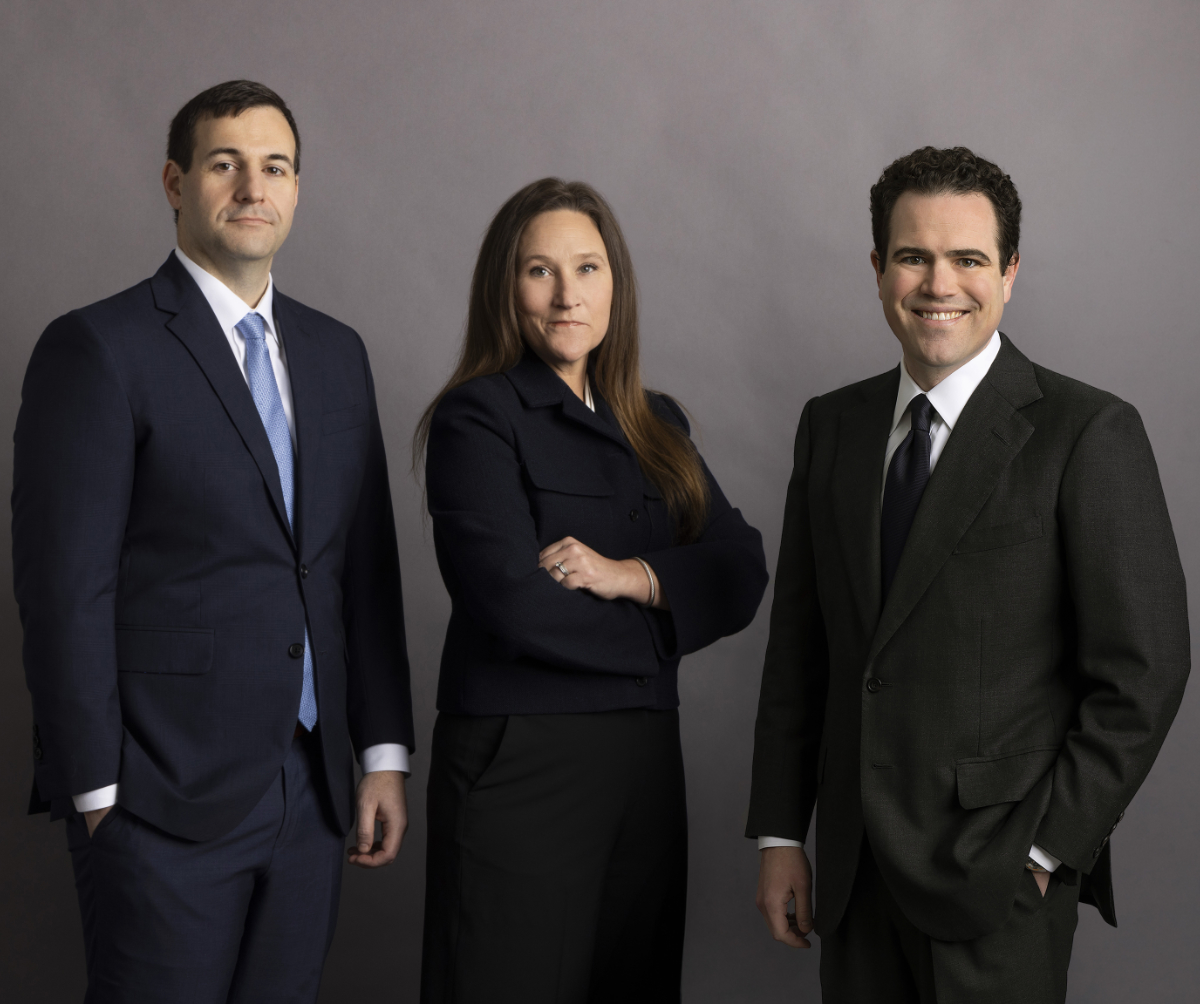
Gutierrez explained the team was making the final sprint to trial – taking dozens of depositions, preparing for hundreds of witnesses expected over the course of trial, and crafting a strategy to distill a decades-long dispute and dense economic issues into a narrative that a lay Manhattan jury could parse and understand.
Throughout 2025, the firm helped clients in the group resolve their claims against Visa and Mastercard. Staples, Target, Kohl’s, JC Penney’s Luxottica, Abercrombie & Fitch, Big Lots and others reached settlements in the first part of the year. Over the holidays and into 2026, the firm resolved the claims of the remaining plaintiffs, who dismissed their claims only weeks before trial was slated to begin in the Southern District of New York.
Just down the hall, Patrick is also leading Google’s defense in Texas against seventeen states that are challenging Google’s advertising technology platform. Joining her on the case are Ayesha Najam, another Harvard Law graduate who joined the firm in 2005; and Charles Rosson, a rare lateral from V&E in 2017.
“We are at the cutting edge between technology and antitrust,” says Aundrea K. Gulley, who joined the firm in 2001. Gibbs & Bruns recently defended automotive software retailer Reynolds & Reynolds Co. in a cutting-edge antitrust case in which Authenticom, a data integration service provider, alleged Reynolds conspired with dealership software firm CDK Global to restrict access to dealer data. Partner Justin Patrick recalls that the firm “dedicated a very significant portion of our energy in the case to prosecuting counterclaims under the DMCA [Digital Millennium Copyright Act], under the Copyright Act, under the Computer Fraud and Abuse Act. Strategically, that was a way to cut off a lot of the [plaintiffs'] antitrust claims. And it was a way to put the other side on trial. Even if you are the defendant, you find some issue where you can put the other side on trial.”
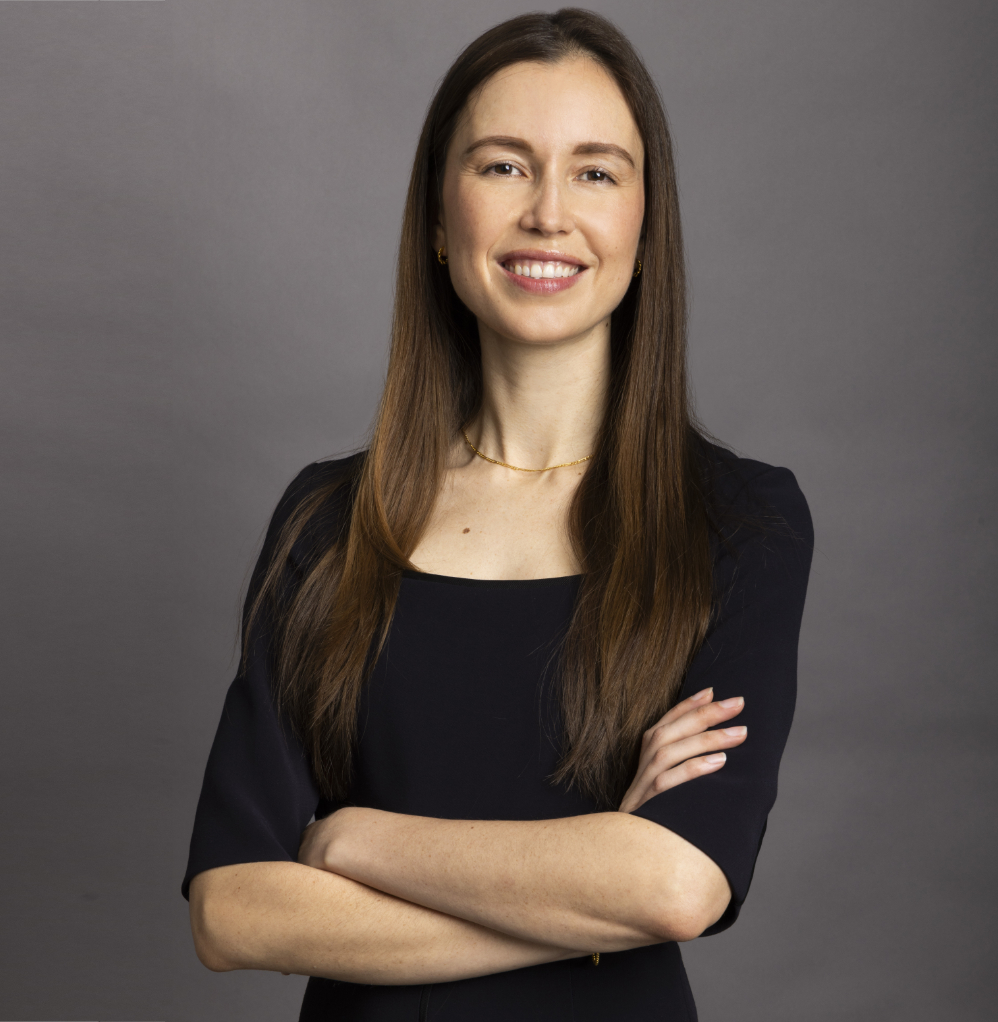
Gulley envisions the antitrust space of the future will “focus more on First Amendment-type IP issues and property rights when it comes to technology … software is private intellectual property. It can cost billions to develop. When it works, it becomes extremely valuable to customers. But it is also coveted by those who want the same benefit without the burdens of the investment and innovation required to gain them. What is the role of private property? And what role does the government have in a market where innovation is happening rapidly? You will see a lot more of those issues which will tumble into an antitrust problem at some point.”
“The reason we were in [the Authenticom] fight was because this data was valuable, and AI is just going to make that even more true,” observes partner Brice Wilkinson.
One thing is certain: Gibbs & Bruns lawyers seem to thrive on the legal twists and challenges that define antitrust work. Long nights spent in paper-strewn war rooms – strategizing, stress testing theories, and refining arguments – translate into a quiet confidence that shows in how this battle-tested team guides clients through complex disputes that unfold over years.
Najam and Rosson both emphasize that lean trial teams foster a high degree of immersion and collaboration. “When the team is small, everyone is closely engaged with the facts and strategy, and over time that shared focus naturally aligns the group and allows each person to complement the others’ strengths in a way that strengthens the overall case – and ultimately better serves the client.”
Gibbs himself modestly marvels at the “steady expansion” of the firm he co-founded over 40 years ago. “We got here by working very hard, taking risks where it was appropriate,” he says. “One of the things, comparing our firm today with where it started, is that in addition to the size of the practice and the quality of people, the quality of life has been a real centerpiece of our culture that we've tried to build here. We keep the firm relatively small, it's always growing, but it grows very gradually.”

