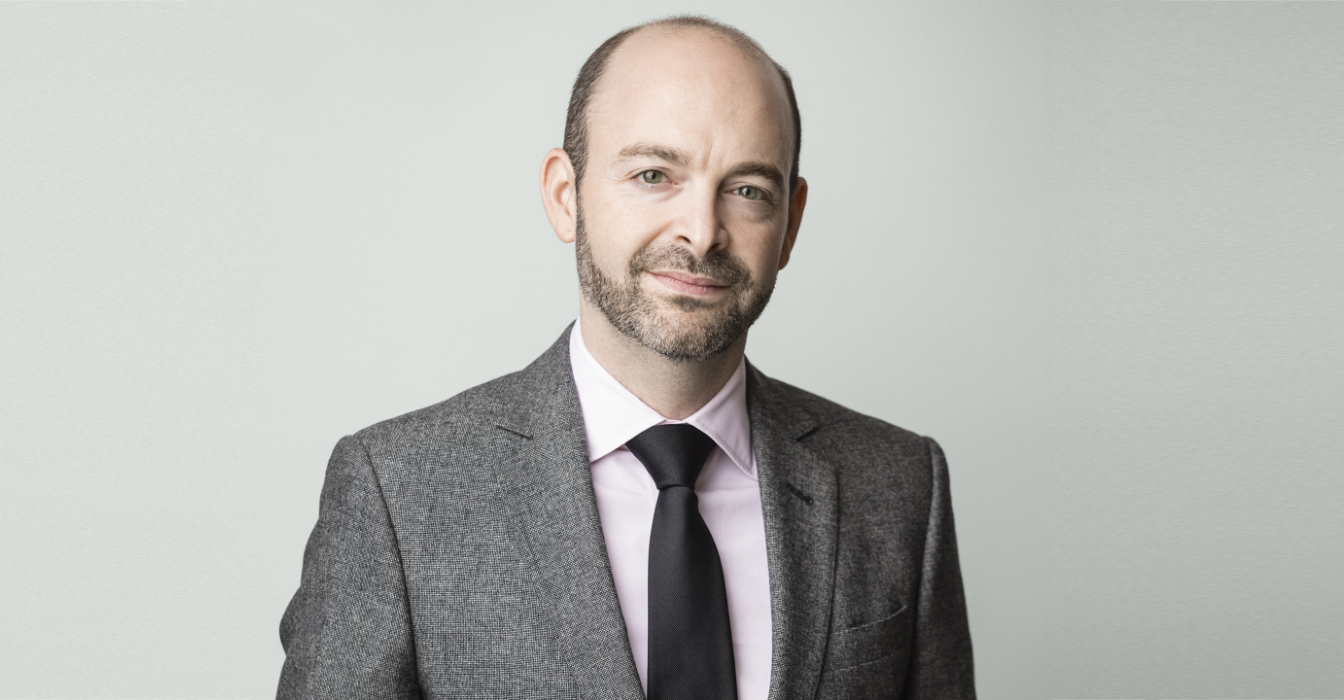
For Michael Vogel, few experiences can match the intensity of a high-profile deal and the interesting, knotty problems to solve that accompany it. It’s an adrenaline rush that has propelled him through his career and into his current role as a partner in the Mergers & Acquisitions and Private Equity groups at Paul, Weiss.
“[Former Paul, Weiss Corporate Chair] Bob Schumer once said in an interview that the energy around a deal is similar to that of a political campaign, and I couldn’t agree more,” said Vogel. “It's that intensity, combined with the constant problem-solving, that makes this practice so compelling.”
Vogel advises on a range of private and public transactions, including mergers and acquisitions, leveraged buyouts, joint ventures, carve-outs and equity investments. A member of Lawdragon’s 500 Leading Dealmakers in America, Vogel has also received recognition for his work in the media and entertainment industries.
Vogel’s media and entertainment work includes advising the special committee of the CBS board of directors on CBS’s merger with Viacom to form ViacomCBS, a deal valued at more than $40B; Advance Publications, a major shareholder in Charter Communications, on Charter’s $34.5B combination with Cox Communications; and Jeffrey Katzenberg, a co-founder of DreamWorks, on the $3.8B sale of DreamWorks Animation to Comcast, among others.
On the private equity side, Vogel recently represented KPS Capital Partners in several major transactions, including its acquisition of a controlling stake in Ketjen’s refining catalyst solutions business from Albemarle, the €3.615B sale of its portfolio company Eviosys to Sonoco Products and the $4.4B sale of Howden to Chart Industries. He also regularly represents Ares Management funds, including in their $1B preferred equity investment in a newly formed railroad subsidiary of FTAI Infrastructure to support FTAI’s acquisition of The Wheeling Corporation, as well as their acquisition of Form Technologies.
In the public company space, Vogel recently counseled Warby Parker in its partnership with Google to develop AI-powered glasses; Nebius Group in several transactions enhancing its AI inference platform; and homebuilder MDC Holdings on its $4.9B sale to Sekisui House.
Vogel recently sat down with Lawdragon to discuss his career and practice.
Lawdragon: What trends in M&A and private equity are you seeing these days?
Michael Vogel: In the current market, as a general matter, we need to distinguish strategics from private equity. First, the megadeal is back, and we’re seeing lots of large-cap transactions. Both the United States and the world have acclimated to the regulatory environment, and corporates in particular are feeling more conviction amid regulatory shifts.
Without equity currency, private equity sponsors remain selective. Among other factors, high interest rates and global political uncertainty are forcing discipline. Without robust demand for assets, we are seeing longer hold periods and an increase in the frequency of alternative transactions caused by extended hold periods.
AI is also driving M&A, but “AI” is a superficial description. There’s a robust ecosystem supporting AI development – from dirt to power, construction services to repair services, CPUs (chips) to BTUs (air cooling) – meaning there is seemingly no industry untouched. With demand seemingly insatiable, the investment and growth in those businesses is getting a lot of attention up and down the economy.
LD: You have done a lot of work on media and entertainment deals. Are you seeing a lot of similar trends through your work in that space?
MV: Actually, the consolidation game in that space largely seems to be over. That said, while history doesn’t necessarily repeat, it echoes. Both technology and regulatory environments drive this space: both vertical integration and hardware-plus-content go in and out of fashion. What remains to be seen is whether the potential “big three” in streaming going forward – Netflix, Disney and the potentially newly formed Warner-Paramount – want to rejigger their content construction and what role the other technology giants want to carve out for themselves in this space. What streaming has made clear is that these assets are remarkably durable, but the other constant is that the corporate parents cycle through.
Our clients at the end of the day are people, and we have great relationships with talented, thoughtful leaders across industries. Working with and learning from people of that intelligence and capability is something for which I am deeply grateful.
LD: What most interests you about working in media and entertainment?
MV: Two things, really. The first is the deep personal investment of the people behind these businesses. Founders and creators of independent companies care intensely about what they’ve built, but that same passion extends to the conglomerates, where executives are genuinely protective of the brands and content under their roofs.
The second is the social and strategic dynamic of the industry itself. Media and entertainment have undergone a complete transformation over the past several years, and I’ve had a front-row seat to how the assets move as the landscape shifts. My clients are sophisticated businesspeople thinking constantly about how to unlock the greatest value from a given portfolio.
Since the 2019 ViacomCBS recombination, we’ve watched content increasingly follow the technology that delivers it. Entertainment itself is a living, breathing enterprise. What changes is how audiences consume it, and that question drives almost every deal in the space.
LD: Speaking of which, I imagine your work representing the special committee of the CBS board of directors in CBS’s merger with Viacom to form ViacomCBS has given you a unique perspective on the media and entertainment space. Would you say it’s the most memorable deal in your career?
MV: Yes, it was amazing to be part of that deal. There was a lot of navigating history, including past ownership and past conflicts. At that time in media, there was also the belief that more content needed to be held under a single umbrella in order to drive a direct-to-consumer experience, which would ultimately drive revenue. The legacy intellectual property was as, if not more, valuable than the new production pipelines. Having assets under one umbrella with CBS’s size and the legacy companies was viewed as an important bringing together of assets. It also set up a dynamic where the Redstone family ultimately exited a tightly controlled business and put it in the hands of a technology-focused group thinking of ways to transform assets.
That deal is personally memorable because it’s the largest deal I have done as a partner at Paul, Weiss. It’s also the first deal I did as a partner with Bob Schumer, and he has been a great mentor to me.
LD: On that topic, what are the most important lessons you’ve learned from Bob and other mentors you’ve had?
MV: Lessons big and small – where to focus my attention in a transaction and what truly matters commercially, but also how to build a career and cultivate relationships, both inside the firm and out. Above all, I’ve learned the value of consistently doing top-tier work and how to take genuinely complex problems and make them feel simple.
LD: What advice would you give to young M&A and private equity lawyers now?
MV: First, it’s a relationship business. Within the firm, it’s important to have mentors and mentees and to build teams. But doing top-tier work requires having top-tier clients, and building those external relationships can be quite rewarding.
Second, don’t take the opportunity for granted. A platform like Paul, Weiss offers something you simply won’t find elsewhere: The opportunity to develop your craft – not just legal expertise, but the dealmaking instincts and commercial judgment that define a great practitioner – is second to none. Take full advantage of it.
Third, embrace your tools, including AI. You can do the best work the fastest when you leverage all the tools available to you to the maximum degree possible.
A platform like Paul, Weiss offers something you simply won’t find elsewhere: The opportunity to develop your craft – not just legal expertise, but the dealmaking instincts and commercial judgment that define a great practitioner.
LD: What does Paul, Weiss provide as a platform for your work, and what do you appreciate about the firm?
MV: It’s the people. Our clients at the end of the day are people, and we have great relationships with talented, thoughtful leaders across industries. Working with and learning from people of that intelligence and capability is something for which I am deeply grateful.
That holds true within the firm too. I can pick up the phone and talk to partners who are going to jump at the opportunity to help. It runs from the partnership deep into the associate pool. There are many wonderful, intelligent people who are awesome to work with.
LD: It sounds like you work with some excellent clients. Are there any that stand out to you besides the ones you’ve already mentioned?
MV: Thanks to another mentor, [Paul, Weiss Global Head of the Corporate Department] Angelo Bonvino, I’ve been working with KPS since I joined the firm, and he’s supported and promoted my growth as one of its lead deal partners from the beginning. My work with KPS has been everything you want to build in a career. Similarly, shortly after making partner, I began working closely with Ares Opportunistic Credit thanks to another mentor, [Paul, Weiss General Counsel and partner] Ken Schneider. That team has been a leader in opportunistic credit, and it has been quite rewarding to work through novel issues with them. And maybe a bit of recency bias, but my work with Nebius this year has been super interesting, particularly working with the upper echelons of tech talent in a global political environment skeptical of AI. Honestly, I feel a bit bad having to choose among clients. It is really a privilege to work with all of them.
LD: Switching gears, what are some things you do for fun outside the office?
MV: In addition to spending time with my kids, I play basketball about once a week. It’s a window I’ve boxed out for my mental health.
LD: From what you’ve told us, it sounds like you were set on being a lawyer from the beginning. But if you had to have a “dream job” outside of law, what would it be?
MV: I’ve always said that being the second baseman for the New York Yankees was the only other option, but my genetic pool was not going to permit that. Jalen Brunson is also making the Knicks point guard spot look attractive, but again, genetics.
LD: It sounds like that hasn’t stopped you from finding a fulfilling career. What do you enjoy most about your work in M&A and private equity?
MV: I love the sport and energy of it. I love the problem solving and opportunities for creativity. I love that it is project-driven – there are consistently things to celebrate. You also have the opportunity to work with great people and build connections over time. That’s what’s most attractive to me: it’s long-term relationships and short-term, challenging projects.

