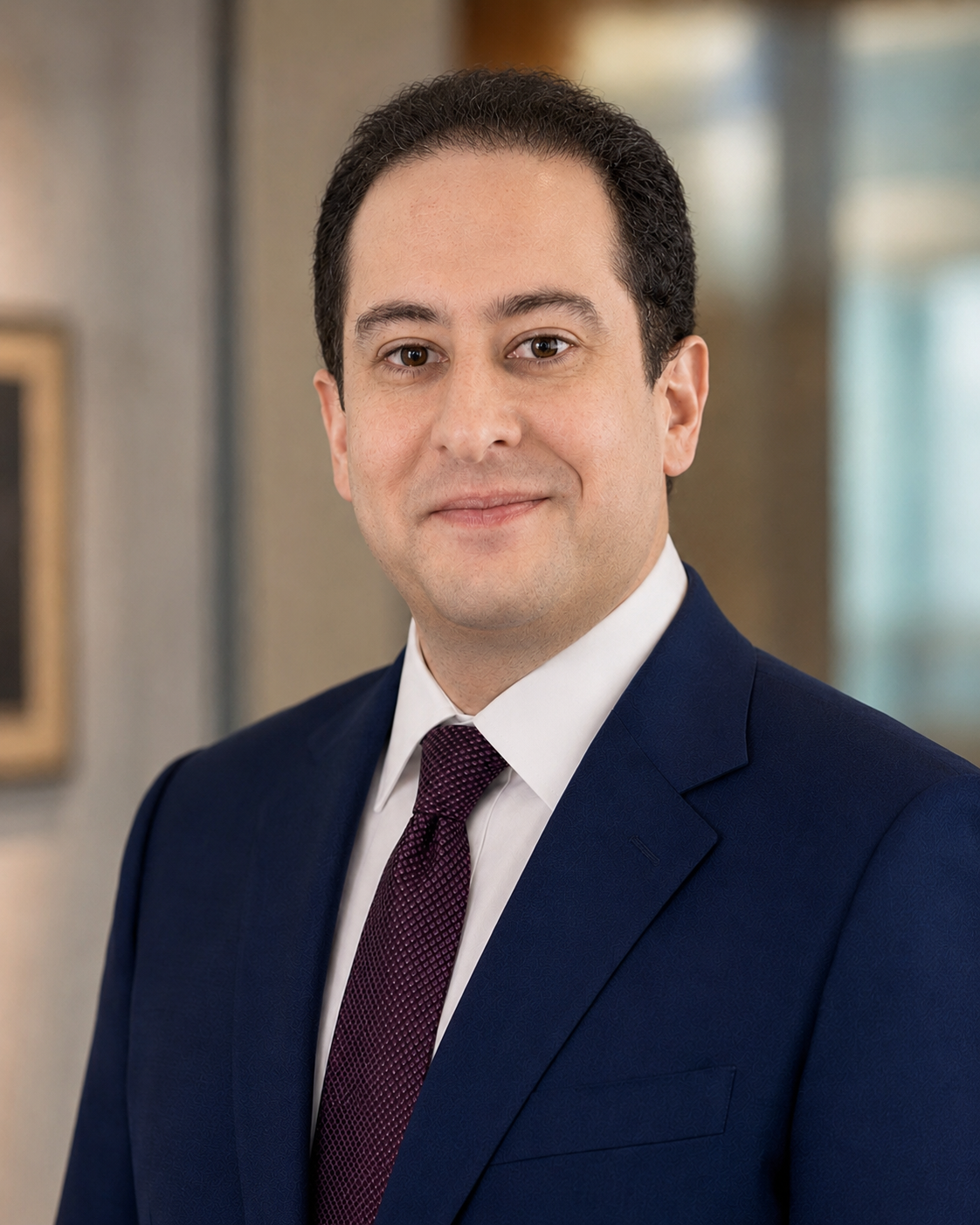
Before John-Paul S. Deol advises a client in a workplace dispute, he wants to see the situation for himself. He goes on-site, learns how the business actually operates, identifies what everyone involved stands to lose and anticipates what they are likely to do next. Founders, senior executives, investors and the companies they lead retain him for the disputes they cannot afford to get wrong, often against sophisticated companies represented by other nationally recognized counsel.
That approach now sits at the center of Columbo Deol, the San Francisco litigation boutique Deol launched this year with Michael A. Columbo, a former federal prosecutor who also served as an enforcement attorney at the Federal Election Commission. The two built the firm on a simple premise. Clients facing consequential problems should get the sustained, personal attention of the senior lawyers they hired.
“The matters we take on tend to be the ones people lose sleep over,” Deol says. “Careers, companies, reputations. Our clients want senior judgment applied from day one, and that is what we built the firm to deliver.”
Deol has taken a deliberately wide path through the law. He began in boutique practice, where he gained hands-on experience early, then moved to AmLaw 100 firms Sheppard Mullin and Fenwick & West, where he represented companies ranging from Fortune 100 corporations to venture-backed startups in employment, trade secret, and employee mobility litigation. Along the way, he built a résumé that is unusually broad even among experienced litigators. He is admitted to practice in California, New York, Texas, Washington and the District of Columbia. He has served as a Judge Pro Tem in the San Francisco Superior Court and as a court-appointed special master, and he earned a master’s degree in public health from Yale while practicing law full time. Today he litigates, counsels executives and companies, and serves as a mediator, working with clients in Spanish and Italian as readily as in English. Each role has sharpened his understanding of how the same conflict can look entirely different depending on where someone sits.
“You cannot outsource judgment,” Deol says. “Not to a bigger team, not to a process and not to a machine. Clients hire us for our judgment, and we give it to them straight.”
Lawdragon: Congratulations on the new firm. How did it come together?
John-Paul S. Deol: Mike and I made partner on the same day at our previous firm, and we’ve always worked well together. We have complementary styles. I tend to be more direct and blunt, while Mike brings a more empathetic approach. That balance works well not only between us, but also with our clients. Our practices also fit together well. I focus on employment and related areas, and Mike brings deep experience in business litigation and government investigations and enforcement from his years as a federal prosecutor and at the FEC.
Eventually we decided we wanted our own firm. Neither of us had ever started a business before, but we had pretty clear ideas about how we wanted to practice.
One thing we cared about was keeping clients in direct contact with us. When clients hire us, they get the people they hired. They are not handed off to a large team with layers of coordination and calls involving 10 people. Mike and I return the calls, do the work and handle matters from start to finish.
Having worked in Big Law, we also understand what corporate clients expect. They want sophisticated counsel, but they do not necessarily want to pay for unnecessary staffing or training.
We do not view any part of a case as beneath us. By staying involved from the beginning, we can apply our judgment early, spot issues before they become problems, and guide the matter all the way through.
When clients hire us, they get the people they hired.
LD: You represent both employers and employees. Why have you chosen to maintain a practice on both sides?
JPD: It is still relatively rare to do both, and I consider it one of my biggest strengths. When I tell other employment lawyers, some find it interesting and others are genuinely surprised because they cannot imagine representing both sides.
Part of that is practical. Employers want a lawyer who is firmly in their corner and may be uncomfortable with that lawyer also representing employees. We run a very careful conflicts process, and I am very selective about the clients and cases I take on.
But there is a broader divide within the employment bar. Lawyers who represent employers can be skeptical of employee claims, while lawyers on the plaintiff side may see employers as inherently suspect.
I don’t start with either assumption. I evaluate each case on its own facts. I have defended employers against frivolous claims, and I have represented employees in very serious cases where employers made significant mistakes. Working on both sides helps me see the strengths and weaknesses of a case more clearly.
LD: Tell us a bit about your advisory and mediation practices.
JPD: Advising is a big part of what I do. I counsel executives on the employee side and businesses on the employer side. On any given day, I could be litigating, working on a pre-litigation resolution, drafting an agreement, or modifying policies.
That experience really helps in dispute resolution. If a company is going to terminate somebody, I am thinking ahead: How is this employee going to react? On the flip side, if I am advising an executive negotiating compensation, an agreement provision or a restrictive covenant, I help them think through how the employer is likely to respond.
My experience on both sides really lends itself to being a mediator. I don’t walk into a room assuming that an employee’s case is frivolous or that the employee has clearly been wronged. There is no “clearly.” There is no “obvious.” You have to listen to what happened, take each case on its own merits and try to resolve it.
I also think there is a role for controlled empathy in mediation. You need to understand where both sides are coming from without losing the distance you need to assess the case objectively. The employer has its own interests it wants to protect. The employee has a career and reputation to protect. If you have only worked on one side, it can be hard to understand what the other side is thinking or going through. I can, because I have been on both sides throughout my entire career.
LD: You work across a wide range of sectors. Tell me about your current mix of practice.
JPD: These days, a lot of my clients, especially in California but also around the country, are in finance, venture capital, private equity, and technology.
That could mean a large, traditional technology company, or it could mean a startup with five employees. I also work with smaller companies dealing with founder disputes, trade secret issues, and disputes involving products, services or code.
Lately, a lot of my clients have also been coming from the AI sector or from companies that may not think of themselves as traditional AI companies but are building AI into parts of their businesses. That has become a huge part of the work.
The biggest issue I see in that space is trade secret misappropriation and confidential information. Employers want to be very careful about protecting that information, but broad confidentiality agreements can make it difficult for employees to move to another job in the same industry.
A lot of the work is helping both sides understand what information people can take with them and what is simply knowledge they have gained through experience that cannot be removed from their heads.
Remote work has made that more complicated. Sometimes someone downloads material onto a personal laptop without really thinking about it, and then either the employer discovers it and gets concerned or the employee realizes what happened and panics. I see a lot of that in my technology practice.
My experience on both sides really lends itself to being a mediator. I don’t walk into a room assuming that an employee’s case is frivolous or that the employee has clearly been wronged. There is no 'clearly.' There is no 'obvious.' You have to listen to what happened, take each case on its own merits and try to resolve it.
LD: What kinds of matters most interest you?
JPD: I really like restrictive covenant matters. California law generally prohibits non-competes and many post-employment non-solicitation restrictions, but the law is developing in ways that can make the analysis much more complicated. You may have a contract governed by Delaware law, for example, and then you have to ask whether Delaware law should actually apply. That can depend on a thousand different things, and I find that kind of conflicts-of-law analysis fascinating. Being admitted in five jurisdictions helps. I see how these questions actually play out across state lines, not just from a California vantage point.
There are two things I really like about employment law. One is the legal questions. The other is the human side.
Employment law always involves personalities and relationships. Sometimes workplace relationships go badly, and you have to figure out whether the problem is still personal or whether it has started to affect the business. Those issues can create significant risks for both employees and employers.
That combination of complicated legal questions and human dynamics is what keeps the work interesting.
LD: Why is it important to spend time with clients on-site?
JPD: Employment law is a very personal, in-person practice. You cannot be a good employment lawyer if you are not good at building relationships with people and taking an interest in what they do.
The other day, I was talking to an employer client who was using all this industry jargon, and I realized, “Wait a second. I understand the high level, but I do not actually know what any of this jargon means.” And I have to know, because the case may turn on the nitty-gritty details.
I see that in mediations, too. People are often talking past each other because they do not understand the basic facts. They know someone was fired for not doing their job, but what exactly were they not doing well? Was it their fault? Was it a machine problem, a resource problem, or something else? A lot of the time, that is the crux of the case.
You have to go there and understand who is involved, how the work gets done, and what is actually happening. You cannot just call someone and expect them to trust you with the full reality of the situation. It is important to be face-to-face and understand the business from the people who actually do the work. That is how you solve problems and prevent them.
And honestly, that is one of my favorite parts of the work. If a client invites me to the site, I’m there.
LD: How do you help clients navigate media attention?
JPD: It comes up on both sides, although most of my media-facing cases tend to be on the employee side. Employers generally want to stay out of the limelight. If they get pulled in, they may have to do some crisis management, and I work with them on that.
On the employee side, you may file a lawsuit knowing it is going to get picked up. There are reporters who go through the L.A. and Sacramento County dockets every day looking for interesting cases. So before you file, you have to think carefully about what goes into the complaint and how much detail to include. That is where trust really comes in. The client is telling you everything, the good, the bad, the ugly and otherwise, and you have to decide what belongs in the case. It is a huge judgment call.
The client has to trust that you are not throwing them under the bus, trying to get famous or making decisions for any reason other than moving their case forward.
You also have to decide whether engaging with the media is a good idea at all. Some clients want their story in The New York Times, while others are worried publicity could ruin their career. I tell them frankly what I think will help or hurt. Ultimately, the decision is the client’s, and my job is to make sure they understand the consequences either way.
Employment law is a very personal, in-person practice. You cannot be a good employment lawyer if you are not good at building relationships with people and taking an interest in what they do.
LD: What challenges have come with launching the firm?
JPD: I’ll tell you a challenge that I didn’t expect. When you start a new firm, it’s a little scary, I’ll admit. I had been a lawyer for years, but I had never started a business. You do not know what you do not know, and you learn as you go.
Right before we launched, I remember thinking, “Is anybody going to call me tomorrow? Is my phone going to ring?”
Then, the day after we opened, I got six new client referrals. Since then, the work has been pouring in. So the challenge quickly became figuring out how to handle all of it. We thought we might need to hire someone in a year. Now, it may be a couple of months.
LD: What do you look for when deciding whether to take on a new client or matter?
JPD: If you had asked me that a year ago, I would have said: Does it feel like the client is not telling me everything? On the employer side, is the documentation so bad or non-existent that the case is going to be very difficult to defend?
Now, the first thing I look for is whether there are a lot of em dashes in the email. I am joking, but only partly. I look out for AI and I look out for someone trying too hard to sell me their case.
If someone says, “I don’t know if I have a case, but this happened and it smells bad,” I am happy to take a look. But if someone comes in citing law, using flowery language and telling me what ChatGPT says the case is worth, that is usually a very bad sign. It suggests that expectations may be unreasonable. I have had people tell me, “Claude says this case is worth at least $2M.” And I have to say, “I can’t possibly tell you that. I can tell you what your calculable damages are, but I cannot tell you I am definitely going to get you that.”
My job is to advocate for the client and tell them the truth. If what they really want is for me to agree with the AI output, that is a huge turnoff.
LD: Do you use AI in your own practice?
JPD: I do. I use it for administrative tasks, some preliminary research, and grammar and spell-checking. It is a useful tool, but anything substantive has to be independently verified, and you have to be very careful about confidentiality and client data. You cannot rely on it to replace judgment.
LD: What has been most rewarding about launching the firm?
JPD: What I am most excited about is building exactly the practice I want. Even though I was a partner at my last firm and headed the employment practice, I still ended up taking cases I might not otherwise have taken. You are still answering to someone, whether it is an institutional client, another partner who needs a favor, or a client who needs representation.
Here, Mike and I are very selective about the matters we take on and we talk about everything. When you only have one other partner, the relationship becomes very close, almost like family.
I can also honestly say that I like all my clients. When I travel to a city where a client is based, I look forward to visiting them. That freedom to choose the work, the clients, and the kind of practice we want to build is something a lot of people don’t have and never get to have.

