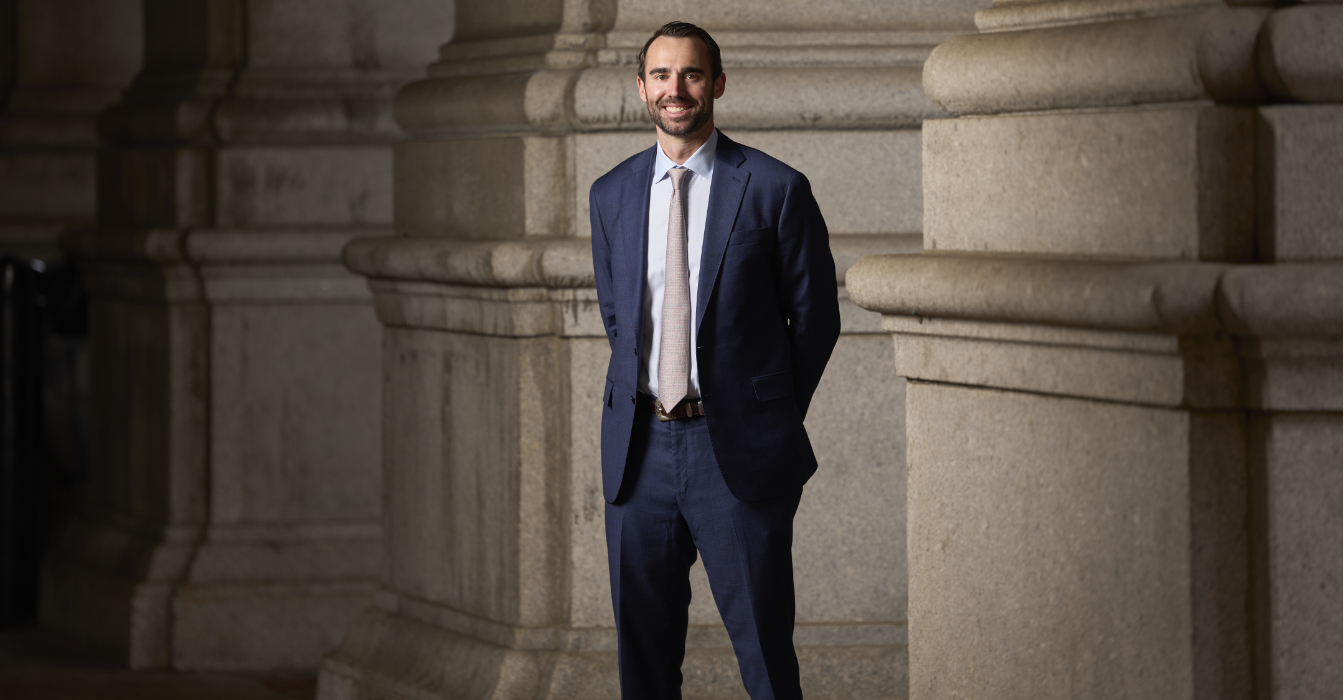
Aaron Brown was just another first-year associate, grinding through the night reviewing documents.
It was 2021 and he was in the Austin offices of Reid Collins, the high-flying litigation boutique with a mastery of plaintiff financial litigation. He was on a team assembling a complex shareholder derivative action against insiders of a China-headquartered company incorporated in the Cayman Islands.
His assignment? Help draft a motion for injunctive relief seeking to prevent the insiders from further looting the company.
In a world of young lawyers, a challenging and complex task, but, really, just another Thursday night.
In Aaron Brown’s world, another day forward on the long way home.
His gut told him to focus on the money trail that the documents could show to prove Renren insiders stripped a billion-dollar investment portfolio and took it for themselves. Around 1 a.m., he surfaced a document.
Its title? “Exit Strategy.”
It was a smoking billion-dollar gun.
“You cannot make this stuff up,” Brown says.
Hidden in a morass of tens of thousands of technical financial documents, “Exit Strategy” laid bare the insiders’ plan to raid the company of its assets.
The Renren case settled not long after – for $300M – at the time becoming the only recent shareholder derivative lawsuit involving a foreign headquartered and incorporated company brought under foreign law in a U.S. court.
Fast forward five years and it’s déjà vu all over again.
Except Brown is now a new partner, and this time he led the derivative case brought by Oasis Investments II Master Fund. Ltd. on behalf of Fang Holdings Limited, a China-headquartered company, against its controlling shareholder and directors. In a settlement approved in February, he and the Reid Collins team delivered significant monetary relief, as well as corporate governance reforms benefitting minority shareholders. It’s only the second successful shareholder derivative suit in which derivative standing under Cayman law was established in a U.S. Court.
A Crash Landing
Brown's arrival at Reid Collins in the summer of 2014 was not conventional.
Scratch that. It was an epic leap of faith by founder Bill Reid, who had known Brown and his family for years. Because Brown had just torched his own life.
Brown comes from a family of lawyers – mother, father, siblings all lawyers.
His dad, Alan, was a legend in the South Texas criminal defense bar. A good, old-fashioned trial gunslinger.
“He tried more than 100 jury trials in his heyday, dealing with death, drugs and sex with a specialty in deadly force self defense,” says Brown, who regularly accompanied his dad, helping to pick juries and other fun tasks for a kid.
His mom, Jean, is a family law attorney, which may be even worse “because people and emotions and kids and money and stuff gets so messy,” he says.
Boy, does it ever. Wait for it ...
Anyway, a typical dinner table conversation at the Brown home started with murder and ended in ugly divorce.
Young Aaron could not get enough.
“I remember him showing me a picture of a body when I was too young to look at a picture of a body and it had been pulverized with a baseball bat. And my dad was going to have to put on a self-defense case. And I would sit there, I was just a kid, and brainstorm with him.
“I’ve been around the law my entire life. I’ve known from seven years old I would be a lawyer,” he says.
Brown has seen it from the inside, as well.
By the age of 15, he was deep in the party scene. “Really, my whole life was drugs and alcohol from 15 to 21,” he says. He made it to college in Fort Worth. But his life was a haze.
“I pretty much chemically managed my life,” he says. Despite that, through Reid, he had secured a spot at Reid Collins for the summer between his junior and senior years. He planned to follow in his father’s footsteps as a criminal defense lawyer, having caught the bug watching as his dad sussed out everyone he met, getting a feel for them – and how they reacted to whatever case he was handling at the moment. Reid Collins seemed a decent gig to experience the private practice side on his way to law school.
One last night out before reporting to the firm. May 19, 2014. Joined by his favorite companions – drugs and alcohol – he went out for the night. He flipped the car and a passenger was severely injured. Brown’s life had reached a crossroads – change or die.
Your choice.
“I really was at a point there where it was up or down – a fork in the road. Am I going to pick up the pieces or am I going to just basically live this crazy life and probably die or end up behind bars?”
On July 14, 2014, he called Reid and said, "Look, man, I got in all this trouble and I’m trying to pick up the pieces of my life. I know that's not ideal for your firm, but if you'll still have me, I'd love to still come."
Reid was headed to Europe for the summer with his family. He said the door was still open.
“I believe that if you hang in there and do the next right thing, you can get over this," Reid said. "If you want to be the one that's taking off to Europe someday with your family, hang around with me for the summer and keep your nose clean. And I think you can overcome all this."
Brown went into treatment, a 12-step program, residing at a sober living house in Austin. He had a pending legal case and his prospects were tough.
“I had hurdles in front of me that I had created,” he says.
Unsure if Reid was just being nice, Brown arrived at the firm’s offices. He found a new type of family – Keith Cohan, Jeremy Wells, Scott Saldaña, Nate Palmer, Josh Bruckerhoff, Greg Schwegmann – who took him in and provided a new type of role model as he put his life back together.
His feet starting to touch ground once more, he knew he had to find a way back to school. He had been “politely asked to leave my prior university and not come back,” Brown recalls. But no other school would take him because of his pending criminal case from the wreck.
I’ve been around the law my entire life. I’ve known from seven years old I would be a lawyer.
“Bill made it clear to me, ‘When you get back in school, dude, there is zero excuse for not earning all As. You're capable. You just need to treat it correctly. I've seen you here long enough. You have the power to control this situation if you're back in.’”
So Brown found a school in Austin – St. Edward’s University. And he started just showing up, presenting himself in the Admissions Office.
“No. Not now,” they said.
He’d show up again, stating how long he’d been clean and sober. Giving his law firm recommendation. The good stuff he’d been doing.
No. Not now.
Finally, his persistence paid off. He told the admissions director, “Ma'am, I don't know what I have to do to prove this to you, but I want this more than anyone in the world. I made a terrible mistake and I take accountability and responsibility and I really need a second chance to get my life back.’”
OK, but ...
St. Edward’s admitted him on one condition: he was not allowed to drive on campus. So he parked off campus and ran to class.
“I don’t know if I was scared of Bill or just inspired by him,” says Brown.
Probably 50/50 for those who know Bill.
Paint the Wall
Brown immersed himself in the firm that summer – from painting a wall to filing documents, grabbing screen shots of sales figures for a class action and helping pick a jury in a nine-figure trial.
He helped paralegals. He helped lawyers. He carried bags. He served as a mock juror. He sat in on trials, mediations, negotiations and client-development meetings.
He caught the bug of the firm’s teamwork and cases involving high-stakes complex financial disputes that often require years of investigation and persistence – a different path than the criminal defense path he had planned.
“I learned what responsibility looked like in the most difficult, high-stakes cases,” Brown says.
Brown’s first real case found him working with Bill Reid and partner Barbara Balliette on behalf of a five-year-old boy who had suffered a traumatic brain injury after he nearly drowned in a community swimming pool. It was not Reid Collins' typical commercial case, but it was one that hit close to home for Reid, whose son was a similar age.
At what was supposed to be a final dinner that first summer, Reid asked Brown to help figure out what had happened.
Brown had begun to glimpse a new path for his life.
He took the boy’s case seriously and stayed.
Brown began building out the factual record. The boy had been going for swim lessons and was found on the bottom of the pool, where he had been for more than four minutes. Brown located witnesses. He researched lifeguarding schools.
What started as an offhand assignment became an early indication of how Brown approached problems. He did not wait for ownership to be formally assigned before taking responsibility for the work.
“It activated that spark of wanting to investigate, wanting to figure out what happened, wanting to right a wrong, those aspects that the law really inspires in me and make me like practicing law,” says Brown.
I learned what responsibility looked like in the most difficult, high-stakes cases.
He would call and survey parents who hung out at the pool to get their accounts and gathered videos. He found a safety expert. He found the foremost expert in Texas on special needs trusts, which the boy would need from any settlement.
They resolved the case. “That was my first real case and my first real taste of making an impact at the law firm in a case,” says Brown.
And then there was the wall at the office. A preposterous task, really. The notion was to paint it to transform it into a dry-erase board with special paint. Brown had never painted a wall in his life. So he bounced between investigating the boy’s accident and painting the wall for the firm, while traveling to jury trials with Reid.
He picked up kids from school, picked up drycleaning, made coffee. “I called myself the investigator, and that’s what everyone called me. But the wall was just … all I’ll say is that they never asked me to paint another wall,” Brown says.
The Second Chance
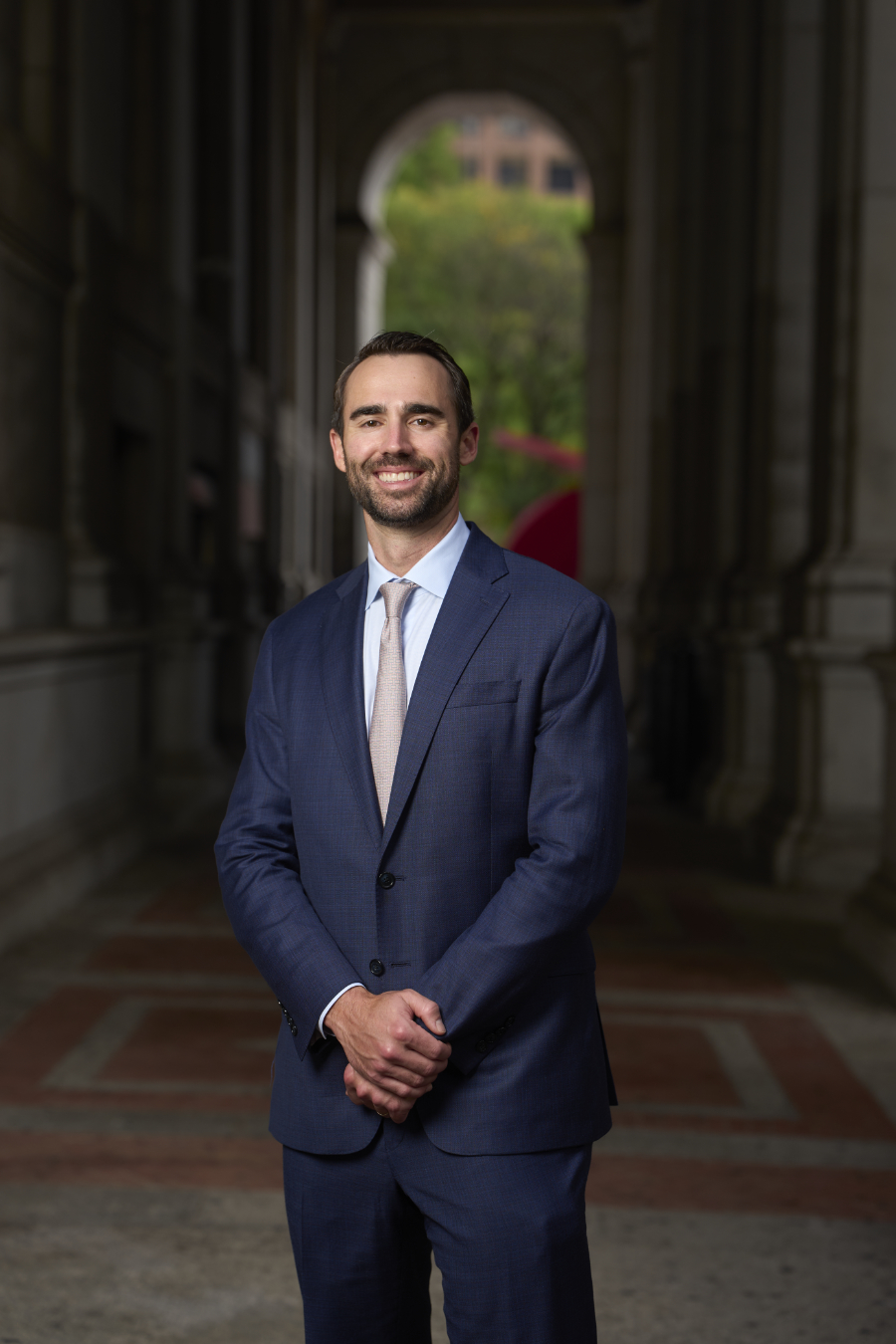
Brown finished college with more than a 4.0, earning student of the year award in the Jewish studies department.
The booze and alcohol were gone – he’s now more than 12 years sober – but don’t for one minute think he doesn’t still follow his own path. Much like Reid ...
After completing his undergraduate degree, it was time to go to law school. He got decent scores on his LSAT but not enough to get into the University of Texas. So he came up with a plan – to attend St. Mary’s School of Law in San Antonio for a year then transfer.
"I don't know, man, if you don't transfer, we like you and all, but to be honest, I don't think we're going to be able to hire a St. Mary's person," Reid told Brown.
Now, it’s more than possible Reid was providing some of his psychic jiu-jitsu motivation, but it had its intended impact. Brown enrolled in St. Mary’s, making the 80-mile commute each day, gave it his all, and ranked number two in his class at the end of his 1L year. He transferred to UT and graduated with honors.
Side note: Brown also learned the power of prestige at St. Mary’s. He saw a number of great students there, the equal of those at his future law school. The competition because of its lesser ranking had Brown and a gold-medal Olympian swimmer side-eyeing one another, both knowing they were head-to-head for a coveted transfer slot.
"He was a fierce competitor and we were friends," says Brown. But they were also in competition as both hoped to transfer to Texas Law .
Brown and swimmer James Feigen both transferred to Texas. “He had a really big impact on me. Sitting next to someone who is a gold-medal Olympic swimmer raised the bar for me, hopping into a race with the best.”
Brown continued working at Reid Collins throughout law school, and in 2020 graduated with honors. The next stop on the comeback? Admission to the bar. Note to future lawyers: There are many reasons not to f your life and admission to a state bar is one of them.
Brown had served 40 days in jail, which he did while attending St. Edward’s, driving to Fort Worth every weekend to check into jail for the equivalent of 40 nights.
“It was a wake-up call. I looked at my life like Ebenezer Scrooge of Christmas past or Christmas present or the future. And this was not where I wanted my life to end up,” says Brown. “The Universe had given me a second chance and I was going to take it.”
It activated that spark of wanting to investigate, wanting to figure out what happened, wanting to right a wrong – those aspects that the law really inspires in me.
He had drawn a suspended sentence and eight years of probation. In 2019, he made a compelling case to get off probation early for good behavior. But Texas still wanted him to show more time of good behavior after probation ended.
Where there’s a will there’s a way. So Brown took the Universal Bar Exam in New Mexico, was admitted there, then transferred into Texas. For good measure, he also got a New York bar license.
“The point of this is I’ve had to always investigate, find a path, get a solution,” says Brown. “In this instance, I applied those skills to become a lawyer because of specific hurdles I put in my own life.”
Reid Collins "in a way raised me," Brown says. "From very early on, they gave me real responsibility and expected me to take ownership of it. That changes how you see the work and see yourself. It makes you accountable for results."
Reid describes one of Brown's defining strengths simply: Once he learns something, he can repeat it. Or, as Brown says, "Once I've been somewhere, I can always return."
That ability has become a hallmark of his budding career, an unusual persistence if you will. The Fang shareholder derivative case is the most recent example.
In Renren, Brown helped lay a trail for bringing claims involving Cayman-incorporated, China-headquartered companies in New York courts when the misconduct allegedly occurred in New York's financial markets.
"The Fang case had similar jurisdictional theories and factual undertones," Brown says. "It was about being exposed to a type of case, learning the structure, and then applying it to a new set of facts."
He also saw time and again the teamwork that makes Reid Collins tick. Alongside him on Fang was one of the Renren architects, Michael Yoder, as well as Reid, Yonah Jaffe and Seth Roye.
An Unusual Persistence
For Brown, Fang turned as much on endurance as strategy and replication of the Renren framework.
The jurisdictional theory created the path into court. The team fought multiple motions to dismiss on jurisdictional grounds and prevailed. “That was really Michael Yoder, his wisdom and expertise,” says Brown.
The case was ultimately shaped by what followed: discovery disputes, repeated motions, sanctions practice, and years of litigation over whether the defendants had complied with their obligations.
No "Exit Strategy" this time.
Instead, the case turned on persistence. The less glamorous work requires a special kind of patience, Brown says. “We had the discipline to stick to our guns and create a record that made reality impossible to ignore.”
In Fang, that perseverance paid off. The court ultimately struck the defendants' pleadings after finding intentional destruction of documents, repeated violations of court orders, and deliberate efforts to frustrate discovery uncovered by the Reid Collins team. The ruling transformed the case and settlement followed.
The result delivered a tremendous win to Fang and its shareholders: $30M in cash directly to minority shareholders, more than 20.4M shares of CIH Holdings Limited transferred back to Fang, and governance reforms designed to strengthen oversight of future insider transactions – a remarkable outcome in a shareholder representative action.
"It's a testament to rolling your sleeves up and diving into the more mundane parts of a case, like discovery battles" Brown says. "That work may not be what people think of first when they imagine high-stakes litigation, but it can significantly impact the outcome.
“It's also a testament to our team," says Brown.
The Universe had given me a second chance and I was going to take it.
Brown and Reid traveled to New York for the final approval hearing, scheduled for Thursday, February 5. Although the settlement provided minority shareholders with a substantial recovery on their claims, the hearing turned contentious. Several Fang shareholders sought to either reduce Reid Collins’ fee request or augment the settlement.
What was expected to be a one-day hearing that Thursday turned into a contentious proceeding requiring an extra day. Brown and Reid left the courtroom Thursday evening planning to return the following Monday.
As Brown turned his phone on, he saw a flurry of messages. His wife, Lindsay, who was 8½ months pregnant, was in the hospital after a fall. He immediately headed to the airport and home.
Despite planning to reconvene on Monday, Friday morning, the Court notified the parties it would reconvene that very afternoon. Knowing he was about to be stuck on an airplane, Reid responded, "I defer to my able partner, Aaron Brown."
His very young partner – whom, an objector argued, because he was only five years out of law school, did not merit the requested fee.
Justice Andrew Borok dismissed the point. Having presided over the litigation for years, he said, he was well positioned to assess Brown’s contributions irrespective of his youth.
By the time Reid landed, Brown had secured one of the most important settlements in the firm’s history, underscoring the firm’s philosophy to hire the best and entrust them with real responsibility.
“I started at the firm helping paint a wall. Twelve years later, I’m a lawyer leading and winning significant cases,” says Brown. “Not every firm gives someone that kind of opportunity. I’m grateful this one did.”
Years of exposure to complex theories, difficult cases and experienced lawyers shaped how Brown approaches problems.
In his personal life, he’s married and has a daughter, Josephine (3 years old) and a son, Robert (6 months). As part of his redemption path, he shares his experience with others. Over the years he's taken his story to dozens of schools and organizations, sharing it with thousands young adults grappling with the choices he once made. “I wanted to help others learn from my poor choices,” he says. “I tell kids I’m not expecting them to make perfect choices after this, but I expect you not to drink and drive after this.”
Professionally, he learned how to build a record, identify leverage points, and keep moving a case forward even when the process becomes frustrating, he says. Brown credits much of that development to proximity and solid mentorship – the opportunity to watch Reid Collins’ lawyers handle difficult problems and entrust him with more responsibility.
"Being around Bill and this firm has been instrumental to my development as a lawyer," Brown says. "I had the chance to learn from the best up close and, over time, figure out how to carry those lessons forward in my own way."
He watched Reid lead complex cases not only with force, but with generosity – making time for younger lawyers, bringing them into strategy discussions, and giving them opportunities to grow.
"Bill is incredibly brilliant and unbelievably generous," Brown says. "He gives people opportunities and he gives them his time, which is the single most valuable resource on earth."
“It’s humbling to see how my partners and I can write the next chapter of this firm,” Brown says.
