The rise of artificial intelligence has created a whole new category of tech startups that cater to the legal world, addressing everything from drafting contracts to preparing deposition questions. According to the American Bar Association, 69 percent of legal professionals now use general-purpose AI tools, a dramatic increase from the 31 percent reported in 2025.
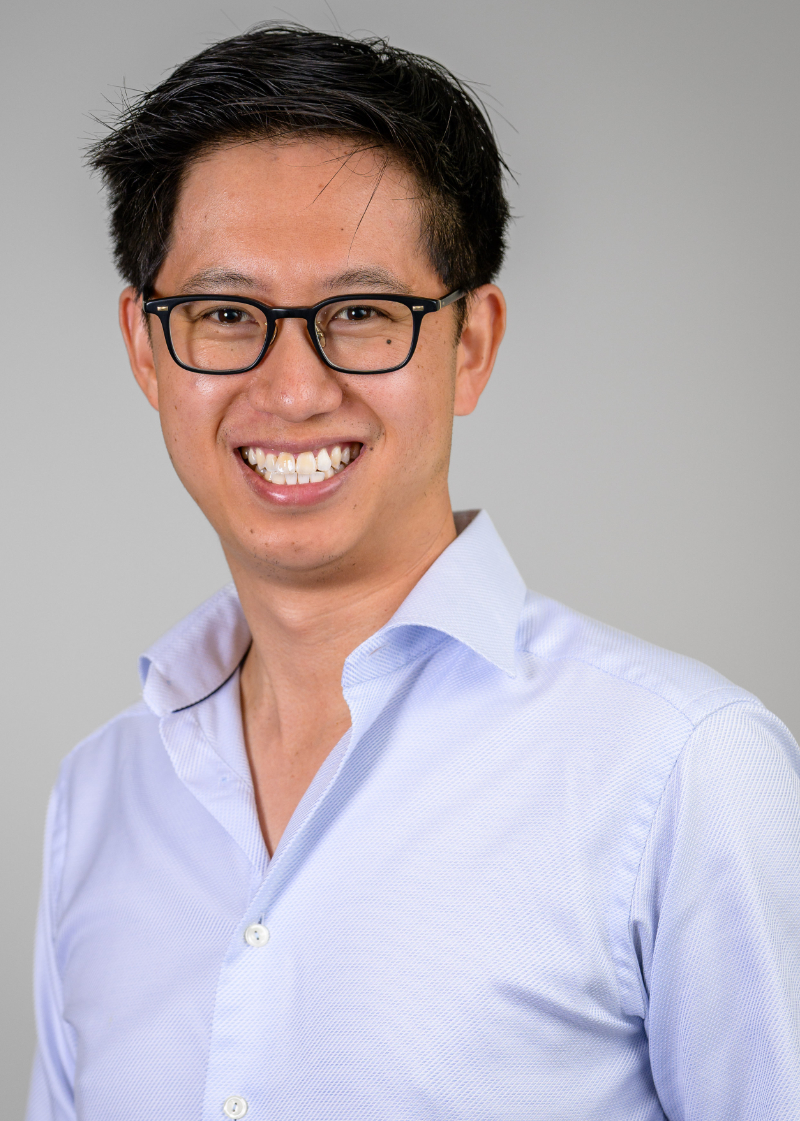
But as serial entrepreneur Patrick Ip dove into the legal AI space, he noticed something: He kept finding tools that benefitted the plaintiffs’ side – but not the defense. Ip responded, forming Palo Alto, Calif.-based Theo Ai in 2024 with Alex Alben, one of Ip’s professors at UCLA School of Law. “We saw that AI had captured a lot of imagination in the legal space,” Ip recalls.
Ip came to AI through a somewhat circuitous route, obtaining a master’s degree in legal studies at UCLA Law before working for Google as a business innovation and global product lead, where his team developed a Nobel Peace Prize-nominated project. He then founded Catalog, a consumer software platform, prior to initially launching Theo Ai as a “predictive,” plaintiffs’-side tool designed to forecast the values of settlements and litigation outcomes.
Lately, however, the company has expanded into filling that defense-side gap – providing AI solutions for and collaboration with defense firms and corporate counsel. The platform delivers intelligence on, among other things, trends across cases and cost trajectories. “We can look at your last thousand settlements and see what you generally settled this type of case for and present those numbers,” Ip says. Rather than the prompt-based, chat-style functions a large language model like ChatGPT, Theo Ai provides a unified look at case summary, plaintiff and defense strengths, discovery photos, medical chronology, budgets and billing in one dashboard, integrated into applications lawyers already use. The prompts are built into the programming, which Ip says helps prevent mistakes – like hallucinations – due to user error.
Of course, many are wary of AI and the implications of lawyers relying on a developing technology. So, Ip is working to pair that tech savvy with institutional legal knowledge. Theo Ai recently announced the formation of a Mass Tort Defense Advisory Board, which includes such legal luminaries as O.J. Simpson defense attorney Robert Shapiro. “One of the areas that we spend much of our time on is the most complex litigation,” Ip explains – making the new advisory board a necessary addition to the company’s other support arms, including its General Counsel Advisory Board and its AI Advisory Board.
Ip spoke recently to Lawdragon about the evolution of legal AI and Theo’s contribution to it.
Lawdragon: Can you start by talking a bit about your background?
Patrick Ip: The short version is that I worked previously at Google, where I was drafted on a project called Billion Acts, which was then nominated for a Nobel Peace Prize in 2015 and 2016. After Google, I had a [software] company, Catalog, which unfortunately we had to shut down because of Covid. After Catalog, [I went] to law school as the next phase of trying to figure out what to do.
LD: What interested you about the law?
PI: I did mock trial in high school and I've always had an interest in the law. I never saw myself as a lawyer, but UCLA Law School reached out to me. It was actually great to be in an academic learning environment as opposed to a work environment where you're like, "Got to meet deadlines."
LD: What got you involved in artificial intelligence?
PI: At UCLA, one of my professors was Alex Alben. We wrote a whole bunch of papers on AI and the law and I founded Theo Ai with him. We saw that AI had captured a lot of imagination in the legal space but most of the money had gone to the plaintiff side. I would say about $700M has been deployed into plaintiff-side technology. Companies like Justpoint and Darrow scan social media to find opportunities for mass tort litigation.
We actually started on the plaintiff side doing prediction for lawsuits. Most cases are settled outside of court, and that data is private. So if you're trying to build a legal prediction engine, you can't because there's no publicly available data. Where we got our start is we worked with a whole bunch of litigation funders who had a lot of data on settlements. They needed help being able to price what was going on. And off of that, we were able to raise an early round of $7M in capital.
What we realized is that plaintiffs are highly coordinated. They have a lot of legal technology. But on the defense side they don't coordinate, they don't have a lot of technology, they don’t share settlement data. So we decided to cross the chasm to the defense side.
LD: Defense firms, including Big Law, can be traditional and reluctant to make changes. Have you seen that attitude shift in the last couple of years and how do you introduce yourself to a firm that might be hesitant?
PI: I think the defense side now realizes there's a need to collaborate more. When we talk to them, I ask them, "Do you work with other GCs when you're getting sued to get advice on what to do?" The answer generally is “No.” They're used to working in a much more siloed manner. But if I ask, "Do you want to work more closely with other folks that are also getting sued?” the answer is generally “Yes.” And so there's this desire to be more collaborative, and Theo is kind of that glue to help folks get more collaborative.
Another way we approach potential clients is that if you're a GC or head of litigation, you can remember your last 10 settlements, but you're not going to remember your last thousand. A use case for us is to use AI to help corporations not only get more organized internally but also work with defense-side counsel.
There's this desire [on the defense side] to be more collaborative, and Theo is kind of that glue.
LD: So you are seeing companies being able to understand their own history and their own work better?
PI: That's correct. And one of the other things we point to is it's not just the number of lawsuits that's increasing; the number of pages is increasing. AI can generate 30-, 3,000-, 300,000-page lawsuits. Someone still has to read it, understand it, decide if it’s real or fabricated. That's a huge burden on the defense side. No human can read 25 million pages realistically. That becomes a great use case for what we do. In essence, we connect to folks' emails, enterprise systems, and then their files and we automatically sort and organize their cases.
LD: Why is your sort of technology necessary? Why can’t a lawyer just use ChatGPT if they want to use an AI model?
PI: A lot of corporates are asking about ChatGPT. Our take is that LLMs [large language models] are good for single-contract review. But we're concerned with litigation scale. So 25 million pages, you can't put that in ChatGPT. It just won't work. And then there’s also the complexity. We work with a lot of pharma companies who deal with a lot of medical records. If you put a medical record into an LLM, it will say, "The documents you uploaded far exceed what I can handle." We've built our system both to handle large scale and high complexity.
AI can generate 30-, 3,000-, 300,000-page lawsuits. Someone still has to read it, understand it, decide if it’s real or fabricated. That's a huge burden on the defense side.
LD: Interesting. Then, How do you integrate Theo with a client’s other applications such as Workday?
PI: One of the things that we're trying to do is create what is called “single pane.” Workday has information when it comes to employment litigation that lawyers need, Legal Tracker is used a lot for financial billing, NetDocs for documents. It’s time-consuming to switch between systems to find everything. That delays justice for everybody. And so what we're trying to build is one system for everything. We can use AI to read everything, connect to all the systems and bring it all together.
LD: Can you talk a bit about the evolution of Theo?
PI: We built this website for legal prediction, and we went to all these people and they're like, "Yeah, it'd be so awesome if we had this website where we could upload our lawsuit and get a prediction of what is going to happen." We built it, we launched it and then no one signed in. And we were like, "Why didn't you log in?" What we learned was that the friction of just going to something else made it really hard, even if it was valuable, for lawyers when they're juggling so many different things to just adopt a new platform. So then we were like, "Oh, let's plug into your case management system. We'll just pull the litigation and just give you the insights and data layer there." And what we learned from that experience is that the case management system was just never up to date. Then we asked, "So where is everything?" And they told us, "Email." So our early product was actually just returning predictions straight into users’ inboxes. We get access to all their litigation in the email. It's still one of the core unique factors for us. You just forward your litigation to our intake inbox.
LD: Can you give an example of how this works?
PI: So when it's a slip and fall case, you want to be able to see a photo of what actually happened. Normally if you're an attorney, you have to go through the email, you got to find the attachment, or if you have a document system, you go through the document system to figure that out. Again, it's the friction of going someplace else. We're bringing it all in one spot. We also make it easy to find the incident report or the witness statement. Generally when these come in, it's gibberish in terms of the title and we make it searchable and useful and structured.
LD: Where is your prediction solution today?
PI: Again, most cases settle. So we were trying to figure out, "What's this going to settle for?" But as we've matured and progressed, what law firms and GCs on the corporate side really want to know is, "If I settle, what is that amount going to be? And then if I go to trial, how much is that going to cost me?" Because we're parsing invoice data, we can say, "We know that for this matter, you typically go with this law firm. We understand these rates for these law firms and we know how long these cases generally last. This is how much we think this is going to cost you." But we can also look at your last thousand settlements and see what you generally settled this type of case for and present those numbers. That is something that I don't think anyone has had before.
LD: How did the mass tort advisory board come about?
PI: We have our GC advisory board; we have our AI advisory board. The mass tort was a newer one that we formed because one of the areas that we spend much of our time on is the most complex litigation. Folks like Bob Shapiro and other law firm partners can say, "Hey, this is something that's much needed." We can get to insights faster with trusted brand names. Also, there's so many different sub-areas in law, like real estate, probate; employment has 20 different sub-verticals. There's no way that we can be the experts on everything, so the advisory board allows us to expand our counsel when it comes to developing each of our practice areas.
We have Sandie Leung, the former chief legal officer of Bristol Myers Squibb, on the board. Pharma is one of our big areas, and we have someone who can say, "These are the things that you should make sure that you have in mind." We have former employment lawyers like Ross Bogdan, who's the former GC at Lucid.
LD: What are the hotspot practice areas that you're seeing?
PI: General liability and employment are probably the top two most voluminous in terms of just actual number of matters. The most complex are usually pharma and medical devices and medical malpractice. Medical records are generally extremely long and tedious, and a lot of medical records are handwritten notes. So we had to build a [character recognition] system that was going to be able to read and understand all the handwritten notes. The messier the handwriting too, the longer it takes for people to digest. Theo can read all these things and understand what's going on.
In medical cases, we're looking for discrepancies between what the plaintiffs have put together and what the actual evidence says. Generally, this work is done manually by a human where you have to read the plaintiff's side, they have to remember what the plaintiff said, then they have to go read the medical records and find out where the discrepancies are. Obviously in many cases, the story does line up and that's great. We can get those settled faster. For the ones that have discrepancies, let's isolate that.
One other thing that we do is find the trends and patterns. Generally speaking, the defense law firm and the counsel, they're like, "Patrick, we would have to read a thousand of these files to understand any sort of trends and patterns, right?” There's like 20 different people reading all these records. But with AI, we have one "reviewer" of all the information, so there's consistency in how things are being reviewed. Pointing to fraud, one of the things that we see is multiple plaintiffs who use the same phone number and the same email. Those need to be filtered out.
LD: What are the developments in AI that are really exciting to you right now and how do you hope to incorporate those into your offerings?
PI: Our ability to better read medical records, better understand all the documents, better find trends – these are all net positives. We also feel like, "OK, even if the LLMs were able to do this work, they wouldn't have the data that corporates are giving us to properly benchmark and understand what's going on." I think that will always give us a bit of an edge.

