What worked for Alan Greenspan in the twilight years of the 20th century doesn’t work anymore.
The former Federal Reserve chairman, whose legendary opacity helped him build a reputation as a markets-whisperer, told a Senate committee in 1987 that becoming a central banker had taught him the importance of mumbling incoherently.
“If I seemed unduly clear to you,” he continued, “you must have misunderstood what I was saying.”
That, of course, was in an era where network television, print newspapers and magazines were the primary gatekeepers of information. Today’s world, where communication is both instantaneous and ubiquitous but often less than accurate, demands more.
Government institutions and titans of industry alike find themselves obligated to convey information to a diverse array of stakeholders quickly and clearly, fueling a surge in demand for expertise in doing so. Global strategic communications and stakeholder-engagement firm TLG Communications is expanding its financial communications business to meet the moment.
It's a vital service, the firm says, since companies that fail to supply the information stakeholders need risk losing their ability to shape the narratives driving financial markets and falling prey to potentially devastating consequences.
“Today, companies are really navigating an environment where you need an always-on approach,” says Michael Crittenden, a senior managing director at TLG with a deep background in financial communications.
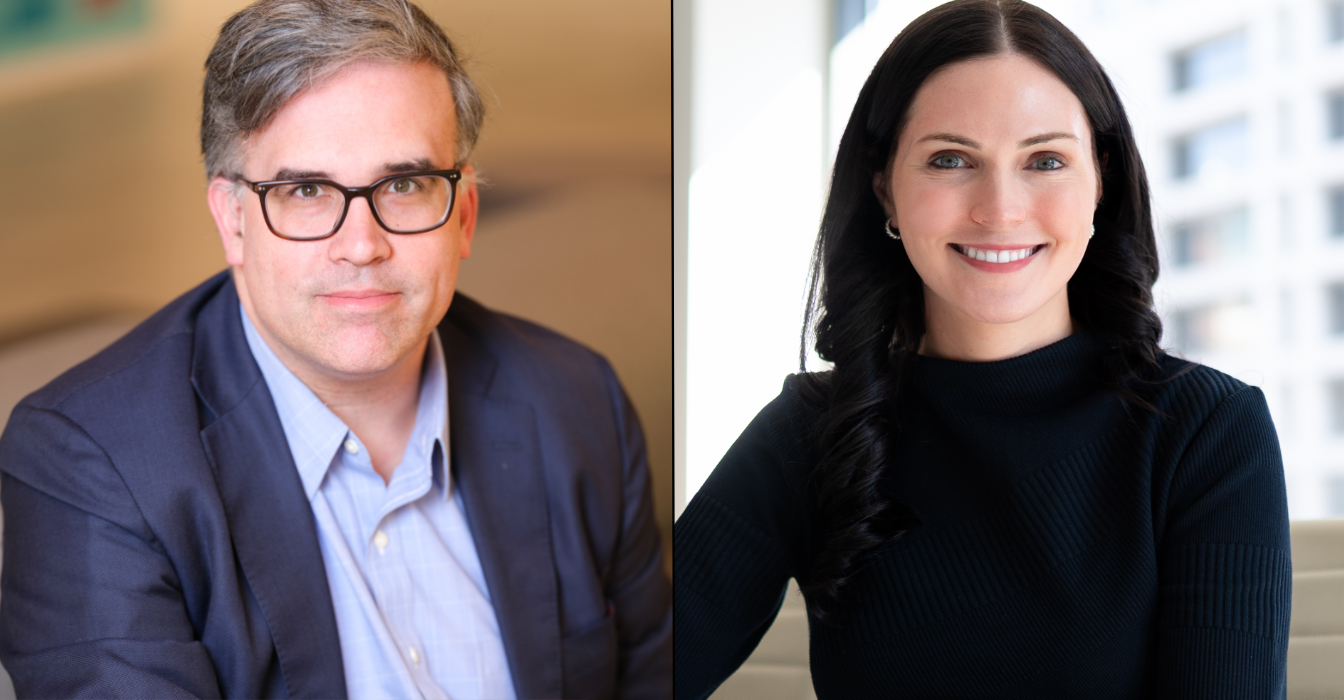
A former Wall Street Journal reporter and managing director at Mercury Public Affairs, he joined the firm in 2022. Early last year, TLG added Ashley Schapitl, a 15-year government veteran whose most recent post was deputy assistant secretary for public affairs at Janet Yellen’s Treasury Department.
“One of the things that financial institutions really need in this day and age is longer-term management of issues that are always percolating below the surface,” she says. “Financial communications have had to adapt by tracking these issues and thinking about how they’re going to impact their business five years down the road if they come to the top of the regulatory or policymaking agenda because there's just a constant churn.”
Lawdragon: You obviously had a long career in government, Ashley. How does your insider’s perspective guide clients in this period of shifting regulation and market development?
Ashley Schapitl: It’s really important for industries and institutions to invest in long-term relationship building and education when interacting with a federal agency or legislators on Capitol Hill, even if their company or industry is not a focus at the moment. If there's a base of knowledge and a relationship, it really impacts how your interactions with either the lawmaker or the regulator will go if your industry or your company becomes of greater interest to either the Treasury Department or Capitol Hill, depending on the situation.
Too often, institutions think that any outreach either to or from the government is necessarily a bad thing because it means you're under scrutiny in a way that you don't want to be. They don’t necessarily appreciate that these are government officials and career government servants who really just want to understand the issues facing the country and better understand the inner workings of companies and industries so that they are better informed when a crisis arises or when there's a novel regulatory or legislative issue that they need to manage. It behooves you as either a company or an industry to engage regularly and thoughtfully. That really pays off in the long run when something happens in the marketplace, because those regulators know who to call to ask questions. Then, they’re not just reading a headline and potentially overreacting to it but coming to an issue with a baseline of knowledge that makes your interaction better.
LD: Looking at your transition into being an advisor, what brought you to TLG?
AS: The things that I loved the most about working in government were working on a wide variety of matters at once and the challenge of being thrust into something different at any moment because of whatever was happening in the world. A good example at Treasury was the collapse of Silicon Valley Bank; that was something that happened on a Friday, and everyone spent the entire weekend working on it and then it dominated everyone's full workday for months. That’s not the way that everyone likes to work, but if you thrive in a workplace where no two days are the same, it’s fascinating. That was what I was looking for in my next step, and that is very much what we have at TLG. You're working on a wide array of issues for a wide array of clients, and you get that same ability to really stretch yourself as a professional and learn. That was really what drew me to TLG.
LD: Michael, you spent years at The Wall Street Journal covering global financial markets, banking and regulation before moving to the advisory side. How does that reporter's instinct inform the counsel you give clients?
Michael Crittenden: Some of the same tools and approaches that make you an effective and successful reporter really carry over, especially on issues like financial markets, banking, communications and these big moments for corporations. Whether it's breaking news on the one hand or a client matter that arises, it's critical to understand the context, to be able to get deep in the substance, so that you can provide that clarity of narrative, approach and strategy that helps clients navigate crises. I had an amazing professor during my senior year in college who was a banking and finance reporter himself in a previous life, so my journey really started in college with understanding how critical these issues are. They can feel very arcane, very obtuse, until you realize how important they are to our day-to-day lives – our ability to buy a house or rent an apartment or get a car or get a job. All of these dynamics are driven by our financial markets. Once you realize the financial markets are made up of people who make investments in corporations in your backyard or in towns across the country, you see how that’s driving our day-to-day lives and understand how that affects prices and affects interest rates. All of that captivated me very early on, and it has served me well. Since then, it's been a passion of mine to figure out how we tell these stories in a smart way. As a reporter, that meant connecting the dots for someone who's opening bank accounts, reading about broader events and wondering, "What does that mean?" And now on this side, I’m giving advice to clients on how to translate these critical aspects of our economy to laymen and to different stakeholders.
LD: TLG has a wide array of clients, but do you have a typical client that you're working with?
AS: While we work with a lot of clients in the financial sector, they really run the gamut from more traditional banks to alternative asset managers and private equity.
MC: It’s more matter-specific than correlated to a particular profile of a firm. In today's environment, everyone is facing this new reality and understanding that it's not as simple as it was once perceived to be. In financial communications, it used to be that you had quarterly earnings, you had the occasional deal, you had your annual report, etc. Now, you need to understand all of your stakeholders, not just in a moment of need, but in advance. Across the board, especially in the financial space and capital markets broadly, you have people who understand that and so they're much more attuned to, “OK, I expect in the next six months – whether it's litigation, activist shareholder campaigns, M&A or other similar transactions – these business-critical moments that go beyond traditional communications and affect all aspects of achieving our business objectives.” That's when companies come to us because they need that strategic perspective. They need it not just on, “How are we going to pitch this to reporters?” but also, “How are we going to talk to regulators about this? How are we going to talk to our employee base?” To describe our clients holistically, they are people facing the most important business-critical and high-stakes moments who need that very insightful, strategic and savvy approach.
In a high-stakes moment that's going to define your organization for the next six, 12 or 36 months, how you communicate with stakeholders is going to be critical to success.
LD: Interesting. So, in terms of market differentiation and then differentiation of experience, what other capabilities does a firm need to have now that it didn't five or 10 years ago, and how does TLG stay on the cutting edge?
MC: A corporation that's going to achieve its business goals and thrive in this current environment needs a very interconnected approach to communicating across a range of stakeholders. People have traditionally thought communications was purely, "How do I deal with the media?" Communications is much more than that. Whether it's business, capital markets, regulatory or legal, communications have to be a critical component of how you approach decision making. In a high-stakes moment that's going to define your organization for the next six, 12 or 36 months, how you communicate with stakeholders is going to be critical to success.
LD: As media is becoming more siloed and bifurcated, how are businesses responding?
AS: One of the things that's especially important in financial communications is not only do you have your top-tier legacy media institutions, but you also have alternate platforms such as financial podcasts or niche financial Substackers. We've always had trade publications that are much more focused on the ins and outs of the daily workings of financial institutions, but you now also have this whole other ecosystem that's very diffuse, in the sense that a policy Substacker, for instance, may decide to write about an aspect of your industry or your institution and the post can be read by policymakers and regulators. You need full visibility into how every single place that you are communicating publicly can impact other areas of the business. You might have an executive who speaks at a conference and the conference is recorded by people in the audience with their phone, for instance. There are just a lot more ways everything you're saying impacts the information environment in a way that wasn't true five to 10 years ago.
MC: The biggest trend is companies understanding that they need to meet audiences where they are, especially with important business-critical information that you really need to get to the right stakeholders. The key is understanding how to engage across mediums, across audiences in ways that will resonate and really get to those audiences versus traditional approaches where the playbook amounted to, "Well, if we do the press release, then the right people will eventually find it." Now it's much different. For example, you can have an organization do an hour-long webcast on a topic, then cut that down into one-minute clips that they can issue over LinkedIn. You can have direct-to-camera videos from leaders weighing in on market trends, long-form podcasts; there’s a whole cottage industry for CEOs and top leaders to talk about their businesses and their perspectives. These are all different mediums that 10, 15 years ago just weren't in the toolkit for many organizations.
There are just a lot more ways everything you're saying impacts the information environment in a way that wasn't true five to 10 years ago.
Think, for instance, about an activist shareholder campaign. Traditionally, how would that play out? Well, they'd buy up some shares, build a position, communicate it to the marketplace, and that would be the process. Just look back at the '80s, with “Barbarians at the Gate”; there's all these amazing moments in Wall Street history of these monumental activist campaigns and how they played out. But from a communications perspective, all of the tactics, all the capabilities we've discussed, now you have to realize the other side can also deploy those. So it's all about understanding in the landscape out there, if it's an activist campaign, if it's an M&A deal, unsolicited takeover, the means of communication, the means of shaping perception and shaping understanding across stakeholder audiences have basically had rocket fuel thrown on them. There are so many different channels that you have to be aware of and you have to build into your strategy not just to support your objectives, but also to protect yourself from potential risks.
LD: Looking at TLG, there's been dramatic growth in the last year or two, including with your addition to the team, Ashley. So how is the financial communications practice growing and how is that growth necessary, not just for the firm, but for the current moment that we're in for corporates and institutions?
AS: We’ve grown financial services significantly over the last year and worked on many high-profile matters that have dominated the headlines. Particularly where we have been very valuable to clients – and one of the reasons the practice has grown significantly over the past year and a half – is that I don’t think we’ve seen a policy and regulatory environment that’s this complex, unpredictable or rapidly changing in many, many years. It's something a lot of institutions are trying to navigate. Given our expertise in communicating across stakeholders and doing long-term issues management and being able to tackle crises as they arise, our core specialties have been really needed.
MC: If you think about these business-critical or bet-the-organization moments, whether it's an executive transition, a market-moving development that management could not have predicted, or a regulatory inquiry, these are areas where the stakes really are the highest and the margin for error is very, very small. These are the moments TLG has always excelled in and is increasingly bringing our expertise to bear in this sector, whether it's private credit, private equity, global financial institutions. These are the moments where organizations need this advice and they need to hear it from people who have that expertise from having lived it, because these are moments that will define an organization for the next one, five to 10 years.

