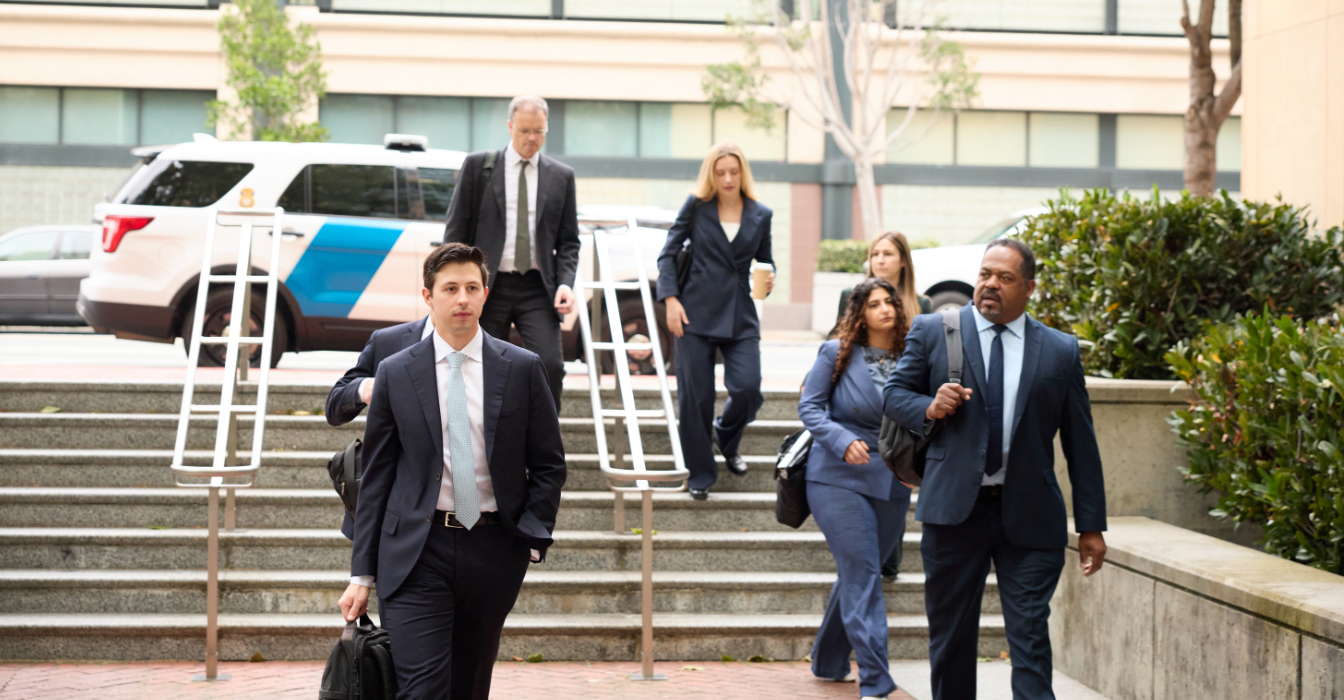
When the testimony got sharp, the only sound was the clatter of keyboards – reporters barred from recording had no other way to keep up.
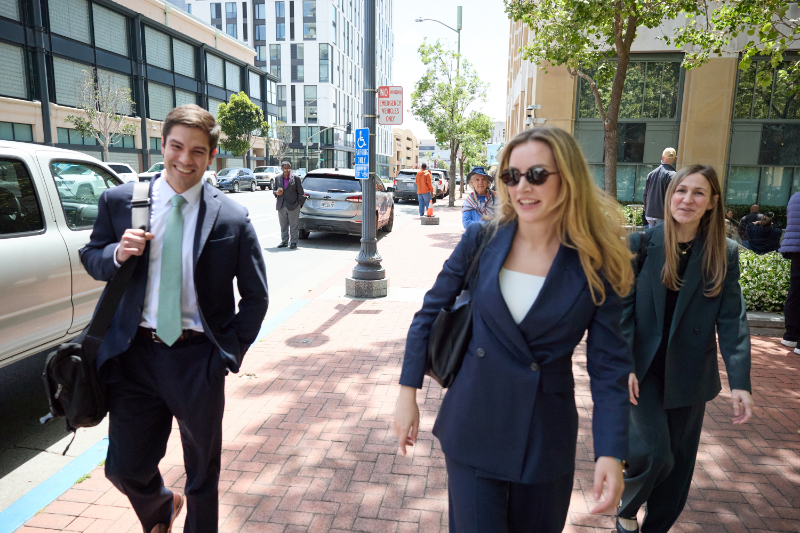
The multibillion-dollar fight over OpenAI's for-profit conversion was one of the most-watched tech trials in recent memory. But inside the Oakland courtroom, a quieter contest was also on display.
Sitting at the defendants' benches: platoons of lawyers from Wachtell Lipton, Morrison Foerster, and Dechert. On the plaintiffs' bench: seven lawyers from an elite litigation boutique founded 17 years ago.
That firm, MoloLamken, was built precisely for cases like this.
Small Teams, Big Roles
Steve Molo and Jeff Lamken are no strangers to Big Law. Before they launched their own firm in 2009, they had practiced at Shearman & Sterling (Molo) and Baker Botts (Lamken).

The two envisioned a new way of practicing. They believed that high-stakes litigation doesn't require size. It requires smart, highly experienced lawyers focused on results rather than process.
The Musk trial team offered a vivid example. Just four senior partners formed the leadership team: Steve Molo, the lead trial lawyer; Robert Kry, as appellate specialist and quantitative anchor; Jennifer Schubert, a former federal prosecutor, as a trial strategist; and Eric Nitz, a skilled trial attorney, who also leads the firm’s recruiting efforts, which take into account candidates’ ability to work well on teams in high-leveraged situations including trials.
The rest of the team was filled out by three associates: Alex Eynon, Walter Hawes IV (who became a partner during the case) and Sara Tofighbakhsh. Associate Harry Larson, a team member from the outset, was on board until his first child was born – right before jury selection. Additionally, partner Josh Bloom brought his financial litigation expertise and investment banking background to the remedies piece of the case. The team’s size ensured no small roles. Every lawyer, including associates, would be required to take depositions, handle witnesses at trial and argue motions.
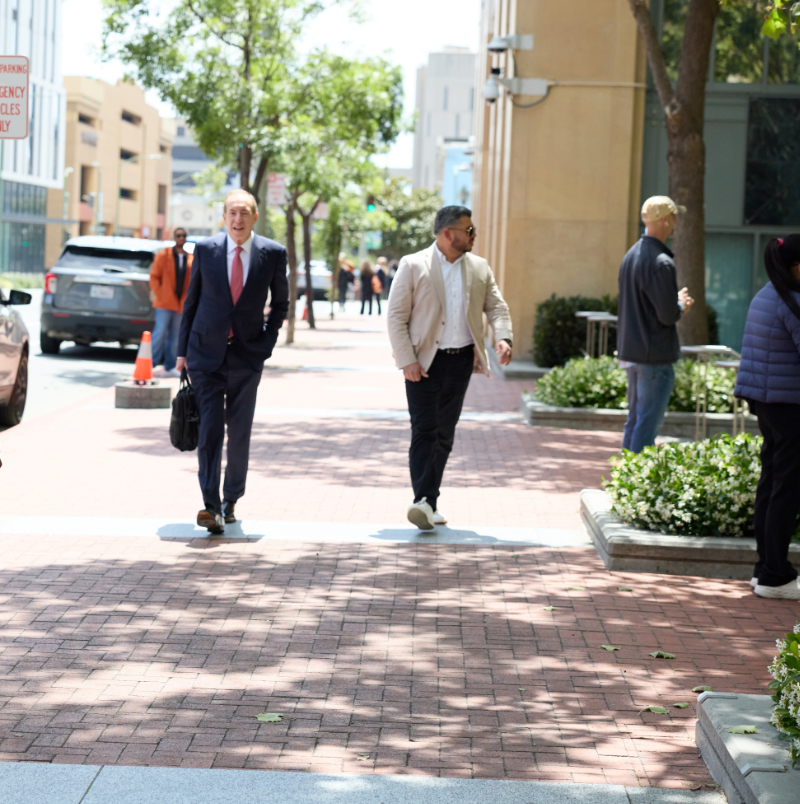
MoloLamken only hires associates with federal clerkships, ensuring a high level of talent from the start. Because they’re trained as generalists, teams can form organically. So when Walter volunteered for the case, Molo welcomed him instantly.
“The firm takes a lot of pride knowing that we can build an excellent team across offices and seniority levels, and that everyone, firm-wide, will step up into the role that needs to be filled on any given team,” said Hawes.
The Palm Springs Summit
The cohesion of MoloLamken’s trial strategy was forged long before opening statements began in late April. Before arriving in the Bay Area, the team gathered in Palm Springs for a four-day summit following a key pretrial hearing.
In many massive litigations, teams become siloed, with one group handling financial experts and another handling fact witnesses, often leading to a disjointed narrative. The Palm Springs summit was designed to dismantle those silos through "whiteboarding" – physically mapping out every claim, element and witness narrative on a shared surface.

This process allowed the team to find a unifying theory. The MoloLamken team included members from the Chicago, New York and Washington, D.C. offices. By gathering in the same room to discuss their part of the case, they spotted gaps early, ensuring the testimony would align perfectly with the technical evidence.
Trial summits are standard practice for big cases at MoloLamken. The day begins with an early morning hike. The team is working by 9 a.m., and a chef prepares meals, so no time is wasted.
There’s team swag that usually sports the firm’s logo along with a memorable quote. For this trial, everyone got a black lightweight puffer jacket with a red ML logo on one sleeve, an American flag on the other and a quote from the opening statement across the right breast.
The Daily Pace
Trials can be grueling affairs. But the courtroom schedule under Judge Yvonne Gonzalez Rogers created an unusual pressure cooker. Unlike the standard 9-to-5 workday, Judge Rogers runs trials from 8:30 a.m. until 1:40 p.m., with only two 20-minute breaks. For the MoloLamken team, each day started at 6:00 a.m. for last-minute printouts needed for trial, followed by a 7:00 a.m. team van ride to the courthouse.
The early finish was a mirage. By 3:30 p.m., the team was back to work, often on tight deadlines. Mid-afternoon on a recent Sunday, the opposition filed an unexpected motion to limit the case. Under the judge’s expedited rules, the team had until 10:00 p.m. to respond.
During the trial, the MoloLamken team took over a wing at the Claremont Berkeley, with a deliberate floor plan. The series of seven rooms included a dedicated "witness prep" room and a small office dubbed the "Movie Night" room, where the team grinded through hours of deposition footage to be played the next day. Even the menu of the team dinners was intentional – Mediterranean food – lean proteins, vegetables, nothing heavy— to maintain their energy.
Resilience as Strategy
At trial, Steve Molo’s colleagues were reminded of his reputation for masterful cross-examinations. During one of the most discussed moments of the trial, Molo forced Altman to defend his trustworthiness after confronting him with a litany of examples in which others had questioned it.
But Molo’s colleagues also observed a masterclass in his adaptability. As evidence shifted and witnesses of varying temperaments took the stand, Molo modulated his tone – moving from a sharp, aggressive cadence to a softer, more measured approach for witnesses who would react poorly to a "take-no-prisoners" style.
Witness examinations, arguments and graphics were mapped out before arriving in California. But everything was subject to revision based on court rulings and how the evidence and strategy developed during trial. Alex Eynon, a veteran of several trial teams in significant cases, notes, “Everyone must take ownership of the case and understand the strategy. That allows us to adapt and try the case that unfolds in court, not just the one we planned on paper.”
Molo also earned praise from his colleagues for his resilience. It prevents a bad day in court from infecting the team's morale.
"He is an incredibly resilient leader," Schubert observed. "Anytime there's a negative ruling, a change in evidence coming in or out... he just adapts and re-strategizes and just does not miss a beat. There’s a lot to appreciate about that."
The jury did not address whether Musk's claims of "breach of charitable trust" were valid, but instead found, as a legal technicality, that they fell outside of a three-year statute of limitations. Undaunted, the team is poised to appeal.

