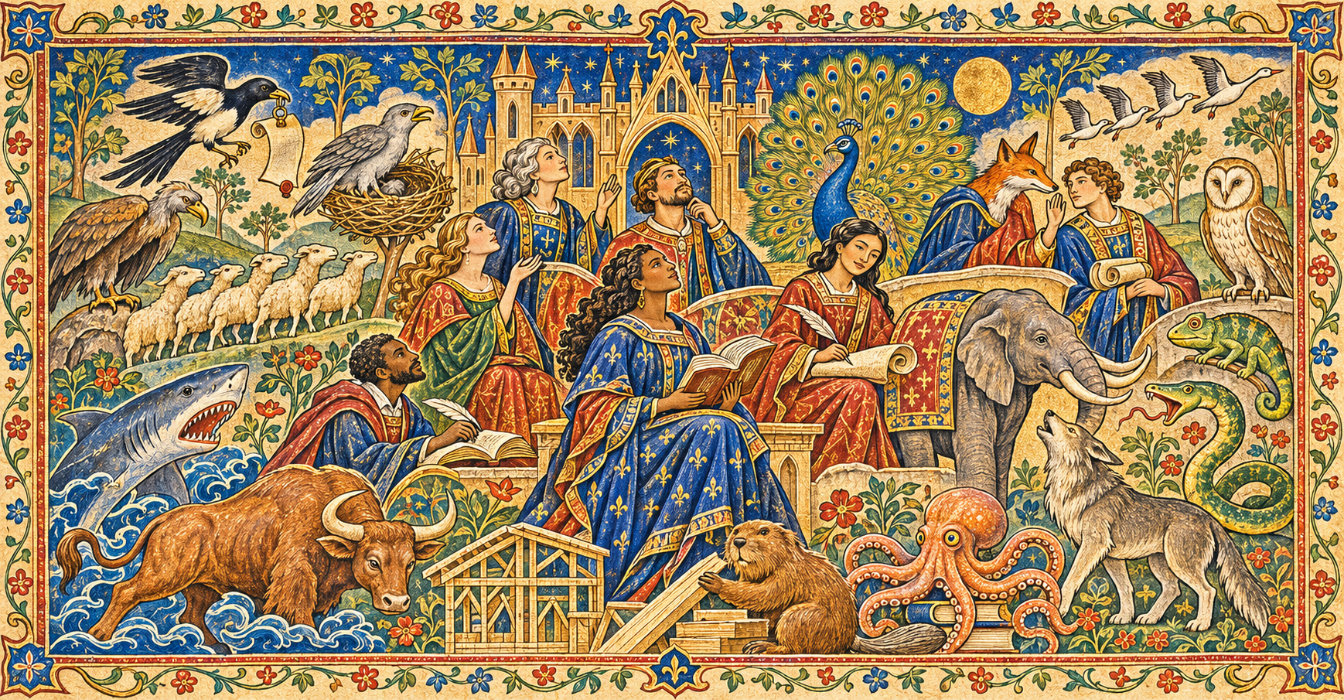
In the Middle Ages, some of the most treasured books in Europe were bestiaries. Richly illustrated, they described the animals of the known world, real and imagined, and attached a moral lesson to each. The pelican was said to pierce its own breast to feed its young with its blood, and so became a symbol of self-sacrifice. The facts were frequently wrong. Pelicans do no such thing. But the lessons stuck, and some of them are still with us.
The legal profession already has a small bestiary of its own. For decades, law firms have sorted their people into finders, minders and grinders: the partners who win the work, the partners who look after the clients, and the lawyers who do the work. It is a useful shorthand, but it describes what lawyers do rather than how they lead. And leadership in a law firm is unusually complicated. Partners are owners as well as employees. Managing partners are elected by the very people they are meant to manage. Authority is borrowed rather than commanded, and influence counts for more than any title.
This piece offers a fuller bestiary for law firm leadership: six families of animals, each representing a way of leading, or of failing to lead, that anyone who has spent time inside a firm will recognize. Along the way it points out where the animal we think we know differs from the animal that actually exists. That turns out to be the most useful lesson of all, because our stereotypes about lawyers and leaders are often as mistaken as our stereotypes about magpies and lemmings.
1. The Opportunists
The first family lives off the work of others. In a profession where credit translates directly into compensation, they are more common than most firms would care to admit. Anyone who has worked in a law firm knows the feeling of seeing their research, their drafting or their client insight presented back to them under a partner's name.
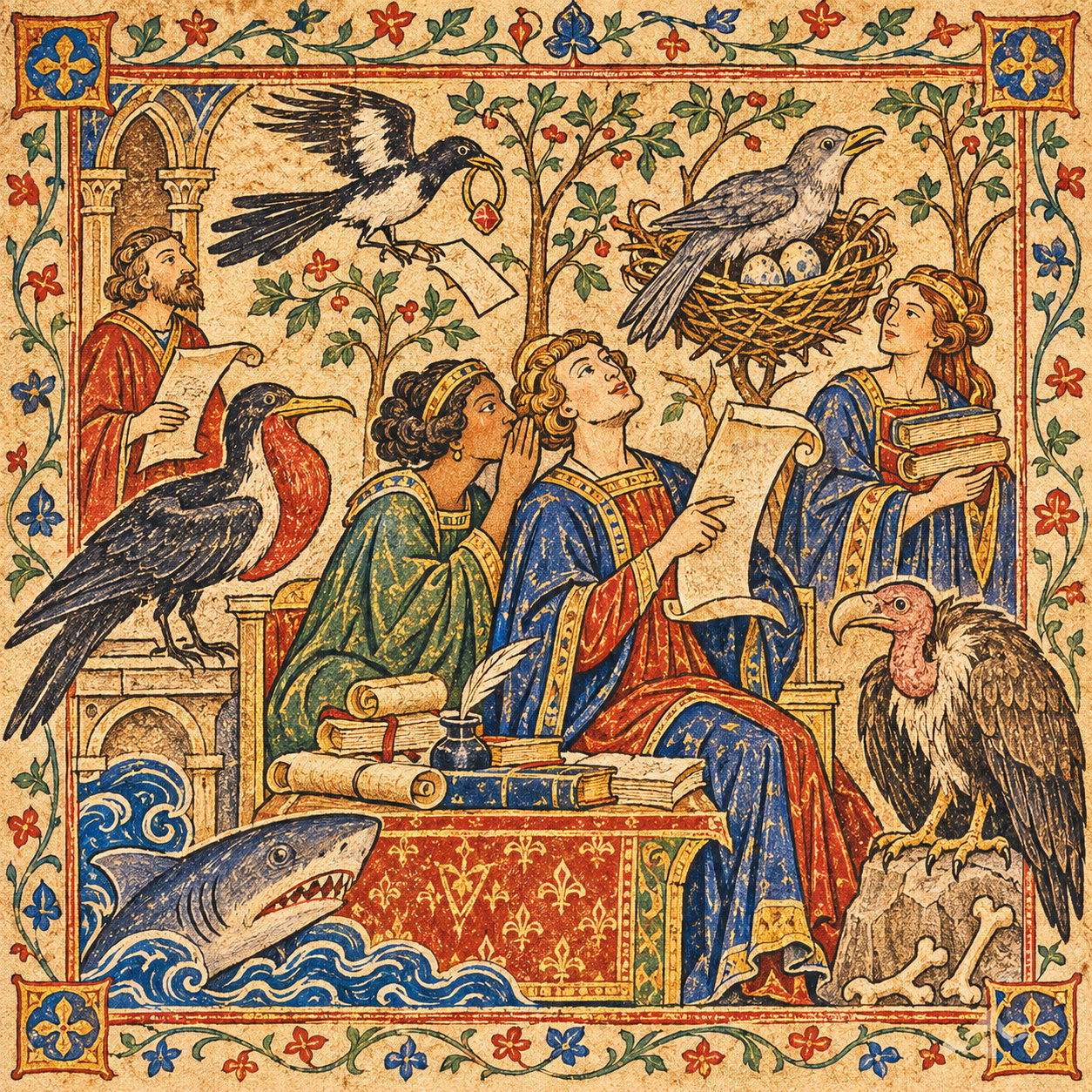
The magpie is the obvious starting point. Folklore has it that the magpie cannot resist anything shiny and will carry off rings and trinkets to its nest. The magpie partner does the same with ideas. The associate's clever point in a research email becomes the partner's insight at the client meeting; the senior associate's analysis becomes the partner's bylined article. Yet when researchers at the University of Exeter tested the folklore in 2014, they found magpies were not drawn to shiny objects at all; if anything, they were wary of them. The magpie's reputation was built on stories other people told. There is a neat irony here, because the magpie partner's reputation is built in exactly the same way.
The cuckoo needs no such correction. Its behavior is every bit as ruthless as its reputation. The cuckoo lays its egg in another bird's nest and leaves. When the chick hatches, it pushes the host's own eggs out, and the unwitting foster parents spend weeks feeding an intruder that soon dwarfs them. Law firms know two kinds of cuckoo. The first is the partner who lands a matter, drops it into another team to staff and runs, and returns only to claim the origination credit when it succeeds. The second is the lateral hire whose arrival, however welcome the book of business, quietly pushes the firm's own senior associates out of the partnership pipeline. The uncomfortable lesson is for the hosts as much as the parasite. The reed warbler never seems to notice that the chick in its nest is not its own, and firms are often just as slow to count what a hire has displaced.
The frigatebird is a more dramatic thief. It harasses other seabirds in flight until they drop their catch, then snatches it before it hits the water. This is the partner who appears at the final pitch or the signing dinner, having done very little, and leaves with the relationship and the credit. Every firm with an origination system has witnessed the resulting disputes. Yet studies of frigatebirds suggest they catch most of their food themselves, and piracy is only a small part of how they live. Most partners who snatch credit are perfectly capable of winning work on their own. The danger comes when the compensation system makes stealing the easier habit.
Law firms know two kinds of cuckoo. The first is the partner who lands a matter, drops it into another team to staff and runs, and returns only to claim the origination credit when it succeeds.
The remora completes the picture of the opportunist in a quieter way. It attaches itself to a shark or a whale and travels on the power of its host, feeding on scraps. This is the partner who has built a career by attaching themselves to a great rainmaker, rising on the rainmaker's clients rather than their own. But remoras also eat parasites from their hosts' skin, and some biologists see the relationship as closer to a partnership than pure freeloading. The best service partners are remoras of the useful kind. They keep the client relationship healthy, spot problems before they spread, and allow the rainmaker to keep hunting. The question is whether the host, and the firm, are better or worse off for the attachment.
Finally, the vulture, who waits for others to fail and then picks over the remains. In a law firm, the vulture circles when a partner is retiring, struggling or rumored to be leaving, ready to move in on their clients and their team. The real vulture, though, is one of nature's most valuable creatures. By clearing carcasses it prevents the spread of disease, and where vulture populations have crashed, public health has suffered. Firms need people willing to take on the clients of departing partners and keep them within the firm; client transition is one of the most important and least rewarded tasks in any practice. The vice is not the salvaging. It is hoping for the departure.
2. The Flock
The second family does not steal ideas. It simply never has any of its own. In law firms, the flock is not a handful of individuals but, all too often, the whole market. Firms benchmark against their peers, recruit the same advisers, and move in formation.
In law firms, the flock is not a handful of individuals but, all too often, the whole market.
The sheep is the emblem of this family, and the sheep also appears in the well-known model of organizational politics developed by Kim Baddeley and Simon James, where it stands for the person who acts with integrity but lacks political awareness. The popular view is that sheep are simply stupid. They are not. Research at Cambridge found that sheep can recognize and remember dozens of individual faces for years. Flocking is not stupidity but a sensible defense: An animal in the middle of the flock is far harder for a predator to pick off. This explains why sheep-like leadership is so persistent in law firms. When one firm raises its newly qualified salaries, the others follow within days. When one opens in a new city, its rivals are soon scouting office space nearby. No managing partner has ever been voted out for doing what every other firm did. The cost only becomes clear when the whole flock is heading the wrong way.
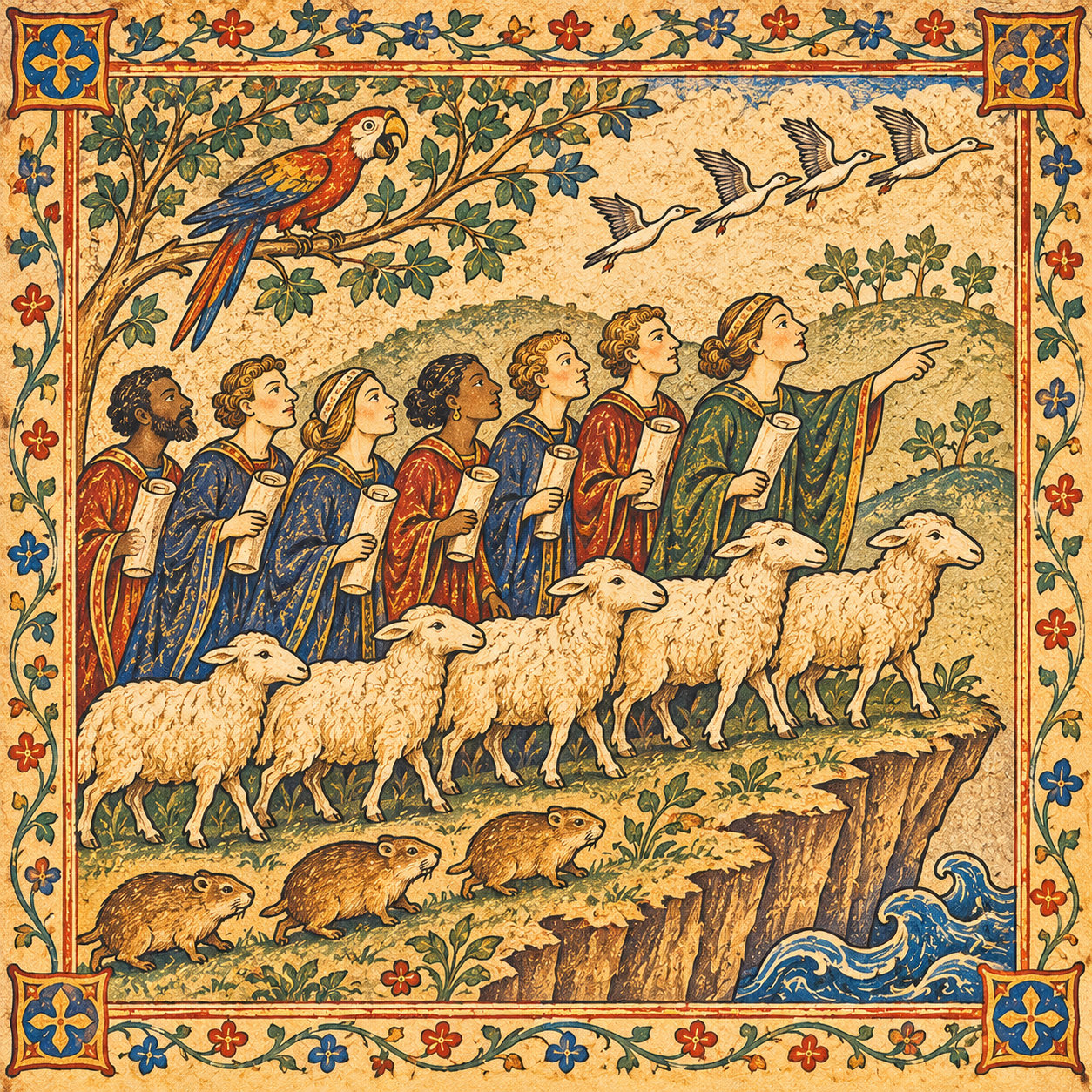
The parrot is the flock's spokesperson. Read the strategy statements of a dozen law firms and the same phrases appear again and again: client-centric, one firm, sector-focused, entrepreneurial, collegiate. To parrot something has come to mean repeating it without understanding. Yet the African grey parrot Alex, studied for thirty years by the scientist Irene Pepperberg, could identify colors, shapes and quantities, and appeared to understand much of what he said. The law firm parrot usually understands the words perfectly well. The problem is that clients have heard them all before, and nothing in them distinguishes one firm from the next.
Then there are lemmings, who famously follow each other off cliffs. They do not. The image comes largely from White Wilderness, a 1958 Disney documentary in which the film-makers herded lemmings over a ledge to create the famous scene. Real lemming populations boom and crash, and at their peak the animals disperse in search of space, sometimes into danger. The profession has its own lemming stories: merger waves that created firms with no coherent strategy, and expansion sprees fueled by guaranteed pay packages for lateral partners, of which the collapse of Dewey & LeBoeuf in 2012 remains the most cautionary tale (it’s too early to tell if this was Weil’s primary issue). It is tempting to see these as collective madness. More often somebody was behind the flock, doing the pushing, whether an ambitious leader, a partnership believing its own narrative narrative, or the pressure to keep pace with the financial wars.
3. The Shape-Shifters
The third family is the most ambiguous, and perhaps the most important in law firms, because partnership politics reward exactly the skills its members possess. Its members adapt, perform and maneuver, and depending on how they use those skills they can be among a firm's most effective leaders or among its most corrosive.
The chameleon is the shape-shifter everyone recognizes. A managing partner must be one person with the partnership, another with clients, another with associates and another with the firm's business services professionals. Adaptability is a genuine requirement of the job. It can also mean a leader with no fixed position at all, who tells each constituency what it wants to hear and hopes they never compare notes. Here the real chameleon offers a surprising correction. Chameleons do not mainly change color to blend in. They change color to regulate their temperature and to signal to other chameleons, showing aggression, readiness to mate or submission. Their color reveals rather than conceals. The best chameleon leaders are the same: they adapt their style to every audience, but their adaptations always tell you something true about what they think.
Adaptability is a genuine requirement of the job. It can also mean a leader with no fixed position at all, who tells each constituency what it wants to hear and hopes they never compare notes.
The fox is the political operator. Machiavelli advised that a ruler should be a fox to recognize traps, and in the Baddeley and James model the fox is politically astute but self-serving. Law firms are among the most political organizations in business. Leadership elections, compensation committees, practice group mergers and office closures are all decided through alliances and persuasion, and no managing partner survives long without some fox-like understanding of where power lies. The fox's genius is adaptability; it has made itself at home in cities across Britain. The question is whether a partner's cunning serves the firm or only themselves.
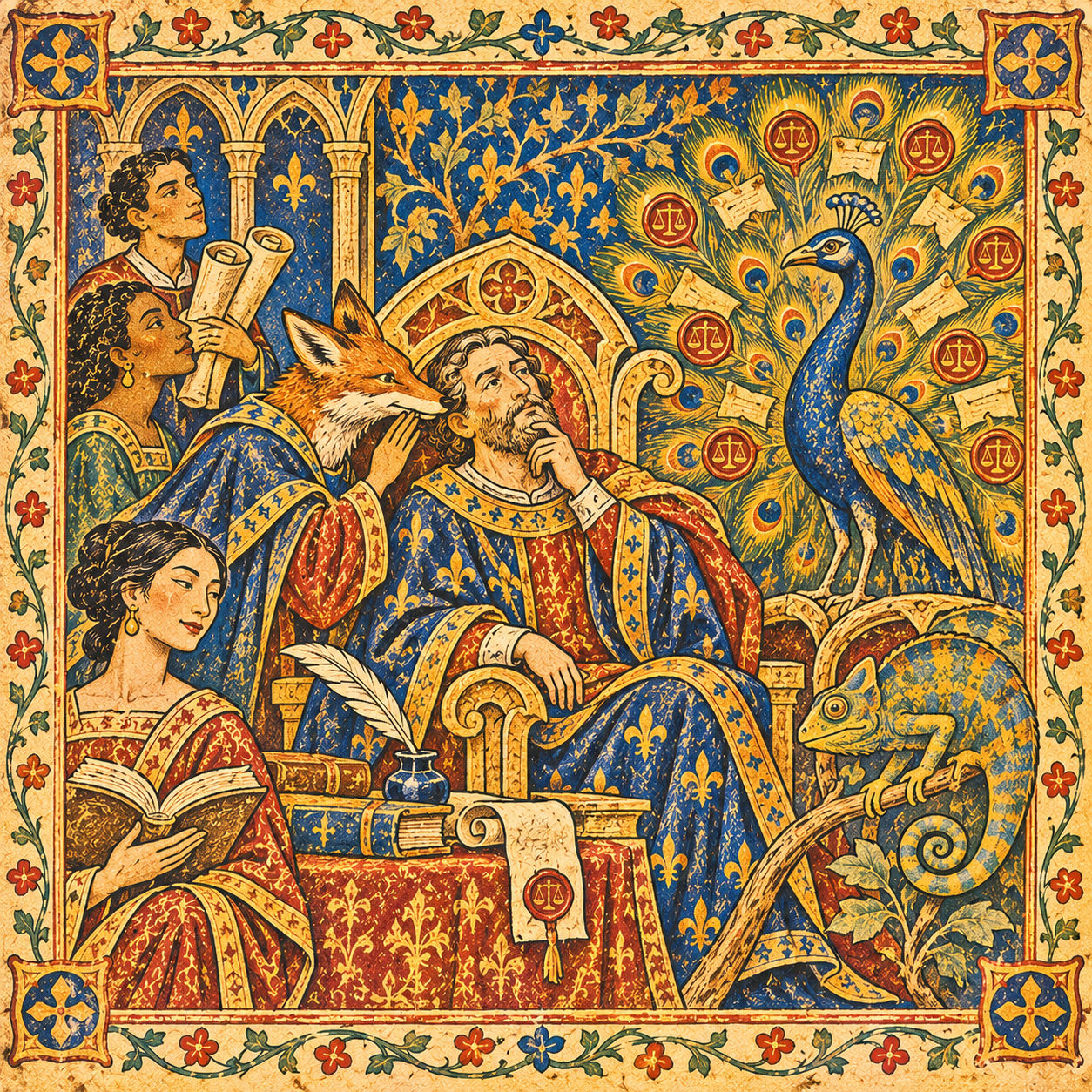
The peacock is the profile partner, strong on rankings, awards, media quotes and conference platforms. It is easy to be cynical about peacocks. Darwin himself wrote that the sight of a feather in a peacock’s tail made him feel sick, because he could not see how such an extravagant display could help an animal survive. The answer biologists eventually reached is that the tail is honest precisely because it is costly: only a healthy bird can afford to grow and carry it. A partner's profile works the same way. Rankings built on client feedback and strong work, and a reputation that brings in instructions, are honest signals of real strength, and firms need partners who can carry them. The problem arises only when the tail becomes detached from the bird, and the display no longer tells you anything about the practice behind it.
The ostrich, by reputation, buries its head in the sand at the first sign of trouble. Every law firm has ostrich leaders: those who look away from a partner's declining practice, from behaviour towards junior staff that everyone else can see, from succession problems in a key client relationship, or from technology that threatens the billable hour. Ostriches do not bury their heads. They lower them to tend their eggs, which are laid in shallow nests in the ground, and from a distance this looks like burial. Faced with real danger, an ostrich runs at great speed or delivers a kick that can kill a lion. The avoidant leader is, in fact, the one thing a real ostrich never is.
4. The Makers
The fourth family creates. In a profession built on precedent, where the safest answer is often the one that has worked before, these are the partners who innovate, build and solve problems nobody else can.
The crow, along with its cousin the raven, is the outstanding inventor of the animal world. New Caledonian crows fashion hooked tools from twigs and leaves. In Aesop's fable, a thirsty crow drops stones into a pitcher to raise the water to its beak, and remarkably, when scientists tested this, members of the crow family did exactly that. Here the myth turns out to be true. Just as important, crows share what they learn. In a study at the University of Washington, crows that had been trapped by researchers wearing a particular mask went on to scold anyone wearing it, and birds that had never been trapped learned to do the same. The crow partner does not just devise the novel deal structure, the new fee arrangement or the better way of using technology. They make sure the knowledge spreads across the firm, into training, precedent and know-how, so that it outlives them. In a profession where expertise is often hoarded because it is personal capital, that generosity is rarer than invention itself.
It is the least glamorous kind of innovation, rarely rewarded in any compensation round, and one of the most lasting.
The octopus is the lateral thinker: a brilliant problem-solver and escape artist, with around two-thirds of its neurons in its arms, each of which can act with a degree of independence. It is a fitting image for a firm leader who trusts every practice group and office to think for itself. But the octopus carries a warning too. Most species live only a year or two and never meet their parents, so each generation must work everything out from scratch. It is the brilliant partner whose practice depends entirely on them, who never introduces a colleague to their clients, and whose departure or retirement leaves the firm starting again. The octopus is the partner with no succession plan.
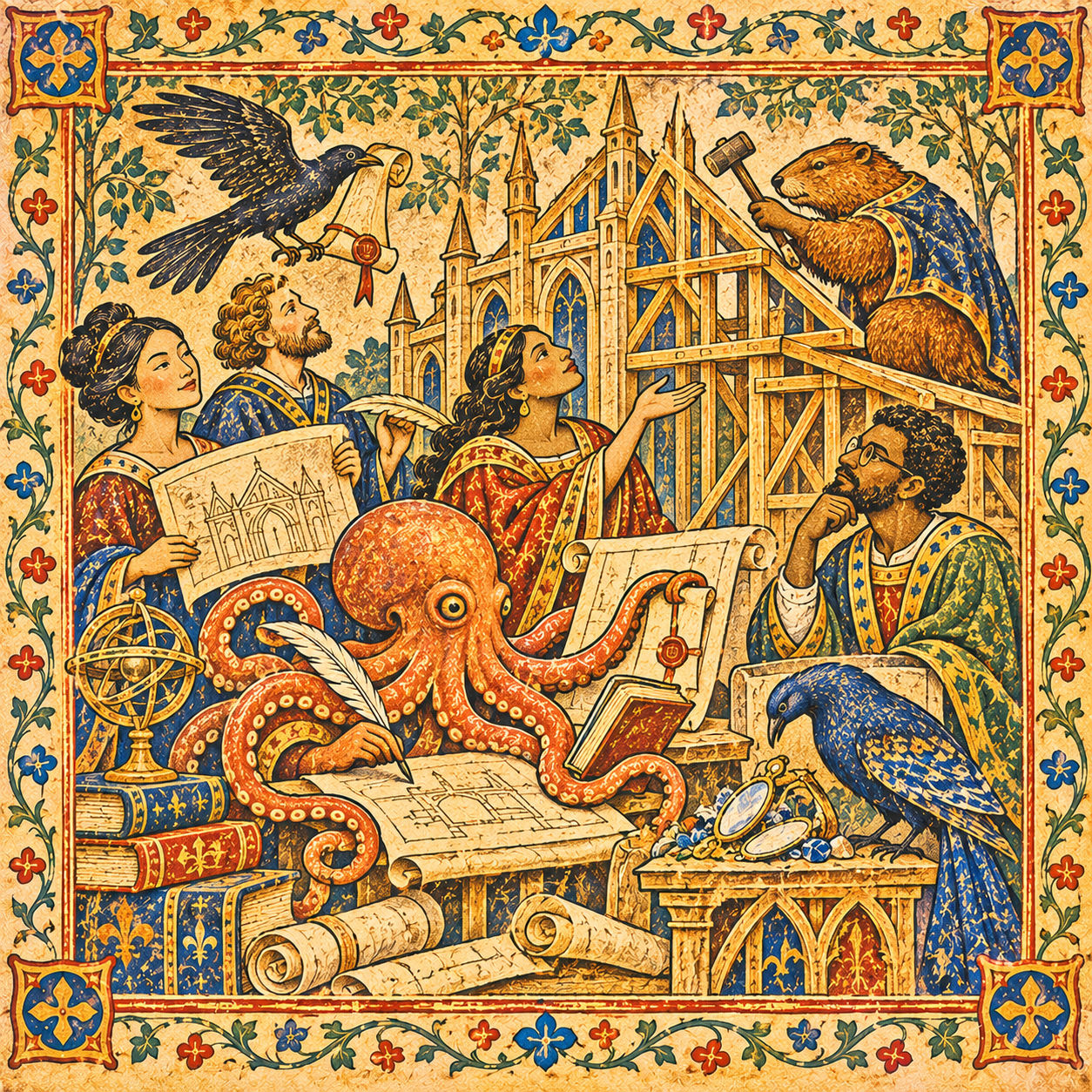
The beaver is the builder. By damming rivers it creates wetlands in which countless other species thrive, which is why ecologists call it an ecosystem engineer, and why it has recently been welcomed back to British rivers. The beaver leader builds the structures in which other lawyers do their best work: the training program, the business development system, the knowledge platform, the pro bono practice, the culture that makes the firm somewhere people want to stay. It is the least glamorous kind of innovation, rarely rewarded in any compensation round, and one of the most lasting.
The bowerbird is the creative curator. The male builds an elaborate structure and decorates it with carefully arranged found objects, often favouring a single colour, to attract a mate. It is the positive counterpart to the magpie: the partner who gathers the insights of colleagues and associates openly and assembles them into something new, whether a market-leading client briefing, a sector initiative or a winning pitch. There is a twist, though. Some bowerbirds steal decorations from their rivals' bowers and wreck their neighbours' work. The line between curation and theft is surprisingly thin, and in a law firm it usually comes down to one thing: whether the people who did the work are named.
5. The Stewards
The fifth family leads by protecting, guiding and serving. These are the leaders partners are happy to elect and re-elect, and the partners associates hope to work for.
The elephant herd is led by its matriarch, usually the oldest female. Research in Kenya's Amboseli National Park found that families led by older matriarchs were better at judging which threats were real and which could be ignored, and in times of drought the matriarch's memory of distant water sources can decide whether the herd survives. The elephant leader is the senior partner or chair who remembers how the firm came through the last recession, what went wrong in the last merger and why a particular client was nearly lost. It is a pointed lesson for a profession that often moves partners on at a fixed retirement age, sometimes discarding precisely the memory it will need in the next downturn.
The elephant leader is the senior partner or chair who remembers how the firm came through the last recession, what went wrong in the last merger and why a particular client was nearly lost.
Geese flying in their V formation have long been a favorite of leadership writers. Birds flying behind the leader save energy by riding the air currents it creates, and the lead position rotates. Research on northern bald ibises found that birds in formation took turns at the front, roughly matching the time each spent leading with the time it spent benefiting from others. Law firms are better placed than most organizations to learn from this. Term limits for managing partners, rotating practice group leadership and the partnership of senior and managing partner all reflect the same idea. The best firm leaders know that one day they will return to the practice, and lead with that in mind: knowing when to take the front and when to step back.
The wolf has had a curious career in management literature. The idea of the dominant "alpha" wolf, fighting its way to the top of the pack, spawned countless books about aggressive leadership, and it maps uncomfortably well onto the eat-what-you-kill cultures of some firms. It was based largely on studies of unrelated wolves held together in captivity. The biologist David Mech, whose work did much to popularize the term, later spent years trying to retract it. Wild wolf packs are families, and the so-called alphas are simply the parents. The real wolf leads by feeding, protecting and teaching its young, which is a far better description of the apprenticeship on which the legal profession was built. The partner who trains and champions associates, and who makes sure the next generation gets its share of the kill, is the true wolf.
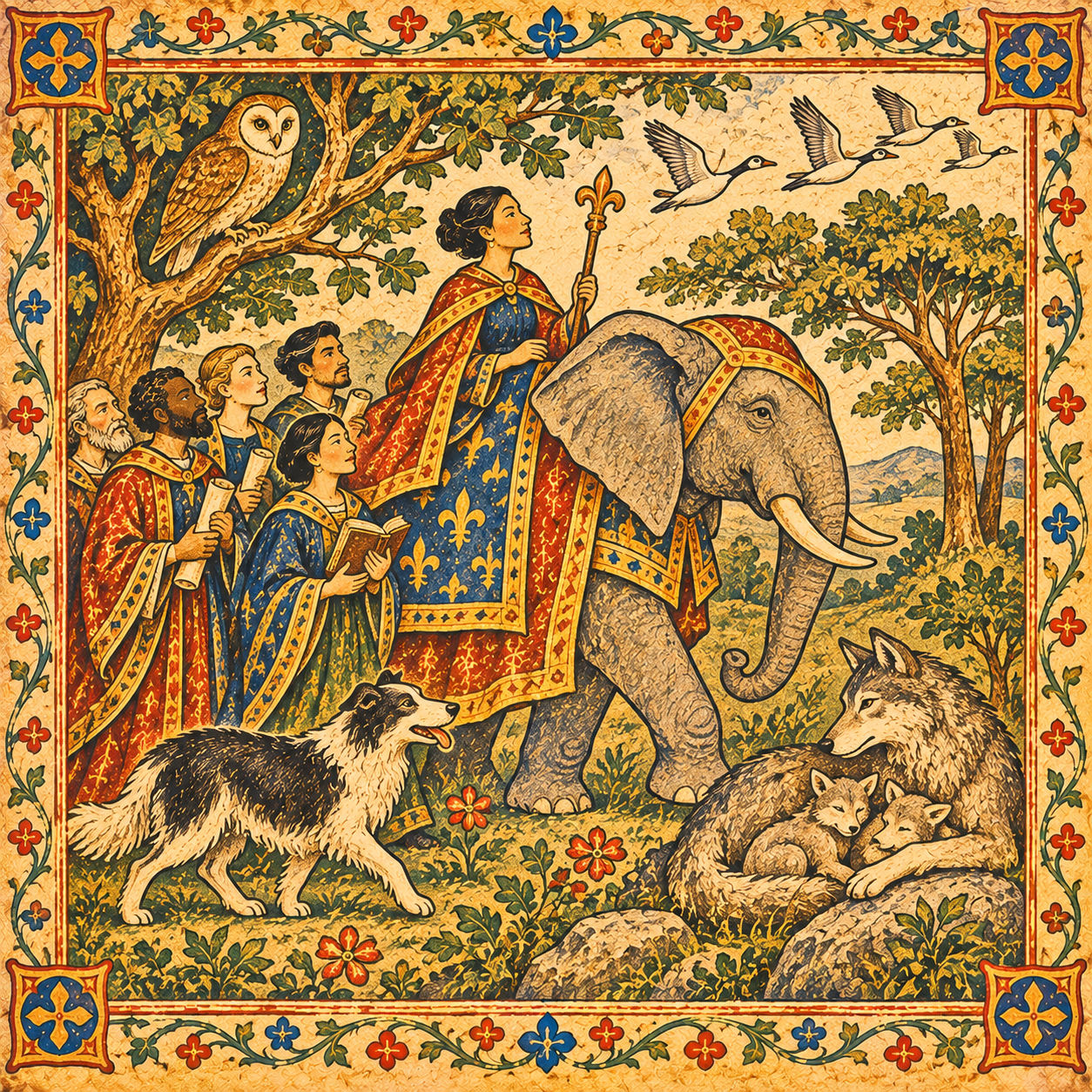
The sheepdog is the practice group leader who guides without bullying. It is often said that managing lawyers is like herding cats, which makes the sheepdog's task harder still. But a good working dog rarely touches the flock. It controls it through position, patience and what shepherds call "eye," a steady, focused gaze. That is exactly how the best law firm managers work. Partners cannot be ordered about; they are owners of the business. The sheepdog leader keeps them moving in the right direction through influence, persistence and quiet authority, and without ever needing to bite.
The owl has been the symbol of wisdom since it accompanied Athena in ancient Greece, and it is the image many lawyers would like to have of themselves: the trusted adviser, calm and learned. Yet in tests of problem-solving, owls tend to perform poorly next to crows and parrots. The owl's real gift is not intelligence but hearing. Its ears are set at different heights on its head, allowing it to locate the faintest sound in complete darkness. There is a lesson here for a profession trained to argue, advise and advocate. When clients are asked what they value most in their lawyers, being listened to and understood features again and again. Looking wise is easy. The owl's true talent is listening.
6. The Predators
The final family is the one to beware of. These leaders get results, sometimes spectacular ones, and in law firms they are too often protected because of the revenue they generate. But the cost falls on everyone around them: on associates, on colleagues, on business services teams, and eventually on the firm's reputation.
The real shark is selective. So is the predatory partner.
The shark is the oldest lawyer joke in the book, and the profession has never quite shaken it off. The shark partner is relentless: always billing, always hunting, pursuing results at any human cost. The popular image of the shark is a mindless killing machine that must keep swimming or die. In fact many sharks can rest, and they attack humans only rarely, usually by mistake. The real shark is selective. So is the predatory partner. Their damage is rarely thoughtless. It is calculated, and directed at those they judge to be vulnerable.
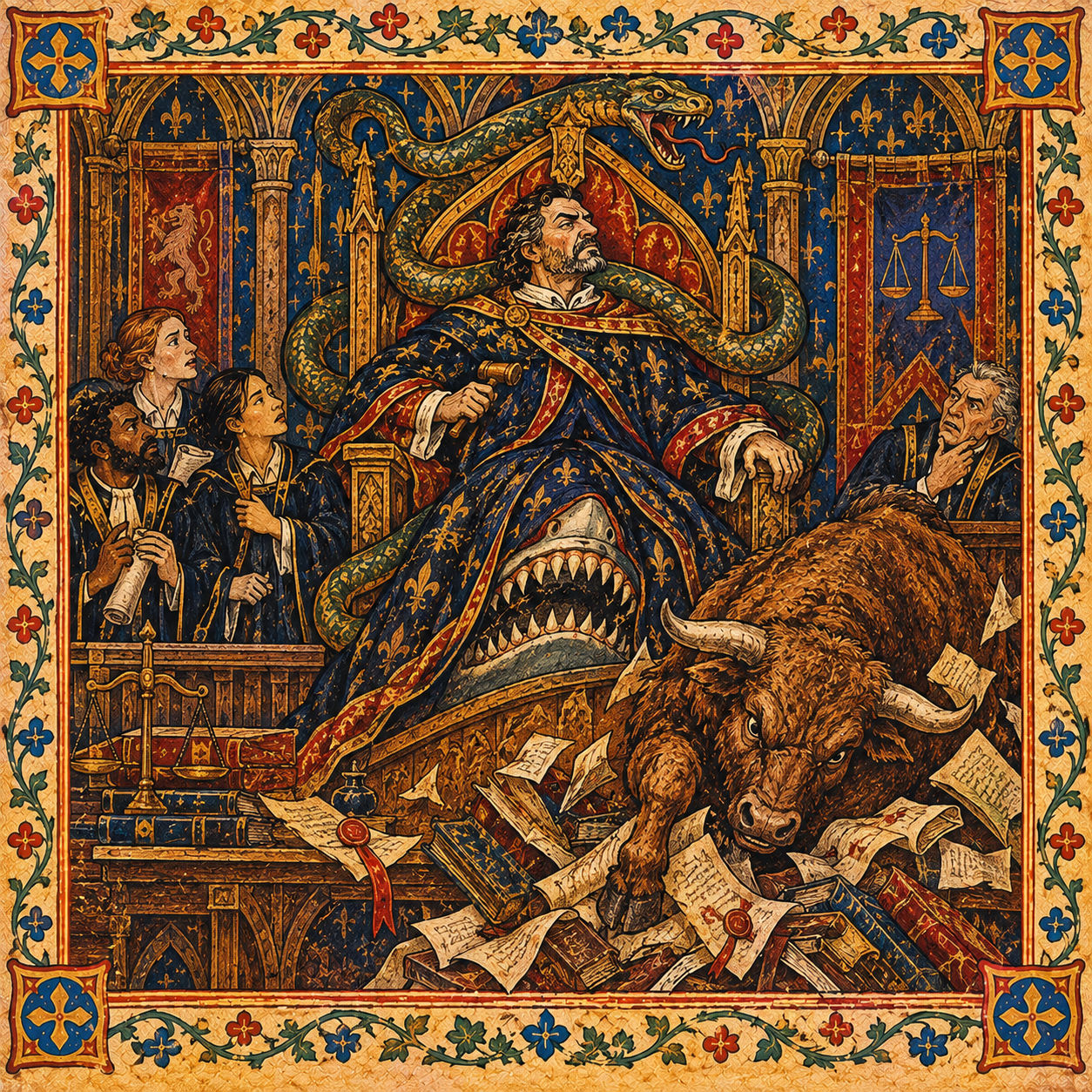
The snake is the manipulator: charming at first, then striking. Paul Babiak and Robert Hare's book Snakes in Suits described how psychopathic personalities can prosper in corporate life, winning over those above them while exploiting those below. In law firms, the snake is the partner who is delightful to clients and to the management committee, and whose associates tell a very different story. Here the real animal is kinder than the metaphor. Most snakes avoid people and bite only when threatened. The human snake is considerably more dangerous than the reptile.
The bull is the leader who charges: the managing partner who forces through a merger, an office closure or a restructuring by sheer force of will. The "bull in a china shop" is our image of clumsy damage, yet when the television program MythBusters released bulls into a room of crockery, they carefully avoided almost all of it. Nor is a bull enraged by the color red; it cannot distinguish red from other colors, and what provokes it is the movement of the matador's cape. The bullish leader, too, is rarely as clumsy as they seem, and it is worth understanding what actually provokes them. In a law firm, it is usually a challenge to their standing or their authority, rather than the issue they claim to be angry about.
Conclusion: No partner is a lion
But what of the obvious animal that has been left out of this bestiary. The lion is the king of beasts and the favorite symbol of leadership, and in law firms the star rainmaker is often cast in the role. Yet lions live on the savannah rather than in the jungle, the lionesses do most of the hunting, and male lions frequently take food that hyenas have killed, rather than the other way round. Anyone who has watched the associates, senior lawyers and business development professionals who actually prepare the pitch, run the matter and nurture the client, while the credit flows to a single name, will recognize the pattern. The king's reputation, like the magpie's, owes a great deal to the stories told about him.
The king's reputation, like the magpie's, owes a great deal to the stories told about him.
That is the final lesson of the bestiary. No real law firm leader is a single animal, and no partner is simply a lion. Every leader is a blend, and the best are a blend of the creatures with the most valuable qualities: the elephant's memory and judgement, the crow's ingenuity and generosity with knowledge, the beaver's instinct for building, the goose's willingness to share the front, the sheepdog's quiet authority, the wolf's care for the next generation, and the owl's capacity to listen. The best leaders also borrow judiciously from the more ambiguous animals: the fox's political awareness, the chameleon's honest adaptability, and even a little of the peacock's gift for display, provided there is a strong bird beneath the tail.
Most partners, if they are honest, also carry a trace of the magpie or the sheep. That is human. The question is which of their animals they choose to feed, and which ones their firm chooses to reward.
In a partnership, leaders are chosen by the very people they lead, and every compensation system is, in effect, a decision about which animals will thrive. A firm that rewards origination credit above all else will breed frigatebirds and cuckoos. A firm that rewards knowledge sharing, client transition and the development of associates will breed crows, wolves and beavers.
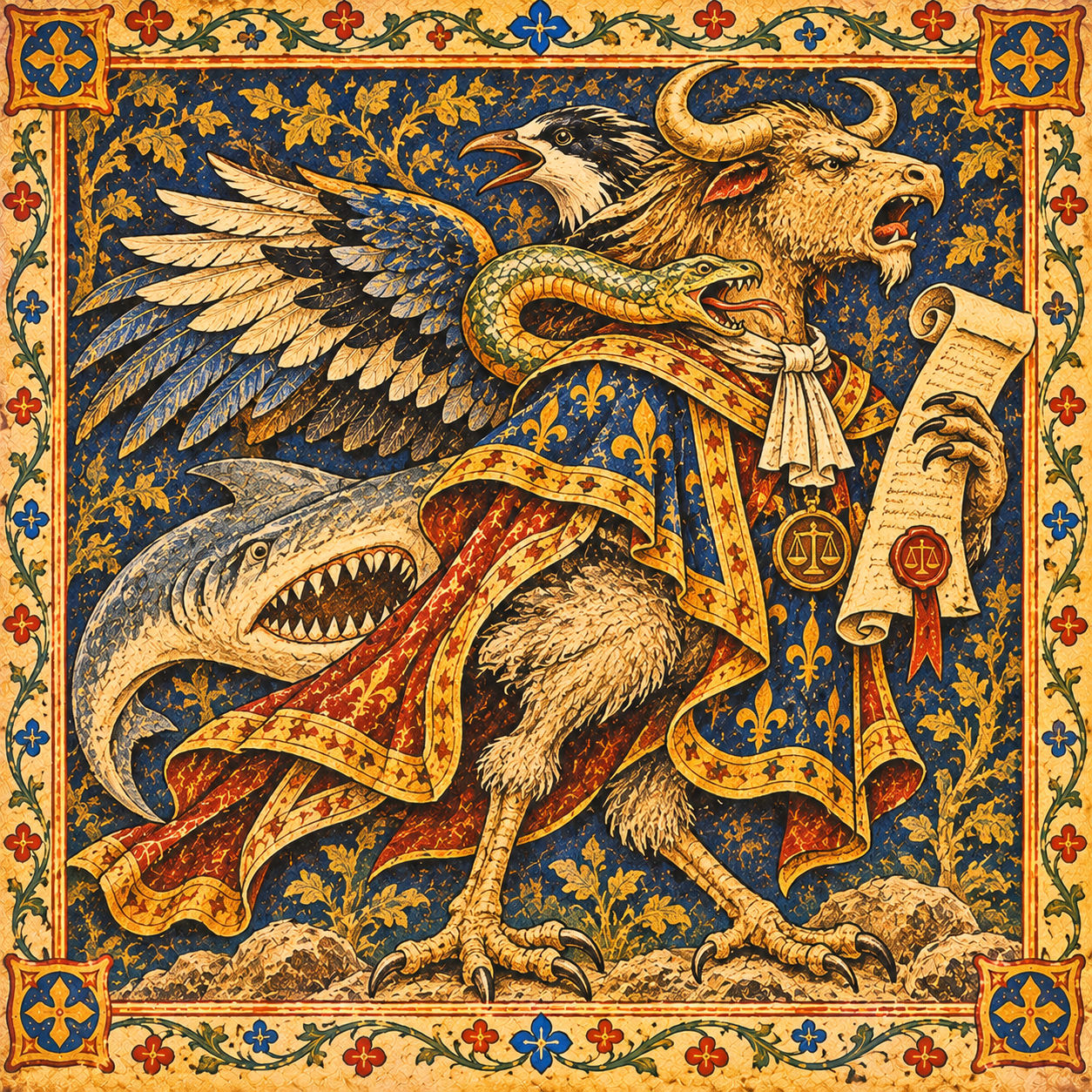
And every firm should beware the partner in whom the destructive animals have come together: the magpie's appropriation, the cuckoo's exploitation of other people's labour, the ostrich's refusal to face the truth, the shark's relentlessness, the snake's charm and the bull's force. Medieval bestiaries had a name for a creature assembled from the parts of different animals. They called it a chimera: part lion, part goat, part serpent, and wholly monstrous. Too many firms have historically tolerated a chimera because of the size of its book of business. Of all the beasts in this bestiary, it is the one law firms should fear most. And unlike the chimera of legend, it is entirely real.
