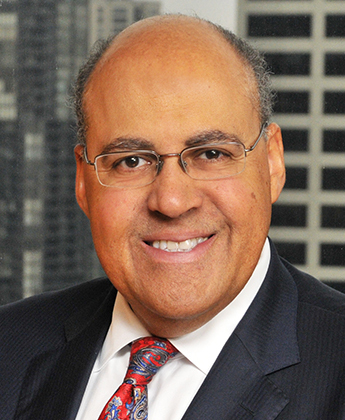
Graham Grady’s work is built on a practical advantage: he understands how Chicago actually functions. Not the Chicago of headlines, but the network of departments, commissions, inspectors and neighborhood groups that determine whether a project moves or stalls. For developers and businesses trying to build, expand or stay compliant, that fluency is often the difference between momentum and gridlock.
At Taft, where he is a partner in the firm’s real estate and land use team, Grady has become a trusted guide through the city’s regulatory maze. His work ranges from hyperscale data centers and industrial facilities to affordable housing, community centers, cemetery parcels and one-off rooftop additions. If Chicago’s built environment touches it – Grady has likely navigated it.
Grady’s style reflects his work: crisp, economical and grounded in real-world practicality. He speaks the way he operates – no theatrics, just the necessary information to move a project forward. It’s a clarity shaped by years inside city government, where precision matters and momentum often depends on saying exactly what needs to be said, and nothing more.
His government background also sharpened a rare blend of legal rigor and civic intuition. He can read a neighborhood meeting before anyone speaks, guide a proposal through the Plan Commission or translate a tangle of technical requirements into steps a client can act on. What clients value most is his sense of how ideas travel through the system – who needs to be brought along, where resistance might surface, and how to build traction in a city where progress is never automatic.
Grady is a member of the Lawdragon 500 Leading Real Estate Lawyers.
Lawdragon: Can you describe for our readers the mix of work you do within your practice?
Graham Grady: Everything from hyperscale data centers, to a battery storage facility, to a tiny rooftop residential addition have provided me with a mix of projects as of late. I am also working on an affordable housing development, three community centers, cell tower leases, adaptive reuse of a portion of a cemetery, and obtaining government approvals for a swim in the Chicago River.
LD: How did you first become interested in developing this type of practice?
GG: My interest in government relations and real estate practice development began when I had the opportunity to serve in several key positions in government in the City of Chicago. Those positions provided me with an overview of government approvals, the need for meaningful community stakeholder engagement, and a results-oriented strategy.
Grady’s style reflects his work: crisp, economical and grounded in real-world practicality.
LD: What are some aspects about this work that you find professionally satisfying? What keeps you excited about it?
GG: Among the personally satisfying attributes of my practice are the friends and colleagues along the way and the occasional full-circle moments that occur over time and with circumstances.
LD: Out of all the work you’ve done in your career, what would you say is the most interesting matter you’ve handled?
GG: Perhaps the most interesting matter I have handled was the development of a $1B data center. This project required multiple legal skillsets and involved over 20 lawyers from my firm. We pursued traditional and unique entitlements, a range of real estate approvals, economic incentives and special interpretations of state law. Part of what made it so special is the relationships we developed with so many folks.
LD: Tell us about a recent professional move, development or achievement.
GG: I was recently appointed as Chair of the Cook County Economic Development Advisory Committee which makes recommendations on tax breaks for blighted properties, provides reports to the federal government to seek funding and engages in a broad array of economic development programs.
LD: Do you have community or charity involvements that are particularly meaningful to you?
GG: In July of this year, I was appointed Chair of the Lloyd A. Fry Foundation which makes annual grants in excess of $10M to local grantee partners to provide education, arts learning, workforce development, community violence intervention and world relief.
LD: Do you have a favorite book or movie about the justice system?
GG: "James" is the book that I just finished. It's the story of Jim the slave in "The Adventures of Huckleberry Finn." This book won the Pulitzer Prize. It's a great reflection on America and racial prejudice, through the eyes of a background character in a great American novel.
LD: If you weren’t a lawyer, what would you be doing now?
GG: I would be a dolphin marine biologist living on an island in a warm and sunny climate!

