Pomerantz LLP is the oldest law firm in the world dedicated to plaintiffs-side securities litigation. It was founded in New York in 1936 by legendary attorney Abe Pomerantz – widely regarded as a legal pioneer and “dean” of the class action bar – who helped secure the right of investors to bring class and derivative actions. In litigation spanning nearly a century, Pomerantz has recovered billions of dollars for damaged investors while securing legal precedents that have expanded investor rights.
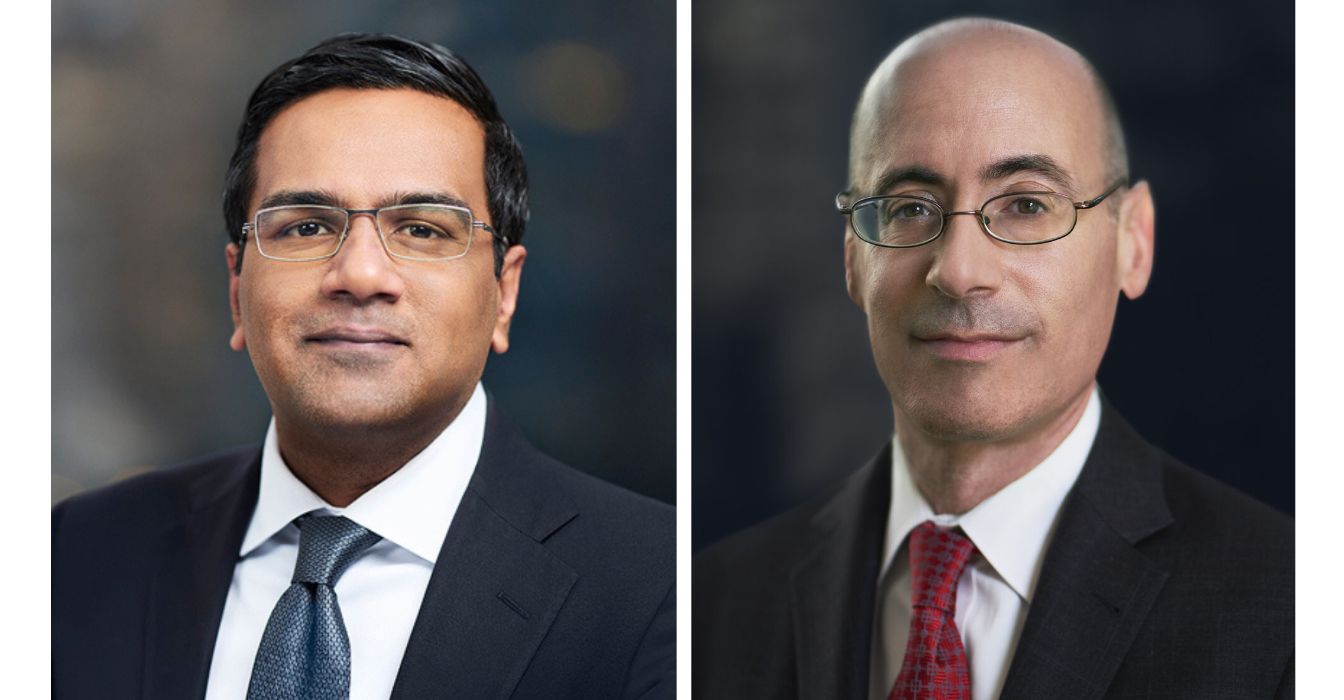
About 800 miles from Wall Street is Pomerantz’s Chicago office, where the firm continues its tradition as an innovator in securities litigation. Partner Joshua Silverman heads Pomerantz’s Chicago office. Throughout his nearly two-decade tenure as a partner, Silverman has spearheaded numerous high-profile securities class actions and secured historic court precedents, particularly concerning SPACs and other emerging issues. In a securities litigation against Grab Holdings, Inc. in 2025, Silverman secured an $80M settlement on behalf of the class – which is the second-largest settlement ever in a SPAC securities litigation.
Silverman also led ground-breaking litigation against Perrigo PLC, where he and co-counsel not only secured a $97M settlement for the class, but also set a historic precedent for investors in dual-listed shares when a U.S. federal court certified parallel classes of investors that purchased Perrigo shares on both the New York Stock Exchange and the Tel Aviv Stock Exchange. This was the very first time a court had certified a foreign purchaser class since the landmark Morrison decision limiting extraterritorial application of the Securities Exchange Act of 1934.
Chicago Partner Omar Jafri also has an exceptional track record. Among other successes, he was an integral player in the Perrigo litigation, and led a securities class action against Forescout Technologies, Inc., which was dismissed twice before being revived by the United States Court of Appeals for the 9th Circuit in a landmark decision that established important precedents favorable to defrauded investors. Last year, the Forescout litigation ultimately resulted in a $45M recovery for the class.
Lawdragon: Tell me about the history of this securities-oriented firm having an office in Chicago.
Josh Silverman: The Chicago office was founded almost three decades ago. When I joined Pomerantz in 2006 there was just one partner, one associate and me. Today, there are two partners (Omar and me), two of counsel, three associates and a senior counsel. The senior counsel primarily focuses on pro bono work, and the rest of us are very actively prosecuting securities litigations. At any given time, we have a slate of between 20 and 30 active cases.
LD: What types of cases is the office handling right now?
JS: Almost all are securities fraud cases. Occasionally, we get involved in a case that is not technically a securities fraud. For example, some crypto cases are not technically securities fraud because the underlying instruments are not technically securities. I’d say 99 percent of our work time is spent on federal securities fraud litigation.
LD: Why does having an office in Chicago make sense for a firm so dominated by securities litigation?
JS: There’s an immense amount of legal talent in Chicago, but not as much focus on securities litigation. In New York, many firms specialize in securities litigation, both on the plaintiff and defendant side. In Chicago, few do. That is both a plus and a minus.
In the plus category, it means that there’s a wide talent pool available. But most are new to securities litigation, so we need to have a deep level of mentorship in our office. It’s something we have worked hard to develop.
SPAC litigation is another frontier where we have made big strides and made new law.
LD: Omar, what brought you to Pomerantz?
Omar Jafri: I was fascinated by the fact that Pomerantz was the first firm in history to bring class and derivative actions on behalf of investors, and that our competitors followed later.
LD: What was the office like when you arrived?
OJ: I joined the office 10 years ago as an associate, just coming off a federal clerkship. I started working closely with Josh and Patrick Dahlstrom. Patrick was the co-managing partner of the firm at that time, and I learned a lot from him about our practice and how to litigate securities class actions.
Eventually I was made of counsel and then partner. Even while I was an associate and of counsel, Josh and Patrick gave me a tremendous amount of responsibility. I was often the lead litigator in some of the securities class actions assigned to me, and I did everything from developing theories of the case, interacting and negotiating with opposing counsel, and arguing in federal courts throughout the country. I argued more appeals as an associate and an of counsel than I have since becoming a partner.
Before being made partner, I handled six federal appeals in different Circuit Courts of Appeals. And that is experience that I would never have been afforded at a large defense law firm or maybe even in other plaintiffs’ shops.
I feel very blessed in terms of the kinds of experiences that I have had and the leeway that I was given while at Pomerantz to become the kind of litigator that I wanted to be. I try to do the same with our associates and of counsel to help develop the next generation of talented plaintiff-side securities litigators.
LD: Can you tell me about some of the cases you’ve been handling?
OJ: Pomerantz has been at the vanguard of ground-breaking litigation post-Morrison, the Supreme Court decision which appeared to close U.S. federal courts to investors who purchased on foreign exchanges. Josh and I both worked on the Perrigo case, in which, persuaded by our arguments, the district court certified parallel classes of investors that purchased Perrigo shares on the New York Stock Exchange and on the Tel Aviv Stock Exchange.
SPAC litigation is another frontier where we have made big strides and made new law.
LD: Can you tell us more about why SPAC litigation is compelling?
OJ: In a SPAC-related merger, it is easier for companies to go public – the underwriting process is not as rigorous as for a traditional IPO. And obviously that means that there is a bigger risk that investors will be misled.
SPACs have spawned a great deal of litigation. Josh and Brian O’Connell, who is of counsel in our office here, led the Grab litigation that settled for $80M a year ago – the second-largest SPAC-related settlement ever. I have also litigated and successfully resolved cases involving SPAC-related securities claims.
Some of the early SPAC cases filed by other firms raised claims only under Section 10(b) of the Securities Exchange Act or Section 11 of the Securities Act. But we as a firm, and the Chicago office in particular, take the position that claims under Section 14 of the Securities Exchange Act should also be brought, because a de-SPAC transaction is fundamentally a merger as well as being like an IPO.
With this approach, we have expanded the type and amount of damages that investors could recover, because there are more claims at stake. And I can affirm that in some of the cases we litigated, the damages increased because of the inclusion of Section 14 claims.
In many of our SPAC cases, all the claims were sustained and the litigations resulted in favorable recoveries for shareholders.
LD: Are there other significant areas where you’re litigating cases?
OJ: We have been involved in many cases against biopharmaceutical companies, especially newcomers to the industry attempting to bring novel drugs to market that aim to treat specific diseases or conditions that to date don’t have cures or have insufficient cures. So, cancers obviously, but also a host of other illnesses like ALS and MS. What we have noticed is that oftentimes defendants make representations about clinical trials or their communications with the FDA – which are almost always hidden from investors – that ultimately are not true or are misleading.
Some drug executives hide problems from investors while trying to resolve issues privately with regulators. We represent those who are harmed by that trade-off.
LD: Why are so many of those cases popping up?
OJ: I think there are two reasons. One is that a lot of these companies are either one-trick ponies, or the drug is so critical to their operations that without it they may not have any business prospects.
The other reason is that there’s been a shift in the regulatory landscape. In the past, it was very difficult to get documents and information from the FDA. But very recently, in the previous six months for example, the FDA has started to release more information than it did before, including something called a Complete Response Letter, which is a document showing the FDA’s reasoning for rejecting a sponsor’s application.
We didn’t have access to that information before, and this change has given us new opportunities to find information that we wouldn’t have otherwise.
LD: Does that information help you build stronger cases?
JS: Now that pharma companies can’t hide behind rules that make discovery so difficult, we do have a better record in these cases. And we are realizing just how common misrepresentations have been. Some drug executives hide problems from investors while trying to resolve issues privately with regulators. We represent those who are harmed by that trade-off, so we certainly are grateful for the government’s increased transparency. I won’t say the FDA is transparent yet, but it is getting better. It used to be a black box until a drug was fully approved, or until you got discovery in a case.
LD: Tell us about some of the major wins you’ve had out of Chicago in recent years.
JS: We have had a number of big wins in this office, from Perrigo to Grab to Forescout. Before that we inked settlements in cases like Aveo and MannKind. We also won the Groupon IPO case.
In the past year, we had $134M plus worth of settled cases.
We litigate some small cases as well. I’m grateful for that, because it allows us to give our associates a leadership role under close supervision. We tell the associate: “This is your case. I’m the supervising partner, or Omar’s the supervising partner, but this is your case. You’re developing the theory of law. We’ll have dozens of conversations about it, but this is yours to develop.”
LD: What trends are you seeing in securities law?
JS: There are two themes we’re seeing. The first is probably related to a drop-off in enforcement from the SEC itself. There’s very little corporate-level enforcement these days, so I think a lot of companies are underreporting related-party transactions or known-sales impediments. I expect that private litigation will fill the gap as the government shrinks its formal enforcement role.
LD: Do you think that approach will continue?
JS: It’s difficult to answer that question without knowing the composition of the SEC in 2028. It has been a fait accompli from the moment that Paul Atkins was appointed. He and Commissioner Peirce routinely dissented to enforcement actions, even against companies that were engaged in rather obvious frauds. So as he took control of the SEC, it was no surprise that enforcement receded to a lesser role.
I would like to see a strong enforcer leading that division of the SEC, even if that reduces our work. I believe it’s good for the country and our securities markets.
LD: What is the second trend?
JS: The second is something that we have pushed hard against in this office and I’m proud of the results we’ve achieved. For the past few years, many executives have tried to manipulate corporate bankruptcies for their personal benefit. When a company goes bankrupt, the bankruptcy courts are supposed to protect the debtor corporation. Usually claims would proceed against the non-bankrupt executive defendants. But recently, bankruptcy attorneys have been pushing for courts to stop or release claims against the non-bankrupt executives as well. It’s very dirty – they do this because the executives they are trying to protect from personal liability are the same ones who hire counsel for the bankrupt company.
Worse, many bankruptcy courts have gone along with the ploy. And when they do, the impacted investors get none of the protections that Article III courts afford absent class members. They do not even get the robust notice you would see in a securities class action. As a result, many are stripped by bankruptcy courts of valuable securities claims against non-bankrupt executives.
Many of our peers are reluctant to get involved in bankruptcies and prefer to try to pick up the securities litigation after the bankruptcy is resolved. We took the opposite approach.
We see that as a blatant misuse of the bankruptcy law. The Supreme Court took an important step in the Purdue bankruptcy, which said a non-consensual release couldn’t release third-party liability. But there’s still debate about whether an opt-out release is consensual, and frequent abuse of the bankruptcy stay to halt litigation against non-debtors.
LD: What have you done to combat that tactic?
JS: We’ve fought these vigorously through the course of numerous bankruptcies. It comes up all the time.
LD: What is your approach in these circumstances?
JS: We don’t hesitate. If there’s a bankruptcy involved, we will fight tooth and nail against any abuse we see. This happened to me a few weeks ago, in a securities class action against two executives who misled investors in Spirit Aviation.
Because the corporation was already in bankruptcy, we did not name it as a defendant. But the two executives – who helped retain bankruptcy counsel and oversee the restructuring – had the corporate debtors file an adversary proceeding in the bankruptcy court seeking a preliminary injunction preventing us from litigating the securities fraud action against the executives.
Many of our peers are reluctant to get involved in bankruptcies and prefer to try to pick up the securities litigation after the bankruptcy is resolved. We took the opposite approach. We immediately hired bankruptcy counsel and began drafting an opposition to the proposed injunction. Fighting in the bankruptcy court can be an uphill battle because they generally favor debtors. But we crafted a strong brief demonstrating that the injunction sought was not permissible under either securities law or the bankruptcy code. When the debtors in the bankruptcy received our opposition, they dropped their motion for preliminary injunction. They withdrew it entirely, which we think was the proper outcome.
LD: Tell me a bit about how you came to focus on securities fraud litigation for your practices?
OJ: I always wanted to be a plaintiffs’ lawyer from the start. Like most people do out of law school, I first went to a big defense firm, but my primary interest was to be on the right side of the “v.” I was also interested in financial litigation.
And what was terrific about Pomerantz is that it had this office in Chicago, and I had a priority to relocate to Chicago after my federal clerkship ended in Atlanta. Chicago was familiar because I had practiced here before, and I went to law school at the University of Illinois.
LD: And how about you, Josh? Before joining Pomerantz, you represented a future commercial commission merchant in commodities fraud and civil RICO cases.
JS: Yes, I primarily did defense-side work for the Chicago office of a national firm. But as my career progressed, I began to feel that I was fighting for the wrong side. I wanted to help people wronged by fraud, not to help people get away with it. I was already familiar with Pomerantz, and it was always my first choice, especially given my interest in securities. It has been a great fit ever since.
LD: Can you tell me about how your office operates in Chicago?
JS: We are very interactive. We do not stay in our own offices with doors closed, doing our own thing. We continually bounce ideas off each other, and that’s why I value us being in the office at least four days a week. Even our Fridays, which are remote-optional, are filled with phone calls connecting to discuss new ideas or case strategy.
LD: And it sounds like you are committed to giving associates deep training early on.
OJ: Yes, that is why we litigate a variety of cases. But even in cases where Josh or I are the lead litigators, we try to give significant responsibility, including depositions and arguments in court, to all members of the litigation team.
JS: I agree with Omar. While I think both of us love to do arguments and depositions ourselves, we realize that it is often more valuable to expose the rest of the team to those experiences – with a good deal of preparation. For example, we will generally do multiple mock arguments, or dry runs through deposition outlines. It’s time-intensive, but well worth it. Few things are more rewarding than watching our associates and of counsel not only hold their own against leading partners from top defense firms, but outshine them.
LD: What’s next for you, and the Chicago operation?
JS: As long as there is still securities fraud, we will be here to fight it. I’m very happy with the Chicago team we have now and am grateful to work with such a strong group.

