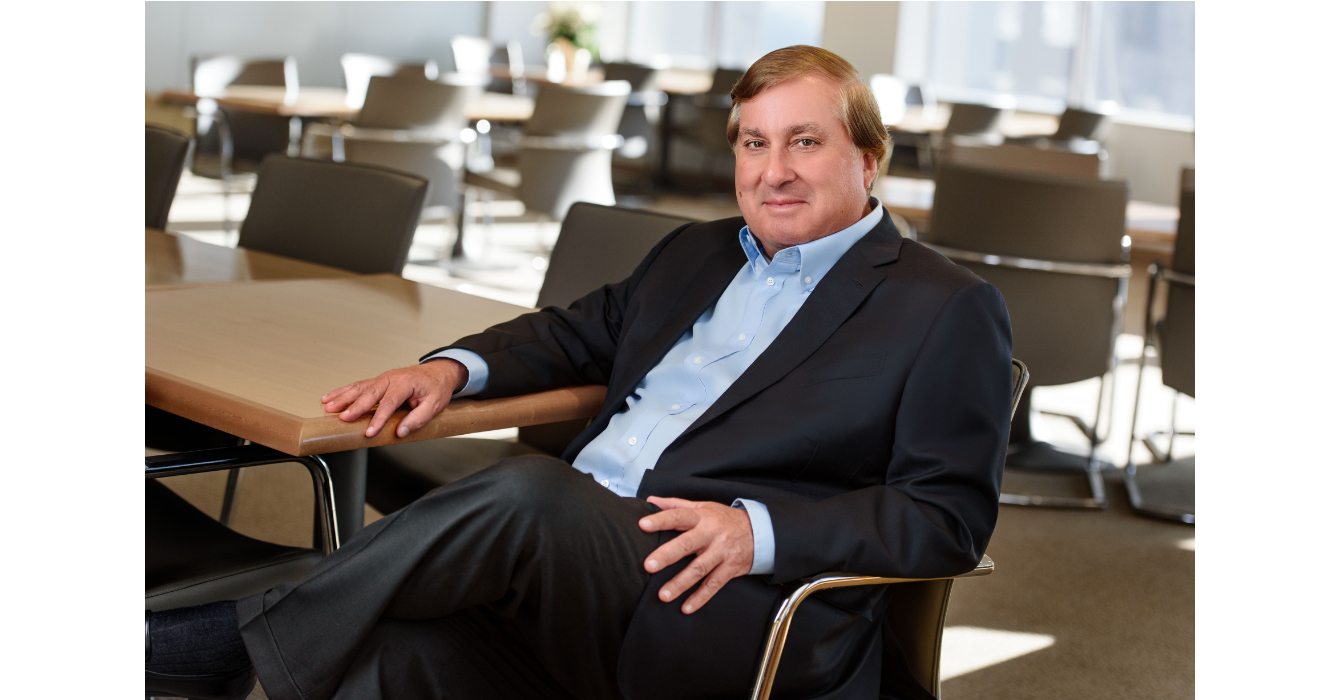
Nicholas Gravante Jr. has built the kind of storied litigation career that can be traced through the institutions that trained him, the mentors who guided him and the high-stakes cases that made him one of the country’s most recognizable trial lawyers.
Throughout his career, Gravante has remained self-directed, moving toward the work, clients and platforms that made sense to him rather than any fixed institutional or political lane. When a new platform could allow him to build at a higher level – for his clients, his teams and the firms he has helped shape – he has been willing to make the move.
He left white-shoe Cravath for the trial trenches with famed criminal defense titan Gerald “Jerry” Shargel. He folded his own litigation boutique into Boies Schiller after a now-legendary dinner with David Boies. He later left Boies Schiller to help build the global litigation group at Cadwalader.
His latest move, to Mintz, is different. It elevates his practice while sharpening his focus.
Gravante joined the firm in February with a team of longtime colleagues from Cadwalader, including Philip Iovieno, Sean O’Shea, Michael Petrella, Matthew Karlan and Mark Singer. The move followed Cadwalader’s planned combination with Hogan Lovells, which created conflicts for the group’s specialized antitrust opt-out practice. At Mintz, Gravante sees room for both growth and a renewed concentration on business origination and client relationships.
“My focus now is to bring in clients, expand my existing relationships across the firm, and continue to practice law and try cases at the highest level,” says Gravante.
The scope of that practice remains characteristically wide. Gravante is currently handling commercial disputes, confidential investigations, pardon requests and long-running matters for institutional and individual clients, often in cases where the stakes are personal, financial, reputational or politically charged.
“Once I agree to take on a case, my client’s politics are irrelevant to me,” says Gravante. “I’m happy to take on liberal causes if the right opportunity presents itself, and I’m happy to represent conservative individuals or institutions if the right opportunity presents itself.”
Lawdragon: Congratulations on the move to Mintz. What prompted the change?
Nicholas Gravante: Law is a business, and Cadwalader’s management made a business decision to pursue a strategic combination with a much larger law firm. I wish them all the best and believe the merger will be good for Cadwalader. But for my group, it created conflicts that the law does not permit us to work around. We can’t litigate against our long-standing, loyal and dedicated clients.
Once we realized we needed to find a new home, we were heavily recruited by a number of outstanding firms. We narrowed it down to three finalists and, in the end, we were incredibly impressed with Mintz. The firm could not have been more enthusiastic about our joining forces with them, and that enthusiasm was infectious. It permeated our entire group.
Mintz is an ideal fit for my practice and the group we brought over. We added substantial depth to Mintz’s already outstanding New York litigation bench, and Mintz offers us something equally important: a full-service firm that can serve the broader needs of our clients.
In joining Mintz, one of the things I was most looking forward to is the partnership and capabilities outside of litigation that I can offer to my clients. The firm’s platform has significant depth in intellectual property (particularly for life sciences and technology companies) and is highly regarded at the ITC. Mintz has a robust healthcare regulatory practice that combines industry leaders with regulatory and litigation attorneys, sophisticated employment counseling and litigation capabilities, as well as lawyers who counsel venture capital and emerging companies through their lifecycle and private equity funds in their suite of complex legals needs.
These cross-selling and horizontal integration opportunities have never been available to me and, in the six months I’ve been at Mintz, they are already paying substantial dividends. And I’m enjoying getting to know my new colleagues.
In joining Mintz, one of the things I was most looking forward to is the partnership and capabilities outside of litigation that I can offer to my clients.
My clients have always been just that, my clients. They are as loyal to me as I am to them. I have built strong relationships starting at Barrett Gravante that have continued to Boies Schiller to Cadwalader and now to Mintz. I am already introducing clients I have represented for years – and in some cases decades – to Mintz lawyers who can serve other aspects of their businesses. Mintz’s bi-coastal geographic scope, particularly with its Florida and California offices, is also greatly beneficial to me.
LD: Tell us about the team that moved with you. These are lawyers you have worked with across several stages of your career.
NG: Yes, and that continuity matters. Phil Iovieno, now one of the country’s top antitrust specialists, continues to lead our antitrust opt-out practice, working closely with Sean O’Shea and Mark Singer. Mark was counsel at Cadwalader and joined Mintz as a partner. He is Phil’s right hand, managing the opt-out cases on a daily basis. Sean, who is probably one of the most aggressive and effective trial lawyers I know, will team with Phil to try the cases.
We were also extraordinarily fortunate to have brought over Mike Petrella and Matt Karlan. Mike is a phenomenal lawyer with whom I’ve worked for decades. We were partners at Boies Schiller and then at Cadwalader, and continue to work closely together. Matt is one of the brightest young lawyers I’ve worked with in years. He worked on many of my matters at Cadwalader, so his move to Mintz made my transition seamless.
But the team that came over can’t possibly handle all the work coming our way, so we have happily turned to our new colleagues. I can’t overstate how impressed I have been with the talent we joined at Mintz. Dominic Picca, Peter Chavkin, Jason Halperin and Amanda Asaro, just to name a few, are not only brilliant litigators, but also a pleasure to work with. I look forward to working with many others.
LD: You have held major leadership roles throughout your career. Where is your focus now?
NG: I ran my own firm, Barrett Gravante, before we merged with Boies Schiller to become its New York City office. At Boies, at one time or another, I served as managing partner, administrative partner, general counsel, and for well over a decade as a member of the firm’s executive committee. I then co-chaired the global litigation group at Cadwalader for almost five years. I have done all of that administrative work, and more, over the last 30 years, and I’m glad I did it and I enjoyed it. But enough is enough.
I will always do my fair share of recruiting, mentoring and other administrative tasks expected of senior partners. Those are things all partners should do, and I will do them with enthusiasm. But my main focus now is to bring in new clients, expand my existing client relationships with other Mintz partners – especially corporate and transactional partners – and continue to practice law and try cases at the highest level. I would be lying if I told you I was going to miss the administrative responsibilities.
LD: What kinds of matters are keeping you busy now?
NG: Currently a wide variety of matters. I’m representing Authentic Brands Group and Travel & Leisure in a civil case, handling a foreclosure action against the American Irish Historical Society, and representing key witnesses in a matter involving Jay-Z and another in a dispute between Clorox and Cognizant Technology.
I continue to represent my alma mater, Poly Prep Country Day School, in certain Child Victims Act cases. I resigned as a Poly trustee after my term as board chair expired because that was the most effective way of my continuing to serve the school. Those cases remain active and keep me busy.
I’m representing Golden West, which manufactures ice cream bars, in a contract dispute with a Kellogg subsidiary and Ferrero, which recently acquired the Kellogg subsidiary, in a suit we filed in Federal District Court in New York. I’m representing the former mayor of Englewood Cliffs, New Jersey on an appeal of an arbitration result to the First Department in New York. I am also representing a former Goldman Sachs banker in connection with a criminal matter.
LD: Interesting. What about your less-public matters?
NG: As usual, I have a number of confidential investigations pending for individuals and companies I cannot identify. One of my greatest strengths as a lawyer over the course of my career has been to represent clients under investigation and advocate on their behalf before charges are filed. When I’m successful, nobody even learns that my clients were under investigation. But they know who they are and they are eternally grateful.
I’m also representing several individuals seeking pardons from the Trump administration. Those clients range from individuals recently convicted to individuals convicted decades ago who have long since served their sentences. Given my successful representation of several Trump Organization employees, including Allen Weisselberg and Matthew Calamari, and my relationship with Acting Attorney General Todd Blanche, my former partner at Cadwalader, clients recognize that I have credibility with the government. None of that guarantees an outcome, but it does ensure that my clients’ petitions will be presented and viewed credibly.
I have been extremely selective in choosing clients for whom I seek pardons. Two of my favorites are a married couple, now in their 80’s. I represented the wife and Jerry Shargel represented her husband over thirty years ago when they were convicted of tax offenses. She received probation and he served several months in jail. I believed the legal system was unfair to them thirty years ago and still believe that today. They have both led successful lives ever since that debacle and are now seeking pardons for one simple reason: They do not want to die as convicted felons. To them, it is a matter of dignity.
When I’m successful, nobody even learns that my clients were under investigation. But they know who they are and they are eternally grateful.
LD: How do you think about politics in relation to your practice?
NG: The short answer is: I don’t. I have never picked my clients or cases based on politics. I’m happy to take on liberal causes if the right opportunity presents itself, and just as happy to represent conservative individuals or institutions if the right opportunity presents itself. Once I accept a case, politics are irrelevant to me. I prefer to focus on winning.
LD: Your practice has always moved between complex civil litigation and criminal defense. How do you define your niche?
NG: My niche has always been the same. I was blessed to start my career working at Cravath for David Boies, who I consider to be the best civil litigator of our generation. I then went to work for Jerry Shargel, who I consider to be the best criminal defense lawyer of his generation. With mentors like that, there’s got be something wrong with you if don’t end up as a highly effective litigator and trial lawyer.
David taught me how to think through and litigate the most complicated civil disputes, as I started my career working for him on the Texaco/Pennzoil case. Jerry taught me how to try cases, how to stand in front of a jury, how to own a courtroom. Both taught me that nothing is more important than maintaining credibility before a judge and jury. Both taught me that there is no substitute for hard work. Both led by example.
I was fortunate to have tried many cases alongside both of them many years after I worked for them. And I continued to learn from them during those trials. That training was the foundation for my practice. It allows me to try a criminal case one month and a complex civil case the next.
LD: Let’s talk inflection points. Your career has had several major turns. Which ones stand out most when you look back?
NG: I can think of three off-hand. The first was leaving Cravath to work for Jerry Shargel, which was a very unorthodox move in 1990. Cravath associates simply did not leave to work for criminal lawyers like Jerry, who at that time was more known for defending organized crime figures than he was for representing white collar clients—even though he always successfully represented both. My move was even more controversial because I had declined Rudy Giuliani’s offer to become an Assistant United States Attorney in the Southern District of New York. It is interesting to note that, later in Jerry’s career, associates from prestigious white-shoe firms would compete for positions working for him. But when I made the move, it was unusual and shocked many in the New York legal community. I took a chance, never looked back, and it turned out to be a great move for me.
The second inflection point was in 2000, when I was running Barrett Gravante, a small litigation boutique that was beginning to thrive and grow. One night, I had dinner with David Boies and his sons, Christopher and Jonathan, at Chin Chin in Manhattan. The dinner was intended simply to catch up. By the end of dinner, and after many Mai Tais all around, David and I agreed that Barrett Gravante should become Boies Schiller’s New York City office. Less than two months later, we merged. That was another great move.
The third was my decision twenty years later to leave Boies Schiller, where I was elected as one of two new managing partners and was David’s heir apparent as firm chair, to run and build the global litigation group at Cadwalader. I enjoyed my years at Cadwalader, made many friends there and was disappointed to leave, but the firm’s decision to merge with Hogan Lovells created conflicts for our group that could not be worked around. I’m a firm believer that everything happens for the best, and I’m thrilled that we quickly found a welcoming new home at Mintz.
LD: When you look back across your many significant cases, is there one that stands out for reasons people might not expect?
NG: So many of my cases have received publicity over the years – my fifteen years of work and two successful trials for Hank Greenberg, the AriZona Iced Tea trial victories, the big Texas verdict against Trinity Industries, the trial victory for Otto Penzler in Los Angeles, my work for Hunter Biden, Kanye West, Allen Weisselberg, former Islanders owner John Spano, and the acquittal of a young boy in a false confession arson case. But one case I still often think about is the Stephen Kovacs case.
Kovacs, an Australian national, had plead guilty to a relatively minor insurance fraud years earlier and already served his probationary sentence. The case had been in the rear view mirror for years as he led a successful life and built a thriving business in Florida. But later, unintended immigration consequences arose from that conviction as federal authorities tried to deport him. Those consequences were disproportionate to his offense and contrary to the advice he had relied upon in taking his plea. More significantly, they threatened to separate him from his wife, children, grandchildren and the successful business he had built for decades in Florida.
On constitutional grounds, we were able to challenge and have his conviction vacated years after his case had been over. That case has stayed top of mind with me because it reflects something I see in a lot of criminal matters: Sometimes the conviction or sentence is not the only problem. Sometimes the unintended consequences that flow from a conviction are what truly become unfair. But where there’s a will, there’s often a way. The best lawyers are accustomed to thinking out of the box and there is almost always a way to remedy injustice.
That’s why the pardon cases I’m doing right now are so important to me. Clients do not always understand what a conviction will mean years later. In Kovacs, I was able to find a path after lawyer after lawyer said it was too late. And the Second Circuit did the right thing. It dispensed justice and reunited a wonderful family. That kind of work is incredibly meaningful.
LD: That makes a lot of sense. What changes in the profession are you watching most closely right now?
NG: When I was coming up the ranks as a young lawyer, we were in the office five to seven days a week. We rolled up our sleeves and often worked 12 to 16 hour days. That was how you learned - by being around more senior lawyers, watching them work, having informal late night meals discussing cases with them in conference rooms, being randomly pulled into conversations for which your presence was unnecessary. You learned through osmosis on a daily basis by taking advantage of all of that informal mentoring. I worry that many young lawyers are not getting that experience in a profession that has become much more accustomed to working remotely.
The other major issue is AI. I am hardly a technology whiz, but I have seen firsthand how powerful a tool it can be as a starting point for factual and legal research as well as drafting. You have to check, double check and triple check everything, but AI can eliminate days, if not weeks, of work by instantaneously generating productive leads. I often wonder what that will mean for so many future young law school graduates. So much early training has historically come from carefully doing one’s own factual and legal research and drafting documents from scratch.
LD: Are you still involved in community work these days?
NG: I’m doing some work for my communities in Florida and Pennsylvania, but I’m largely done serving on the boards of non-profits, except for fund raising and personal volunteer work. I was recently appointed as an honorary life trustee of the Community Service Society of New York and still try to help the organization any way I can. I have agreed to introduce my former partner, Senator Kirsten Gillibrand, when she is honored at the CSS gala in October.
As you know, over the years, I’ve served as board chair of several non-profits – Poly Prep Country Day School, Community Service Society of New York, Brooklyn Public Library, and the Lords Valley Country Club. Each of those positions took a tremendous amount of time and effort. At this stage of my life and career, as I mentioned before, on a professional level, I am singularly focused on practicing law and building out and expanding my practice at Mintz. On a personal level, I am focused on my family. My wife Jackie and I are fortunate to have three parents in their 90s who we look after and our three boys are still in school. So I’m keeping plenty busy and also looking out for my health by playing tennis as much as possible. I’ve had a great run, but have no intention of retiring or ending my practice of law, either voluntarily or involuntarily.

