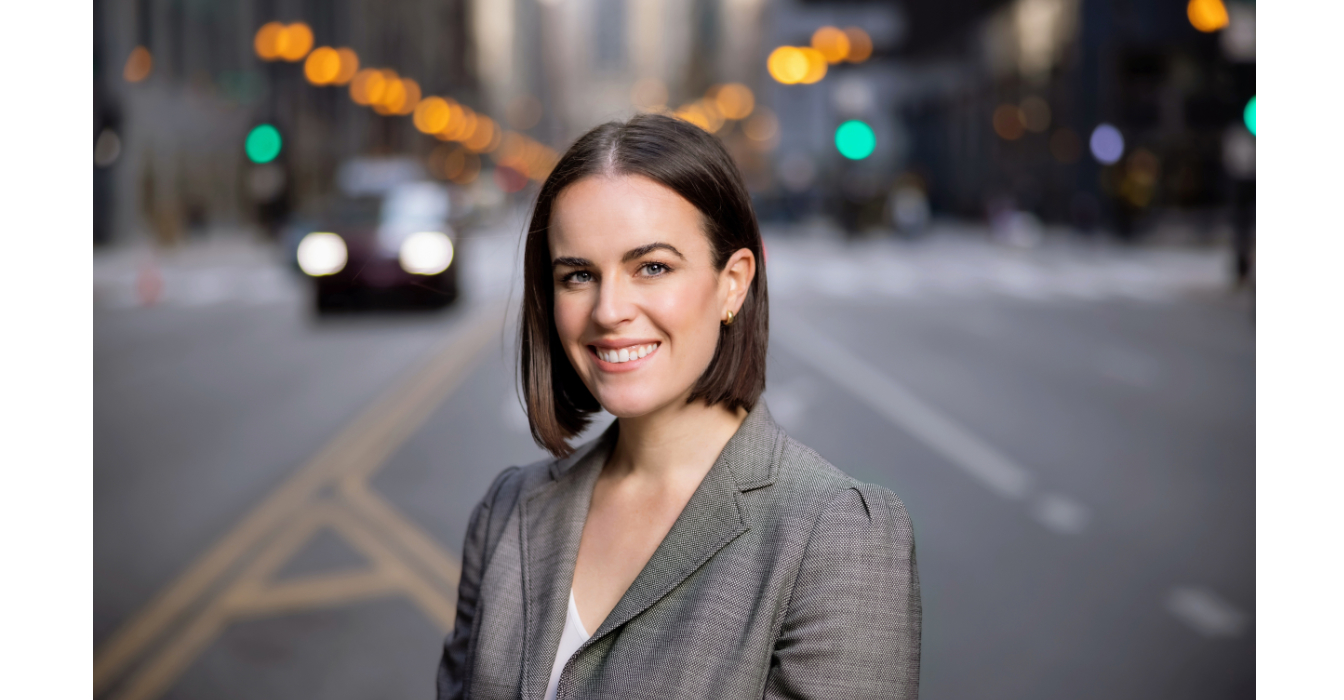
Tracy Brammeier, a partner at Clifford Law Offices, has ascended into a key role in the firm’s landmark aviation cases.
Exposed to the work at the start of her career to the crash of a Colgan Air plane in Buffalo, N.Y., Brammeier has been part of the team representing families of victims in the U.S.’s most disastrous airplane catastrophes. She’s currently working on cases stemming from the crash of Ethiopian Airlines Flight 302 (one of the flawed Boeing 737 Max8 jetliners) in 2019 and a wrongful death lawsuit resulting from the 2025 midair collision of an American Eagle flight and an army helicopter in Washington, D.C.
Brammeier says that because air travel is thought of as safe, when something goes wrong, it is especially traumatizing.
“With aviation cases, there's a sense of betrayal because there's such a huge system that is supposed to make travel by plane safe and safer than any other method of travel,” she says. “You have so, so many people and so many resources and so much money devoted to keeping aviation safe that when something goes so wrong, as I've seen now multiple times in the last decade, it's like, ‘How can this happen?’”
Those situations also show that following the regulations is not enough, and that legal action can force changes needed to prevent similar tragedies in the future.
Brammeier joined Clifford as a law clerk while still a student at Loyola University School of Law and has been with the firm since 2011. While she remembers being underestimated as a young lawyer, more than a decade into her career, the tide has changed. Time and again, she has held massive companies accountable when they don’t live up to their responsibilities.
That’s true outside of transportation injury cases, as well: In 2023, Brammeier obtained an Illinois record $4.3M settlement for a dog-bite case. Her client was a 61-year-old woman mauled by a pit bull. The previous high for a dog-bite case was $1.3M.
Brammeier was the chair of the Chicago Bar Association’s Young Lawyers Section, and currently serves as a host of the Bar Association’s podcast, @theBar. She is also part of a team of volunteers for the 100 Club – a 50-year-old organization that provides 24-hour support to families of first responders in Cook and Lake County.
She is recognized on three Lawdragon guides – the 500 Leading Lawyers in America, the 500 Leading Plaintiff Consumer Lawyers and the 500 X – The Next Generation.
Lawdragon: You’ve become an expert in aviation cases. What was the first one you were involved with?
Tracy Brammeier: The very first aviation case that I worked on was when I was a law clerk. It was the last really major crash in the United States, which was when a Colgan Air plane crashed in Buffalo, New York.
When you're a law clerk, it's maybe a slight exaggeration to say I really worked on it, but I bring it up because it definitely made an impression on me – the case and the seriousness of it.
LD: What were some of the other aviation cases you were involved with after that?
TB: Luckily, there was not a major plane crash in the United States for a very long time. I continued to work on our aviation matters, but they were generally smaller or maybe less consequential for many years. We did work for one of the families who was on MH370, which was Malaysian Airlines Flight 370, which disappeared. That was very interesting.
And then in 2018 the first Boeing 737 Max crashed. Clifford Law was not involved in that crash, but I do remember when it happened because we were talking about it here and about whether it was caused by a defect in the airplane or not.
And on March 10, 2019, Ethiopian Airlines Flight 302 crashed in Addis Ababa, Ethiopia. I remember where I was when that plane crashed. I had gone skiing with friends, and we were driving through the Rocky Mountains on the way back to Denver Airport to fly home. We got a news alert and, in that moment, I remember thinking, "My life is about to change."
LD: The criminal charges against Boeing in that case were dismissed in March. Where do the civil suits stand?
TB: Our last case was a trial that we began and settled during jury selection in January this year. There are civil cases pending here in Chicago involving three decedents. We don't represent any of those three individuals or their families, so I've sort of concluded at this point, although I still have a toe in the water, so to speak. But for the most part we're no longer involved.
We got a news alert and, in that moment, I remember thinking, 'My life is about to change.'
LD: More recently, there was the 2025 crash over Washington, D.C. Where does that case stand?
TB: That case is very tragic. 67 people died. There were three people in an Army helicopter and 64 people on a regional jet.
We represent nine people in that case, and I personally am very involved in the day-to-day management of litigation. The case is set for trial in April 2027.
These aviation cases are different because there are many more plaintiffs and many more lawyers, but also there's a lot more to do.
LD: Are fatal airline crashes particularly tough emotionally for clients?
TB: When somebody dies in any sort of sudden or traumatic circumstance, there's always this intense grief from the family. But with these aviation cases, and it doesn't matter if it's ET302 or if it's this case, it's a different grief experience for people in that situation.
LD: What do you think makes it different?
TB: It is such a mass media event. I’ve worked with clients who have the media literally on their doorstep in the immediate aftermath of the crash and that's something that's really difficult for them to go through.
Also, you're going through it with all these other people, it's like a group trauma and that's a unique experience that happens with each of these crashes.
I think that with aviation cases, there's more a sense of betrayal because there's such a huge system that is supposed to make travel by plane safe and safer than any other method of travel. You have so, so many people and so many resources and so much money devoted to keeping aviation safe that when something goes so wrong, as I've seen now multiple times in the last decade, it's like, "How can this happen?"
LD: Are companies like Boeing being held accountable as crashes have increased in the last decade?
TB: There's a tradition of companies saying, "As long as we're complying with the regulatory requirements, then we are meeting the safety standards." We're seeing that sometimes that's not true. Sometimes just because you're in compliance doesn't mean that you're "safe" and you might know that.
LD: Which case is keeping you particularly busy now?
TB: Definitely this case of American Airlines 5342. There's a lot to do and a little bit of time on that case.
I'm still working on the Alaska Flight 1282 case, which was another Boeing 737 Max problem. We represent the flight attendants.
LD: Right, the plane where the door plug blew out. What makes that case distinctive?
TB: My clients, the flight attendants, are expected to trust the system every day for their livelihoods and they're supposed to take care of other people on an airplane when something goes wrong. I think that that's a case where there's this sense of deep betrayal.
LD: Your dad was an attorney, and as a high school student, you tracked down a Chicago Seven juror and interviewed her at her house. But you didn’t go into the law at first. What happened?
TB: My father was a criminal defense lawyer. He was a prosecutor and then a defense lawyer. I'm the oldest of four children and I was the one that he always was like, "Maybe you're going to follow in my footsteps."
I was never dead set on it by any means. After college I decided to see if there were other things that I might want to do and I ended up in the marketing communications department of Claire's Corp. I had a great experience there, no complaints. But I realized pretty quickly that climbing the corporate ladder was just not going to be for me.
My clients, the flight attendants, are expected to trust the system every day for their livelihoods and they're supposed to take care of other people on an airplane when something goes wrong.
LD: What do you enjoy about being a lawyer?
TB: Sometimes it's nice to be super deep into something. You almost get an adrenaline rush when you're intensely working on something in this particular job in a way that I never experienced in my short time in corporate life.
It's been nice for me to have this to share with my dad over the last – how long have I been practicing now? – 12 years. It's been something that's turned out to be a nice part of our relationship.
LD: Did being at Clifford change the kind of law you wanted to practice?
TB: When I first went to law school, I was thinking I was not going to be a litigator. I came to work here and I was like, "Oh, actually this is pretty great."
LD: Do you remember what convinced you? What did you fall in love with?
TB: It was a little bit of everything. This work can be really exciting. You work really hard, but you drive at a really fast pace also, so you're never bored. You're never sitting still.
I think that’s because we don't bill by the hour and that's one of the reasons that we work at a really fast pace. You still have the same expectations and responsibilities to do excellent work.
And then also, I work with great people here. I work pretty closely with Bob Clifford and Kevin Durkin. Kevin really took me under his wing when I first started here and has been my mentor since the moment I arrived. They're great to work with.
LD: What have you learned from Kevin Durkin?
TB: What haven't I learned from him? He's incredibly dedicated. He works really hard, but also at the same time, he has fun doing the job. We do serious work, and we never lose sight of that, but also, he's somebody who relishes the work at the same time. So, working with him is fun.
LD: And what about Bob Clifford?
TB: Everybody knows Bob. He's a titan of the industry. It's been quite the honor to be able to work so closely with him and see him in action and learn from him.
He does things that nobody else could do. It’s been great having a seat in the room to see him in action. He's provided me with a lot of incredible opportunities that I'm really grateful for. He takes mentorship and the legacy of his work very seriously. And he makes sure that the younger lawyers are a part of the conversation and are “in the room,” so it speak, in a way that I don't know that all my colleagues at other law firms have experienced.
Because of that, there's a certain amount of learning by osmosis. You're there for the conversations; you're observing the dynamics. When he deals with a major issue that comes up in the middle of a witness giving testimony, you see how he deals with that. Maybe it's not the same way I could deal with it because I'm not Bob Clifford, but I'm learning about different ways to approach this, there's different outcomes and it's really informing the way that I grow and develop as a lawyer.
LD: So how would you describe your approach or your style?
TB: I had a client tell me recently that, when they were referred to me, they were told I was very intense. I guess that’s true. I think I tend to be pretty task-oriented, task-focused. I'm the one who's always making sure that I'm driving our team in a very intentional way. I guess it's a different leadership style than my bosses.
LD: What else have you learned in your time at the firm?
TB: One thing that I've learned from Bob and Kevin is that you don't get the best result for your client without being willing to go to a jury on a case. In certain cases where we knew that there was a better result to be gotten than the one that was being offered, we had to prove that time and again. You always want to get the best result for any client. And sometimes that means that you have to be in front of a jury.
LD: Was being ready to go to trial a key in any of the cases you tried?
TB: Yes. There's one that immediately comes to mind. In 2018, Bob Clifford, Kevin Durkin and I were on trial for a young woman who was hit by a truck. She lived, but she had severe injuries, and we tried the case for a week before we finally were offered the limits of the available insurance on the case.
That's absolutely a case that we had to prove we were willing to take it all the way and get one week through the trial before we were able to get the maximum amount for our client.
LD: Can you tell me about some of the cases outside of aviation that have stuck with you?
TB: I've worked on a couple of drowning cases that left big impacts on me. The first is I was given an opportunity here to be a part of a trial team for the case of a six-year-old boy who drowned at a public pool. It was just a horribly tragic case. We had to go all the way to a verdict in order to get the best result for the client there.
I had another case of a young woman in her 20s who was on a boat on Lake Michigan that sank. That case settled shortly before trial. I think when you spend so much time with certain mechanisms of death, it leaves an impression on you.
LD: How do you take care of yourself through all that? I imagine that's a struggle in the profession.
TB: Yeah. I think people can understand it better if I say it's kind of like if you're an ER or ICU doctor. It's your work and it's important and you compartmentalize. You care about your clients, and you care about your cases, but you also have to be a professional.
LD: At the end of the day, what’s most fulfilling about this work for you?
TB: I think this job really changes people's lives in a way that I get to see directly. When something horrible happens to somebody, we can't fix it. But we can help them at least be in a place where they can start to make peace with it themselves and move on. That's a really fulfilling aspect of this job. Also, seeing changes be made by corporations or with a change in the law in order to prevent those types of things from happening again in the future is very fulfilling.

