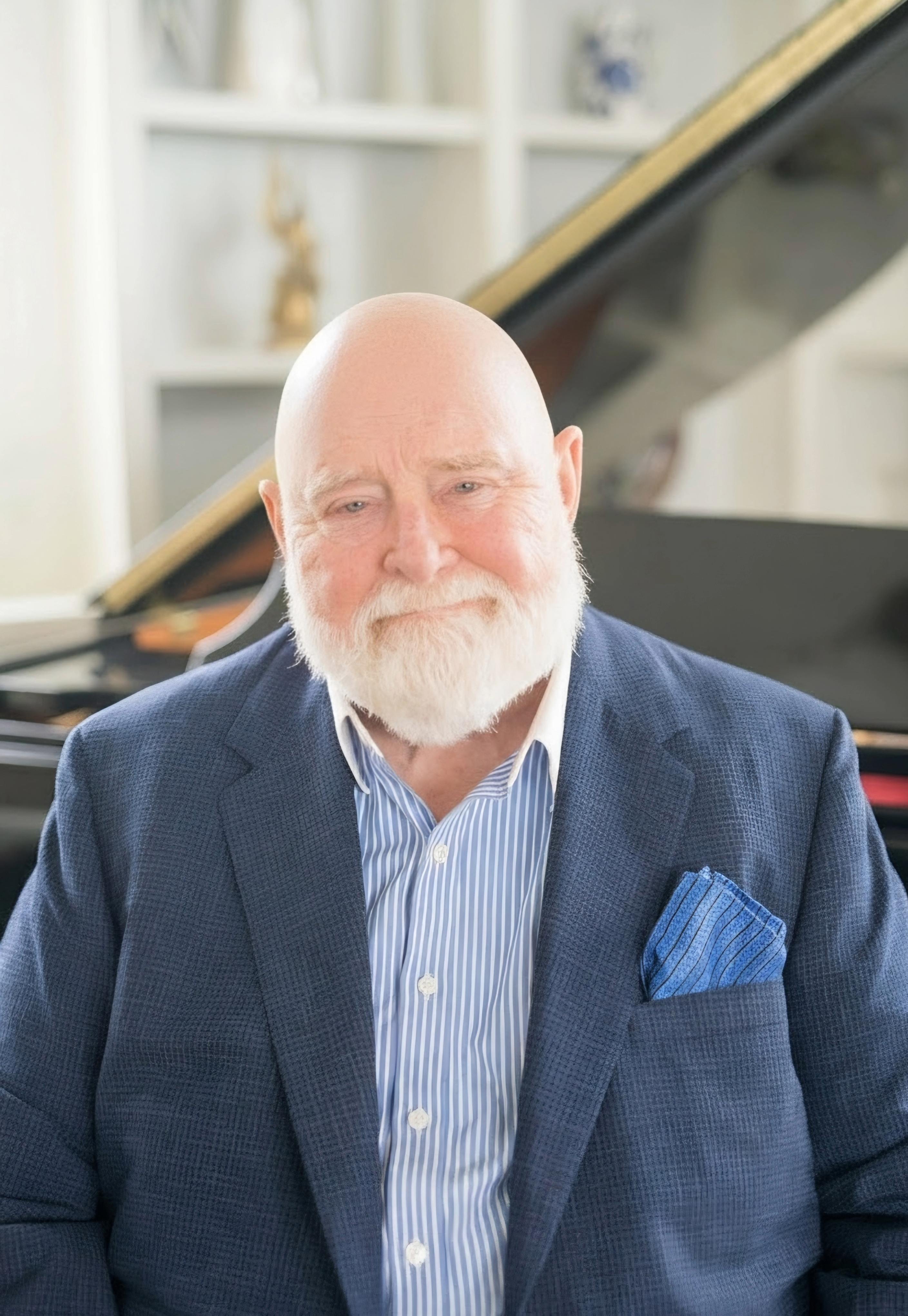
By his own account, Don Keenan looked a bit like Opie Taylor when he became an attorney. Which makes it less surprising that his very first closing argument, decades before obtaining his law degree, could have been scripted for the rural North Carolina community that Opie called home on “The Andy Griffith Show.”
Keenan, all of five years old, was seeking justice for an animal (he doesn’t recall now whether it was a deer, squirrel or rabbit) in a courtroom on his back porch.
“Ever since I was a little kid, my role models were Perry Mason and the lawyer shows,” says the Atlanta-based plaintiff’s lawyer who founded the Keenan Law Firm in 1975. Far from his back porch, Keenan went on to win national recognition for his work championing constitutional rights for children before the U.S. Supreme Court and seeking justice for victims of medical malpractice. Keenan, who received the Tradition of Excellence Award from the Georgia State Bar in 2008, was also the youngest member ever inducted to the Inner Circle of Advocates; later, at age 32, he became its youngest president.
Today, Keenan has secured 402 verdicts and settlements over $1M including 17 over $10M and one over $100M. Keenan shares his years of expertise with other attorneys through the Keenan Trial Institute, which offers courses that qualify for continuing legal education (CLE) credits, along with topical advice through the Keenan Trial Blog. The Keenan’s Kids Foundation takes advocacy for children, which won him the moniker “Voice for the Voiceless” in news media coverage, beyond the courtroom.
Keenan has appeared on virtually every major news program, including: 60 Minutes, 20/20, Larry King Live, Montel, The O’Reilly Factor, The Today Show, Good Morning America, CNN, National Public Radio (NPR), and The Oprah Winfrey Show addressing children’s issues. Oprah Winfrey also selected Keenan as one the “People of Courage” for his dedication to fight for the protection of abused children.
In tandem with that initiative, he recently published a revision of “365 Ways to Keep Kids Safe,” a book he authored at the suggestion of Winfrey, on whose long-running talk show he frequently appeared to discuss child safety issues. New sections of the book, first published in 2006, focus on issues from online risks to vaccine safety for mothers and the dangers posed by mold and lead-based paint in homes and commercial buildings.
Looking back, despite the accomplishments, Keenan wishes for more long-lasting change.
“When judgment day comes, we’re not going to be judged by the way we took care of the normal children,” Keenan says. “It’s the children who fell through the cracks and what we did about it that we’re going to face judgement on. Children don't have a lobbyist. They're not able to call a press conference. They're not able to write a letter to the editor. That's the reason why children are always coming in second-best; they don't have the rights that Congress intended them to have.”
Lawdragon: Did you always know that this was the type of law that you wanted to practice?
Don Keenan: While I was always interested in the law, I originally perceived myself as a criminal defense lawyer. I had a vision of representing thousands of innocent people. But after I got out of law school, after the first year of representing people, none of them were innocent. Eventually, I grew tired of representing so many people who were guilty, of hearing stories about how they got away with it, and I decided I needed to do something else. I actually considered leaving the law altogether. That’s when the family of Kathy Jo Taylor came to me and said, “We have an injustice here. Our young girl was taken from us, and unlawfully. You need to stop these things from happening.
And I said to myself, "Well, I've not really done that, but I'm passionate about hearing the story."
LD: Right, and that case would eventually go to the U.S. Supreme Court. Kathy Jo was taken from her family in the early 1980s, right? Then placed into foster care, where she was beaten and lapsed into a coma and never revived. How did her family find you?
The Chattel Defense
DK: I think it was serendipity. The Department of Family and Children’s Services, or DFACS as we call it in Georgia, had taken Kathy Jo away from her family. I was arguing her individual rights, that she's a person and that she ought to be respected, whereas the main defense for the state was, unbelievably, that children below the age of 18 are not people, that they are chattel. I’ve never been able to get over that. That was really my target, to prove that kids, no matter what their socioeconomic background or their mental development, are human and they're entitled to constitutional rights like everybody else.
When judgment day comes, we’re not going to be judged by the way we took care of the normal children. It’s the children who fell through the cracks and what we did about it that we’re going to face judgement on.
I filed a lawsuit in federal district court arguing that when the state intervened, they put her in an abusive situation. Based on common sense, I believed that was wrong, but there was no law to support my argument and the case was dismissed. We appealed to the 11th Circuit U.S. Court of Appeals, where one of the judges asked what law backed us up. And I said, "Sir, I don’t have any law." He said, "What are you here for?" I said, "I'm here for all the reasons these courts were created: To get some justice. The three of you are far smarter than I ever thought about being, and you've got law clerks, and you've got all kinds of repositories of great thinkers. I want you to come up with it. You have the ability, with your decision, to change things for every kid in foster care. I'd like to think that the reason why you put those black robes on is to do good, and you're never going to have a case where you've got a greater potential of doing good than here."
So the judge said, "Well, can you just give us something to go on? Just give us a starting point." I said, "Well, I've done some prisoner litigation cases where guards beat the prisoners or prisoners didn't get adequate medical care, and the prisoners all had due process rights. They were all in state custody, so why shouldn't Kathy Jo and all the foster kids have at least the same due process rights as the convicted child molester or the convicted murderer?" Ultimately, part of the decision actually touched on that, citing that argument in determining that children in foster care do have due process rights.
Victory Beyond the Verdict
LD: That’s amazing. I know you’ve also advocated what you call the One-Third Solution, arguing that a court ruling is only one piece of achieving justice, for years. Tell me about that.
DK: The principle is creating a domino effect to derive a good outcome from a tragedy: One third is handling the actual case, prosecuting the bad actor. The second portion of it is bringing that tragedy to light in the form of public awareness, and the final part is passing legislation or pushing rules and regulations to prevent the tragedy from repeating. Ninety-nine percent of lawyers might do great work on a case, but when they get the final ruling, say, “That’s it. I don't really have any lawyering to do, so I'm going off to the next case." I've always preached to lawyers that, "Your job is not done when you bring about success in litigation. That's just the beginning. You have to get to the point where you can sleep at night because you're part of the solution and not part of the problem."
LD: What are some examples of that?
DK: I’m sure you have a seatbelt in your car. I do in mine. But even today, the majority of school buses don’t have any. We’ve argued in a number of different states that when children are involved in a bus crash, they're the first ones that get hurt. They’re banging into metal and flying up in the sky, and all of this, every bit of it, could be prevented by seatbelts, but we don't provide them. As a result, many states now have mandatory seatbelts. Alabama, for example, decided to do a test and put seatbelts in half of the school buses, but not in the other half. After a couple of years, they saw that with accidents involving buses where kids wore seatbelts, nobody died, nobody had serious injuries. In the ones where kids weren't belted, there were deaths, brain damage, etc. And so they said, "Maybe it works. I think maybe we'll put seat belts in."
Your job is not done when you bring about success in litigation. That's just the beginning. You have to get to the point where you can sleep at night because you're part of the solution and not part of the problem.
My part of the solution, specifically, was the establishment of Keenan’s Kids Foundation in 1993. Part of it is charitable, funding certain activities for children, but for the most part, the priority is advocacy and prevention. We've got nine separate safety projects. The first one, I believe, was playground safety, because we had seen injury after injury, death after death, from the same kinds of things. We took advantage of the internet to promote child safety, back-to-school safety, Fourth of July safety, hold press conferences, make flyers and reach a large audience. There’s no legal fee; it's part of our obligation to see that this stuff doesn't happen again.
LD: And that eventually led to your book, “365 Ways to Keep Kids Safe.” That’s impressive. What would you say are the most pressing concerns that children are facing now? What most needs to be addressed?
Systemic Déjà Vu
DK: Unfortunately, the system faces the same problems as it did in the 1970s. It’s underfunded. You cannot take a caseworker, no matter how dedicated they are to doing the right thing, give them a caseload of 35 kids and expect them to look after and protect them; they just can't do it. So, kids are falling through the cracks all the time.
Another issue is that the leadership positions at these child welfare agencies don’t attract the people with the skills necessary to come in, clean house and do the job right. So there is one director after another, many with a good heart and good intentions, but no experience. That's the problem, and I hate to say that it persists even today.
LD: Last year was your firm’s 50th anniversary. What prompted you to start your own firm? How has your mission grown and changed over time, and what do you enjoy about the people that you practice with?
DK: People have often asked me, "Why didn't you go with a firm in the beginning?" Are you kidding me? Nobody was going to hire me: I was too young; I looked like Opie. Today, my partners are all far younger than me, and I've had the opportunity to mentor them, for them to sit second chair at trials and write articles with me, and so, they practice law differently than other lawyers. They are now getting their own audiences, and we've broken the partnership down into specialties in areas such as workshops, malpractice, products and mold. Currently, consulting cases count for half of our firm’s business.
Now, I have to admit that my style of practice is very demanding. There's no tolerance for laziness or mistakes. There are not a lot of lawyers who are going to stick with that, but I've got three or four lawyers that have been with me for a long time. I think a lot about my legacy now, "What's going to go on after I leave?"
I have to say that I couldn’t have done what I’ve done without my loving wife of 51 years, Teresa. She has been there not only supporting me but also telling me “no” when I needed to be told “no.” She has been a caring, loving wife, as well as my one-person focus group. We do focus groups all the time, but when it comes down to it, I’ll ask Teresa at the dinner table or somewhere, “What do you think?" And sometimes she’ll say, "Well, that dog won't hunt." I’ll say, “How come?" and she’ll answer, "Because of this, this, this and this." She's not speaking as a lawyer. She's speaking as a layperson who's eventually going to be on that jury. And I'll listen to her before I'll listen to lawyers.

