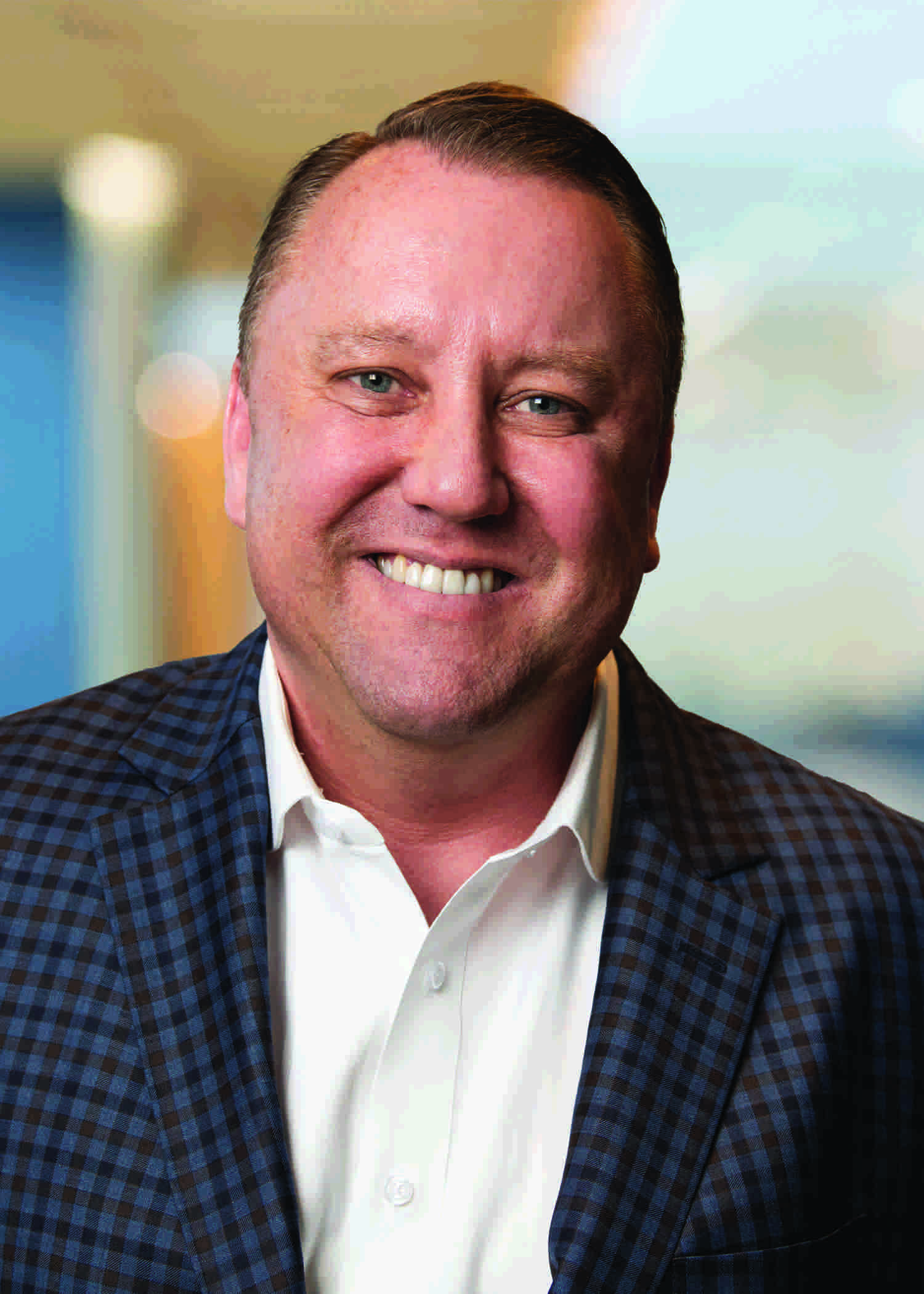
Few corporate lawyers are better placed to take tech startups from “garage to global” than Louis Lehot, a Big Law partner at Foley & Lardner’s Silicon Valley office in Palo Alto, California.
“How do you help a company from the very beginning when it's just an idea on a whiteboard?” he asks. “That’s the garage. The global part is the dream.”
Lehot’s own career has followed a similar path. His journey in Big Law began as a file clerk at Shearman & Sterling in the early '90s. Though he’s known he’d be a lawyer since the age of seven, the file clerk job filled a secondary need: “I was trying to pay for beer money at Georgetown as an undergraduate,” Lehot remembers. He was the king of odd jobs: “I was running around delivering documents on my little moped around Washington, D.C., making sandwiches, making copies, doing whatever needed to be doing. And I turned that into a paralegal job.”
From there, his legal career took off – and, like many of the startups he’s counseled since, went global. After working in cross-border corporate finance in Europe for Shearman & Sterling, Lehot made it to Silicon Valley in 2005 as a corporate lawyer at Simpson Thacher & Bartlett specializing in M&A deals, private equity-sponsored leveraged buyouts and capital markets transactions. In 2009, he moved to Sheppard Mullin where he devised that “garage to global” philosophy, helping companies grow “from inception to ideation to commercialization to exit.”
That emphasis continued during stints at Cooley, DLA Piper and L2 Counsel, a boutique firm where he worked from November 2019 until February 2021 when he joined Foley. More than five years later, he is still guiding startups as they secure venture capital and growth equity financing, prepare for an initial public offering or an M&A transaction and navigate the exit. He also represents U.S. and non-U.S. registrants before securities regulators and keeps his finger on the pulse of the ever-changing world of technology.
“The next frontier for law firms is, how do we help companies transform their businesses into AI-first businesses and how do we transform our own business into an AI-first business?” Lehot says.
Lehot spoke recently to Lawdragon about his career in the Silicon Valley hotbed and the challenges of helping companies adapt, transform and grow.
Lawdragon: When you took that gopher job in undergrad, did you know that you wanted to be a lawyer?
Louis Lehot: I knew I was going to be a lawyer when I was seven years old. That was it. At the time, I think I must have thought this meant being a trial lawyer. I had no idea that there was this way of being a business lawyer where I could help everybody win. That was why I quickly pivoted away from litigation: I love the win-win, not win-lose.
LD: Tell us about your early days in Europe at Shearman & Sterling.
LL: From the early 1990s through the mid 2000s, American lawyers and American law firms were privatizing big European companies and helping them list on the New York Stock Exchange, acquire U.S. companies, or be acquired by U.S. companies. It was the golden age of being a U.S. lawyer abroad. I spent 12 years off and on there, shuttling between New York, Paris, London and other European hubs, helping companies get transactions done.
LD: How did your career progress after Shearman & Sterling?
LL: In 2005, I moved to Simpson Thacher where a group of ex-Shearman lawyers had opened the Palo Alto office just a few years before. I continued helping big companies access the capital markets and I learned how to do M&A. That was when private equity was transforming everything that happens in Silicon Valley. I worked on this small transaction spinning a business out of HP called Avago, which is now known as Broadcom, and on a number of leveraged buyouts, one of which was Seagate, which was making hard drives.
Then on Christmas Eve 2008, when we were in the thick of the financial crisis, I was thanked for my service, but that I would not be a partner, and to start looking for another job. Big clients like Lehman Brothers and Washington Mutual had declared bankruptcy, so it was a dark time. I had to dig deep inside of myself and say, "What are you going to do next?" I transformed into an emerging growth lawyer helping companies grow from garage to global, meaning from inception to ideation. So I went from Simpson Thacher to Sheppard Mullin in 2009.
“I had to dig deep inside of myself and say, ‘What are you going to do next?’
LD: Can you elaborate on that "garage to global" philosophy and how it's taken you through your whole career?
LL: When you're a lawyer, you need to be relevant to the people around you so that they know when to call you, why to call you, how you can help them. At Shearman & Sterling, they threw me into the swimming pool of these big multinational companies that they had as clients. And then at Simpson Thacher, they threw me in the pool of private equity firms that needed their help. Those kinds of clients require a big institutional law firm and those are not relationships that you generally can develop on your own. It requires a big, giant platform. And so I developed the idea of garage to global as I was learning how to be relevant to the people that could hire me.
Here in Silicon Valley, either they're in a late-stage startup that's going public or they're an early-stage company that they're trying to scale to hyper-growth stage. And so garage to global became, how do you help a company from the very beginning when it's just an idea on a whiteboard? What problems do you have at the very beginning of a company? What's the equity split? What's the intellectual property? How am I going to make money? How am I going to convince an investor to write me a check? Do I have to put them on my board of directors? Does it mean they have control of my company? And what do I do to protect myself? That’s the garage. The global part is the dream. If you make it past the garage, can you make it global?
We had some really early successes with some companies, one of which was called RealD. It had this technology that is still used to help you see a movie in 3D in the movie theater. We helped turn that franchise into a global company and took it public on the New York Stock Exchange in 2010. That was an example of garage to global.
LD: How did your global experience at Shearman & Sterling help you in that work?
LL: It makes you really think about, “It’s great that you filled up all the movie theaters in Los Angeles, but they have a lot of movie theaters in Beijing and all these other parts of the world. How do you access them?” Uniquely “legal” problems are boring. What makes them interesting are the people behind them and the businesses that they operate. How you do business in China versus Europe. What does a handshake mean? What does a contract mean? How do you structure payments? Who gets the technology? Who owns it? How do you go to market? Do you need a local partner or do you go direct? These are all exciting questions.
LD: From the dot-com bubble bursting to the rise of private equity to the financial crisis, you've seen these markets in the earliest stage of their booms and the lows of their busts. What has that taught you about staying nimble and resilient and forward-thinking? And what is most on your mind for driving ahead now?
LL: For businesses that were created before AI was primary in everything, they have to pivot and redesign the product to be an AI-first product. I think law firms are in the same place right now. We have to figure out a way of leading with AI. We all have AI tools, but how are we going to sell AI to our clients and how do we help them turn into an AI-first business? The big consulting firms have figured out that that's a big business for them to go after, and I think they're making money hand over fist. Law firms have not yet figured out how to turn AI into a product that they are selling. The next frontier for law firms is, how do we help companies transform their businesses into AI-first businesses and how do we transform our own business into an AI-first business?
LD: Are there any steps that you're taking in your practice to transform it into an AI-first business?
LL: I've always had the philosophy that the first-movers in technology disruptions will be the commercial winners. When I was in London in 2001, everybody in New York had a Blackberry, but nobody in London did. So I flew to New York and got myself one and brought it back with me to London. For about a year and a half, because the Europeans were slower to adopt Blackberry, I was every client’s favorite lawyer, because I would answer their emails instantly at whatever time of the day or night (because I had the Blackberry and didn’t need to be logged into my desktop computer), and it was a complete game changer.
I saw this when I was working at L2 Counsel in a boutique environment. We experimented with a lot of tools that other law firms didn't, one of which was called Kira, which was one of the first AI due diligence platforms. It allowed us to compete with the Big Law firms. I learned during that time that the right thing was always to have technology, because if you have the technology and the right people, you can do amazing things.
LD: That’s so interesting. Then, looking forward, how did you end up at Foley & Lardner?
LL: Ultimately, if you want to be working on the technologies that are most disruptive, that are going to go the most global, you need to have a legal platform that can deliver all the services that your client is going to need. At L2 Counsel, we had gotten to the point where we were not able to access certain matters because we would never have enough people with enough expertise, and the “boutique” platform didn't inspire enough confidence for larger buyers. We knew we needed a bigger firm with more resources to bring to bear, and we needed a big firm that was going to be people-centric, full service and technology-driven.
If you have the technology and the right people, you can do amazing things.
LD: What has the experience been like at Foley?
LL: From the first moment I met the Foley team through today, they will tell you that their four most important priorities – their pillars – are their people, their culture, their clients and their communities. That really resonated with us, and it has been our touchstone. We operate as a team, as a unit. We operate in a flat structure. We landed with 14 people in February 2021, and we're now over 60 people in 2026. It's about the people and the team and the clients and how we practice.
LD: Do you see yourself continuing to grow the practice now or do you feel you're in a sweet spot?
LL: Do we have areas of growth? Absolutely. And I'm constantly trying to fill them. To give you an example, the way emerging growth companies need labor and employment help is totally different than a big company. I don't call it labor and employment, I call it talent management, meaning it starts with hiring people and then it continues on with retaining people. And then sometimes it's managing those people, and sometimes it's managing them up, managing them toward a more fruitful area of growth, and sometimes it's managing them out.
And so I hired Cathryn Le Regulski, who I had known for 15 years at prior stints at Cooley and DLA, to come over to Foley and help us deliver that for our clients. Not that Foley didn't already have great labor employment lawyers, but they wanted to litigate and investigate, not focusing on what I call “talent management” in the way that we do it on our team on a day-in, day-out basis. That was an example of a hole that we filled. We'll always have holes as the market evolves and we'll continue to try and find the best people.
LD: Can you tell me about some recent engagements that you've been particularly excited about or proud of?
LL: I have a client called Mirantis that started 25 years ago. Immigrants from the Soviet Union formed an IT services company in Silicon Valley doing IT consulting work. Then in 2011, they pivoted and became a hybrid cloud and container orchestration platform, meaning that they were serving companies as they moved their data into the cloud. They became a technology rather than a services company.
They were having very good growth, but then artificial intelligence came along, and if your product hadn't been designed as artificial intelligence from the get-go, it probably wasn't optimized. And so they needed to do this pivot to become an AI-first company. They partnered with an Australian company called IREN to deliver a data center for Nvidia in Texas. It was such a successful collaboration that Nvidia said, "Why don't you guys do more of this?" And we ultimately said, "Why don't we merge?"
So, a company that was growing at a healthy but normal pace suddenly began growing at a hyper-scaling pace.
Another one was a company called Gatik here in Silicon Valley, which has been developing technology to help a mid-sized truck that Pepsi or Walmart might use to deliver product from a regional distribution center to a store. Historically, those have been driven by two people and then you've got people loading at either end. Gatik’s technology will turn that same truck into an autonomous logistics system by having it drive autonomously and then have loading systems so that they can be loaded and unloaded with ease. In June, we helped them close a $200M round of financing with the Qatar Investment Authority and go into commercial services with Pepsi.
LD: What do you find most fulfilling about your work?
LL: It's definitely the people. I realized somewhere along the line that I wanted to be a lawyer because I get energy from people. At every stage of my career, I've had to make a pivot, or in many cases a save, because I fell on my butt and tripped over my shoelaces. But you get up again because of the energy of people.
