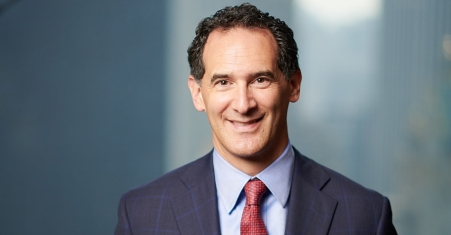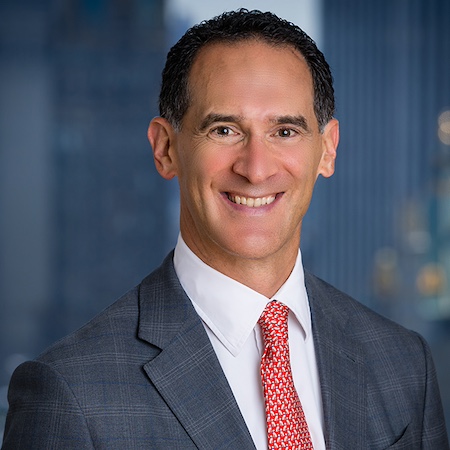

David B. Anders is a partner in Wachtell Lipton’s Litigation Department. His practice focuses on the representation of Fortune 500 and other companies in connection with the defense of regulatory, white-collar criminal and complex civil litigation matters. He also regularly advises clients in connection with internal investigations and corporate governance and compliance reviews.
Prior to joining the firm, Anders served as an assistant United States attorney for the Southern District of New York from September 1998 through December 2005. During his time at the United States Attorney’s Office, he investigated and prosecuted a wide variety of securities, commodities, and other investment fraud schemes, money laundering, immigration, racketeering, and associated violent crime. He tried 13 felony cases to verdict, and briefed and argued numerous appeals before the United States Court of Appeals for the Second Circuit. He was involved in several significant prosecutions during that time, including the investigation and prosecution of the fraud at WorldCom.
Lawdragon Honors
Anders is a 1991 graduate of Dartmouth College with an A.B. in government and graduated from Fordham University School of Law in 1994. He served as law clerk to the Honorable Denny Chin of the United States District Court in the Southern District of New York (1995-96).
Anders is a frequent speaker at bar associations and professional organizations on issues relating to securities and commodities fraud and internal investigations. He was an associate adjunct professor at Fordham University School of Law from 1997 through 2006. Anders is Chair of the Federal Bar Council’s Federal Criminal Practice Committee, a past-President of the Board of Directors of the Fordham Law School Alumni Association, a member of the Board of Visitors for the Nelson A. Rockefeller Center for Public Policy at Dartmouth, and a director on several non-profit boards. Anders served on the New York State White-Collar Crime Task Force, which was charged with examining New York’s white-collar crime laws with the goal of recommending legislative and executive changes.